
How to choose the right pool heater for a Longboat Key home
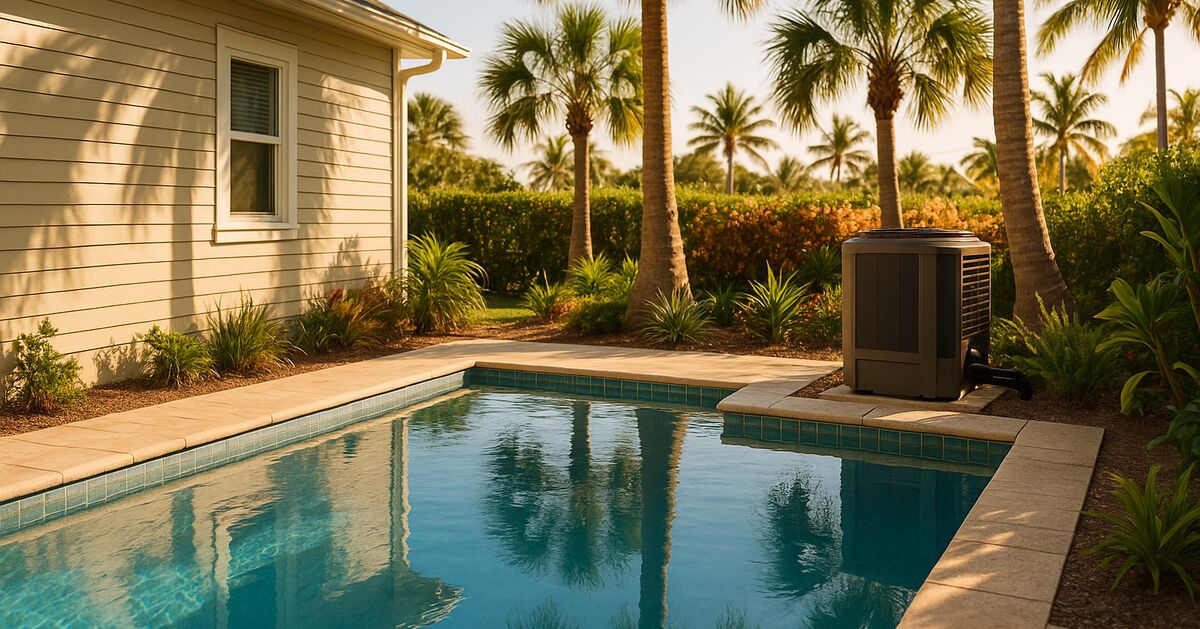
Gulf water temperatures off Longboat Key dip into the low 60s in January, and even the most committed swimmers start eyeing the heater controls around November. If you've been wondering whether a pool heater is a smart investment for your home here, or which type makes the most sense in a coastal Florida climate, this guide is written exactly for you.
First: is a pool heater actually worth it on Longboat Key?
The short answer is yes, for most homeowners, and here is why. Longboat Key, Lido Key, and the surrounding barrier islands enjoy genuinely warm weather for roughly eight to nine months of the year. Without a heater, your pool is comfortably swimmable from about March through November. Add a heater, and you extend that window to twelve full months. For full-time residents who swim regularly, that extra season is meaningful. For part-time owners or snowbirds who visit between Thanksgiving and Easter, a heater is not optional, it is the whole point of having a pool.
The calculation changes slightly depending on how you use the home. If you rent the property on a vacation platform, a heated pool commands noticeably higher nightly rates in winter and dramatically improves booking occupancy from December through February. If the home sits empty from May through October, you may want to run the heater on a minimal schedule and lean on a quality cover to hold heat overnight.
The bottom line: in this climate, a pool heater pays for itself in comfort and extended usability faster than most homeowners expect.
The three main types of pool heaters
1. Heat pumps (the most popular choice on the islands)
A heat pump does not generate heat, it moves heat. It pulls warmth from the surrounding air and transfers it to the pool water, much the way a refrigerator works in reverse. Because it is moving energy rather than creating it, it uses electricity very efficiently.
Why heat pumps make sense here: Longboat Key and the surrounding Gulf Coast communities rarely see truly cold air temperatures. Heat pumps work most efficiently when the air is above roughly 50 degrees Fahrenheit. Our nighttime lows in December and January average in the low 50s, with genuinely cold snaps being brief and infrequent. That means a heat pump can maintain a comfortable 84 to 86 degrees almost every day of the year without struggling.
Running costs: Because of that efficiency, monthly operating costs are considerably lower than gas. The exact figure depends on the size of your pool, your utility rate, and how aggressively you set the thermostat. But for a typical Longboat Key pool in the 15,000 to 25,000 gallon range, expect electricity costs during peak heating months to be a fraction of what gas would demand.
Heat-up time: The main trade-off is speed. A heat pump raises water temperature slowly, typically one to two degrees per hour. If you left for a month and came home to a 65-degree pool, you may wait a full day or two to reach swimming temperature. Scheduling the heater remotely before you arrive solves this completely, and most modern heat pumps include Wi-Fi controllers for exactly that reason.
Salt air durability: This matters on the barrier islands. Look for a heat pump with a titanium heat exchanger and a coated cabinet. Units without corrosion protection degrade noticeably faster in the salt air environment you get on Longboat Key, Lido Key, and Bird Key. Our pool cleaning and maintenance services include routine inspection of heat pump components for early corrosion, which can save you a significant repair bill.
2. Gas heaters (propane or natural gas)
A gas heater burns fuel to heat water directly. It can raise pool temperature by several degrees per hour, meaning it can heat a cold pool in hours rather than days.
Where gas heaters shine: If you entertain unpredictably, host large gatherings where you want the pool hot on short notice, or have a spa attached to your pool, gas heat is hard to beat. A spa in particular benefits from gas because guests typically want it at 100 to 104 degrees quickly, not eight hours from now.
Running costs: This is where gas heaters lose ground. Propane especially has become expensive, and running a gas heater continuously through a Florida winter adds up quickly. Most homeowners who choose gas use it as a supplement, running it for a day or two before a party or to bring a spa up to temperature, rather than as a primary means of maintaining pool temperature all month.
Coastal corrosion: Salt air is harsh on gas heater components, particularly the heat exchanger and burner assembly. If you have a gas unit, annual inspection by someone who knows coastal conditions is not a suggestion, it is a maintenance necessity. The posts on how to know when coastal pool equipment needs replacing and pool equipment lifespan near the coast go deeper on what to watch for.
Natural gas availability: Not every part of Longboat Key or the surrounding islands has natural gas infrastructure, so many homeowners default to propane. Factor in propane tank installation and delivery logistics when comparing costs.
3. Solar heaters
Solar pool heaters use roof-mounted panels (actually flexible mats or rigid collectors) to circulate pool water through a sun-warmed surface before returning it to the pool. In theory, they run on free energy. In practice, the picture is more nuanced.
The upside: No fuel cost once installed. Solar systems are simple and have very few moving parts, which means lower maintenance. In our climate, a well-sized solar system can maintain water temperatures comfortably from roughly March through November with no operating expense.
The limits: Solar cannot heat your pool on cloudy days or at night. In December and January, even in Sarasota and Longboat Key, overcast stretches can last several days. Many homeowners pair solar with a heat pump backup to cover those gaps, which adds to the total installation cost but gives you the best of both worlds.
Roof and HOA considerations: Some communities on St. Armands Key, Bird Key, or along the Longboat Key corridor have architectural guidelines that limit or prohibit visible rooftop equipment. Check your HOA rules before specifying solar panels. Also, solar systems work best on south- or southwest-facing roofs with good sun exposure and minimal shading from palm trees.
Sizing matters more than most homeowners realize
Every type of heater must be correctly sized for your pool's surface area and volume. An undersized heat pump will run continuously and still struggle to hold temperature, wearing itself out prematurely and costing more to operate. An oversized unit costs more upfront and may short-cycle, which is also hard on components.
A few factors that affect sizing on local properties:
- Pool surface area. Larger surfaces lose more heat to evaporation and radiation, especially on breezy Gulf-front lots.
- Shade vs. sun. A pool that sits in full sun gains free solar heat throughout the day. A pool shaded by the home, a pergola, or palms loses that passive gain and needs a larger heater to compensate.
- Wind exposure. Properties directly on the Gulf or bay experience more evaporative heat loss than homes tucked inland on the islands.
- Pool cover use. A good cover can reduce heat loss by 50 percent or more overnight. If you use one consistently, you can size down slightly and still hold temperature.
- Desired temperature. Maintaining 82 degrees costs meaningfully less than maintaining 88 degrees.
What to expect when getting a heater installed
A qualified pool professional will assess your pool volume, your site conditions, and your usage habits before recommending a unit. Expect to discuss:
- Whether your existing electrical panel can support a heat pump (many require a dedicated 240-volt circuit)
- Placement of the heater unit relative to your equipment pad and prevailing winds
- Whether your current pump and filtration system are compatible
- Warranty terms and what is and is not covered in a coastal environment
Installation typically takes one day for a heat pump or gas unit. Solar systems can take longer depending on roof complexity. Ask specifically about corrosion-resistant components, titanium heat exchangers, coated cabinets, and stainless hardware. On Longboat Key, Lido Key, Anna Maria Island, and every other barrier-island community we serve, the salt air environment shortens the life of unprotected equipment.
Ongoing maintenance: what changes when you have a heater
Adding a heater does not dramatically change your regular maintenance routine, but there are a few things to keep in mind.
Water chemistry becomes more critical. Heated water accelerates chemical reactions. Chlorine burns off faster, algae can establish more easily if chemistry slips, and calcium scaling on surfaces becomes a risk if your calcium hardness and pH are not kept in balance. If you've had questions about mysterious water issues, the guides on cloudy pool water on the barrier islands and why your pool water is cloudy as a barrier-island owner explain how water temperature interacts with chemistry in ways many owners don't expect.
Inspect the unit regularly. Salt air works on heater cabinets, electrical connections, and heat exchanger fins year-round. A quick visual check during each service visit can catch rust or corrosion before it becomes a failure.
Run the heater on a schedule, not continuously. Most pools on the island do not need continuous heating. Set a timer or use the app to bring the pool up to temperature before you use it. Overnight, a good thermal cover does a far better job of holding heat than the heater does of replacing lost heat.
Plan for rainy season chemistry shifts. During the summer rainy season, heavy daily rain dilutes pool chemistry quickly. A heated pool during those months, common with year-round residents, needs more frequent water testing. Our algae prevention guide for Gulf-coast pools during rainy season is a useful companion read.
A word about costs
Pool heater costs depend on the type, brand, and size of unit, the complexity of your installation, and any electrical upgrades required. We don't publish fixed prices here because those variables genuinely move the number significantly from one property to the next. What we can tell you is that heat pumps have higher upfront costs than gas but lower long-term operating costs, gas units cost less to purchase but more to run, and solar has the lowest operating cost but the most installation variability.
The most useful thing you can do is get a site-specific quote. An honest professional will look at your pool, your electrical setup, and your usage pattern before giving you a number. That is exactly what our team does for homeowners across Longboat Key, Lido Key, Siesta Key, Anna Maria Island, and our other service areas. You can reach us anytime through our contact page.
Making the final call
Here is a simple way to think about it:
- You swim year-round or rent the home in winter: A heat pump is almost certainly the right choice. Size it correctly, add a quality cover, and your pool is comfortable every month of the year at a reasonable operating cost.
- You have a spa or entertain with short notice: Consider a gas heater for the spa side of a combination unit, and a heat pump for the pool.
- You're home only in winter and away in summer: A heat pump or gas unit on a remote-controlled schedule keeps the pool ready for when you arrive without running unnecessarily.
- You're focused on lowest long-term cost: A solar system with a heat pump backup handles most situations efficiently, especially if your roof orientation and HOA rules allow it.
There is no single right answer, but there is almost always a right answer for your specific situation. A pool that's comfortable in February, properly maintained, and well-matched to your equipment pad is one of the real pleasures of owning property on these islands.
If you're not sure where to start, our frequently asked questions page covers a lot of common heater questions, and our team is always happy to walk you through options with no pressure. We look after pools from Longboat Key down through Sarasota and out to Anna Maria Island, and we're familiar with the conditions, the equipment that holds up, and the equipment that doesn't.