
Algae prevention for Gulf-coast pools during rainy season
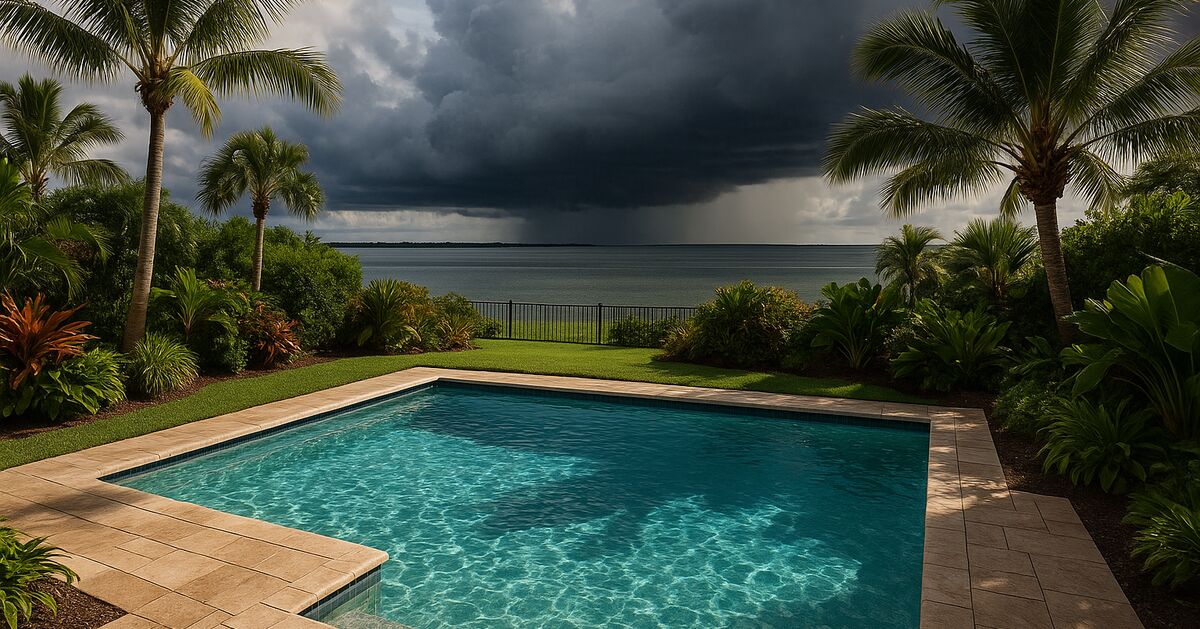
Rain is coming whether you plan for it or not, and on the Gulf coast that means months of warm afternoon downpours that can turn a sparkling pool into a murky green mess faster than most homeowners expect. From Longboat Key down to Siesta Key and across to Anna Maria Island, the rainy season runs roughly June through September, and every one of those months is prime time for algae. Understanding why that happens, and knowing the specific steps to stay ahead of it, is the difference between a pool you actually want to swim in and one you dread looking at.
Why rainy season is algae season on the Gulf coast
Algae doesn't appear out of nowhere. It needs three things: warmth, nutrients, and an imbalance in your pool's chemistry. Florida's rainy season delivers all three at once, and it does it repeatedly, often every single day.
Here's what a typical summer afternoon storm actually does to your pool:
- It dilutes your sanitizer. Even a moderate rain event adds hundreds of gallons of untreated water to the pool. That water has a pH of its own, and it carries dust, pollen, bird droppings, organic debris, and airborne bacteria. All of that drops your effective chlorine (or salt-generated chlorine) concentration, sometimes dramatically.
- It shifts your pH upward. Rainwater in Florida is slightly acidic when it falls, but the organic matter it carries tends to push pool water in an alkaline direction over time. High pH makes chlorine far less effective, even if your parts-per-million reading looks fine on a test strip.
- It warms the water further. Gulf-coast pool water in summer already sits at 88 to 92 degrees on most afternoons. Warm rain adds heat rather than cooling things down. Algae thrives above 85 degrees and practically races above 90.
- It introduces phosphates. Lawn fertilizer runoff, organic debris, and even the air itself near the coast carry phosphates. Phosphates are the primary food source for algae, and rainy season washes them directly into your pool.
Put those four factors together and you can go from a balanced, clear pool on a Monday to a visible green tint by Wednesday. On barrier islands like Longboat Key and Lido Key, the problem is compounded by salt-laden air that accelerates equipment wear and keeps humidity near 100 percent around the clock, which slows evaporation and keeps water temperatures elevated even overnight.
The three types of algae you're most likely to see
Knowing what you're dealing with changes how you treat it and, more importantly, how you prevent it.
Green algae is the most common variety on the Gulf coast. It spreads quickly and turns pool water a pale green or teal color. It's also the easiest to prevent with consistent chemistry. If you're seeing it, your sanitizer has slipped.
Black algae looks like dark spots or patches on plaster, often in shaded corners or behind fittings. It's not actually algae in the traditional sense but a cyanobacterium, and it anchors itself with a protective coating that makes it extremely resistant to normal chlorine levels. Preventing it is much easier than treating it.
Mustard algae (sometimes called yellow algae) is less common but tricky because it can look like dirt or sand on the pool floor. It tends to come back after treatment if you don't also treat everything that was in contact with the pool, including swimsuits and pool toys. It's also more resistant to chlorine than green algae.
The prevention habits that actually work
Prevention is almost entirely about consistency. There's no magic product that replaces regular attention, especially during rainy season. Here's what works.
Test and adjust chemistry after every significant rain event
This is the single most important habit you can build. A rainstorm that drops even half an inch of rain can shift your pool's chemistry enough to open a window for algae. Test your water within 24 hours of a heavy rain and correct these parameters in this order:
- Total alkalinity (target: 80 to 120 ppm). Adjust this first because it stabilizes your pH.
- pH (target: 7.4 to 7.6). Low pH makes chlorine aggressive toward equipment; high pH makes chlorine ineffective.
- Free chlorine (target: 2 to 4 ppm for traditional pools, higher after a dilution event). Shocking after a heavy rain is often the right call.
- Cyanuric acid / stabilizer (target: 30 to 50 ppm). Rain dilutes this too. Low stabilizer means your chlorine burns off in sunlight within hours.
- Phosphates (target: below 200 ppb). If your readings keep climbing, a phosphate remover applied monthly during rainy season is worth considering.
For a deeper look at how these numbers interact with Florida's climate, our post on balancing pool chemistry in Florida heat covers the underlying principles in plain language.
Keep your circulation running longer
A still pool is a vulnerable pool. Algae settles and anchors in water that isn't moving. During rainy season, run your pump for at least 10 to 12 hours a day, ideally timed to overlap the afternoon storm window and continue into the evening. If you have a variable-speed pump, set it to run at a lower speed for longer rather than at high speed for a short burst.
Pay attention to dead zones in your pool. Steps, under ladders, behind fittings, and in corners around returns are all places where circulation slows and algae gets a foothold. Occasionally angling return jets to create a slight circulation pattern that sweeps those corners helps.
Brush the walls and floor weekly, even if the water looks clear
Algae often starts as an invisible biofilm on pool surfaces before it becomes visible in the water. Brushing disrupts that biofilm before it can establish and also loosens any early-stage spots so the sanitizer can reach them. Use a nylon brush for plaster and fiberglass, and a steel brush only for rough gunite surfaces. Hit the waterline tile especially carefully during rainy season because organic matter accumulates there.
Maintain a consistent algaecide routine
A maintenance-dose algaecide applied every one to two weeks during rainy season is a reasonable layer of insurance. Polyquat 60 (a 60 percent poly[oxyethylene(dimethyliminio)ethylene] compound, commonly labeled as "non-foaming algaecide") is widely recommended because it doesn't foam and doesn't affect pool water clarity. Copper-based algaecides work but can stain plaster and cause green-tinged water if your chemistry isn't precise, so they require more care.
The important thing is that algaecide is a supplement to proper sanitizer levels, not a replacement. If your chlorine is consistently low, algaecide alone will not hold the line.
Don't let debris sit in the pool
Leaves, grass clippings, and dead insects are organic material that consumes chlorine as they break down and adds phosphates to the water. During rainy season, windy storm conditions mean debris comes in fast. Empty your skimmer basket every day if necessary, and consider running your robotic cleaner more frequently in June through September than you do in the dry months.
On properties near the water, like many homes on Bird Key and St. Armands Key, wind-blown organic matter from coastal vegetation can hit a pool hard after an afternoon squall. A quick skim after each storm is a five-minute task that prevents a much longer fix.
When to shock, and how to do it right
Shocking your pool (raising free chlorine to 10 ppm or higher, then letting it drop back down) is your best reactive tool and an important preventive one during rainy season. Here's when to shock:
- After any rainstorm that dumped more than one inch of rain
- After a heavy-use weekend with lots of swimmers (sweat, sunscreen, and body oils consume chlorine fast)
- Any time you notice a faint green tint, even if you aren't sure that's what it is
- After treating any algae outbreak, even one that seemed minor
Always shock in the evening. Sunlight degrades free chlorine rapidly, and shocking during the day means you're losing much of the product before it can do its work. Use a calcium hypochlorite shock (granular, roughly 68 percent available chlorine) dissolved in a bucket of pool water before adding, or a liquid sodium hypochlorite shock if your stabilizer is already adequate. Don't swim until chlorine drops back below 4 ppm.
What professional service covers that DIY can't easily replicate
A lot of rainy-season algae problems come down to timing and consistency. You test on Saturday, everything looks fine, a storm comes through Monday, and by Thursday you have a problem. Regular professional visits during rainy season mean someone with a proper test kit (not just strips, which aren't accurate enough for tight chemistry management) is checking the water frequently and adjusting proactively.
Professional service also includes equipment checks that matter during rainy season. A pump that's losing flow rate, a filter that needs backwashing more often than the homeowner realizes, or a salt cell that's producing below its rated output can all make algae prevention much harder. Our pool cleaning and maintenance services are built around exactly this kind of ongoing, attentive care rather than reactive fixes.
If you've ever inherited a pool that was let go during rainy season and wondered how it got so bad so fast, the answer is almost always a combination of chemistry drift and missed maintenance windows. The time and chemical cost of clearing a full algae bloom is several times higher than the cost of preventing one.
For homeowners in Siesta Key and across Sarasota who manage vacation rentals or seasonal properties, the rainy season is particularly challenging because the pool may be occupied one week and idle the next. Idle, warm water with no swimmers is actually higher risk, not lower, because there's no one to notice early warning signs and the sanitizer demand doesn't disappear just because people aren't in the pool. If you're managing a property remotely, see our guidance on getting your pool ready before you leave for the season, which covers the specific steps to protect an unoccupied pool.
A quick rainy-season checklist
To keep it practical, here are the habits that matter most from June through September:
- Test water within 24 hours of any heavy rain
- Correct alkalinity, pH, and chlorine in that order
- Shock after significant rain events and after heavy use
- Run circulation 10 to 12 hours daily
- Brush walls and floor weekly, focusing on shaded corners
- Empty skimmer baskets after every storm
- Apply a maintenance dose of polyquat algaecide every one to two weeks
- Check and clean your filter more frequently than in the dry season (rainy season loads it faster)
- Keep stabilizer in the 30 to 50 ppm range to protect your chlorine from UV burn-off
One more thing: don't ignore early warning signs
A faint green tint or slightly cloudy water is your pool asking for attention. It's not a big problem yet. If you act immediately, a shock treatment and a chemistry correction usually resolve it within 24 to 48 hours. If you wait a week, hoping it will clear on its own (it won't), you're looking at multiple shock treatments, a possible algaecide treatment, extra brushing, and a filter cleaning cycle that takes three to five days.
If the water has turned fully green, or if you're seeing black spots on the walls that don't brush off easily, that's the point to call a professional. Our post on signs your pool needs a professional, not another DIY fix walks through exactly where the line is and what the treatment process looks like.
We serve homeowners across all of our Gulf-coast service areas, and rainy season is easily our busiest stretch of the year for algae-related calls. We'd far rather help you keep it from happening than be the crew that has to fix it after the fact. If you want to talk through your pool's specific situation, get in touch with us and we'll take it from there.