
Signs your pool needs a professional, not another DIY fix
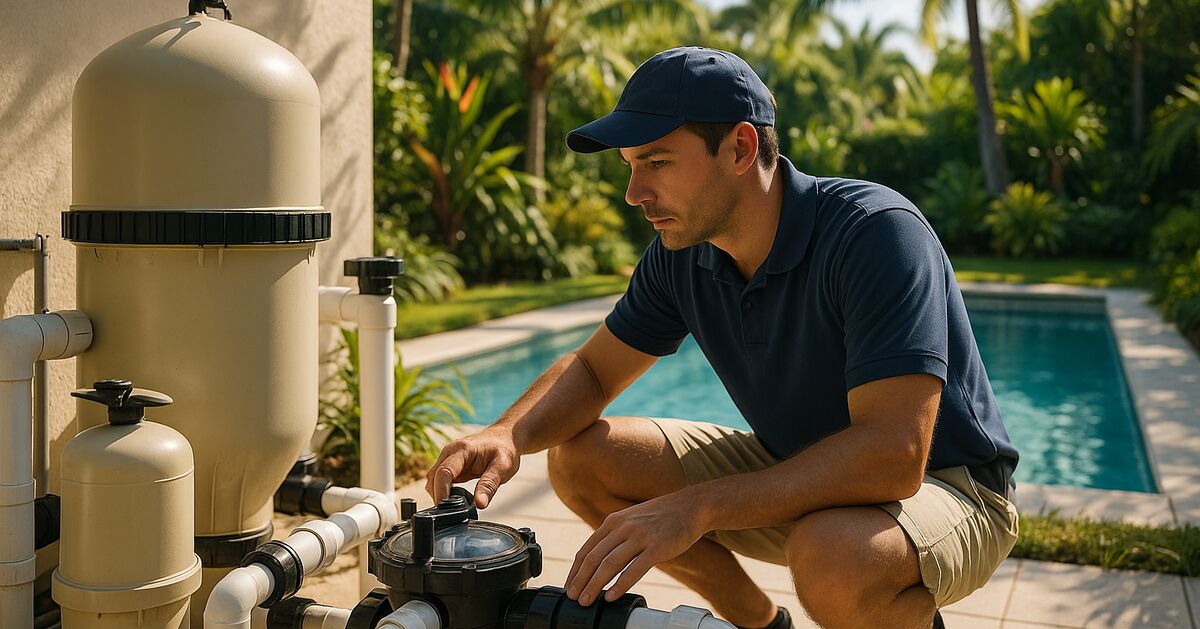
Your pool water looks off again, and you've already added a bag of shock, adjusted the pH twice, and watched three YouTube videos. Sound familiar? For plenty of pool owners on Longboat Key, Siesta Key, and along the barrier islands, the DIY loop becomes a frustrating cycle that wastes money and quietly lets real problems get worse. Knowing when to put down the test strips and call a professional is one of the most useful things you can learn as a pool owner.
This isn't about giving up. It's about recognizing the difference between routine maintenance tasks any homeowner can handle and the warning signs that point to something deeper, something that will only cost more the longer it waits.
Cloudy water that keeps coming back within days
A single cloudy-water episode, cleared up quickly, is normal enough. Florida pools take a beating from heat, heavy bather loads, afternoon thunderstorms, and organic material blowing in off the Gulf. The problem is when the water clears up for a day or two and then goes cloudy again on a recurring cycle.
Persistent cloudiness usually means one of a few things: a filtration system that isn't turning the water over enough, a filter that's past its useful life, a circulation problem caused by a failing pump, or a chemistry imbalance that simple shocking can't correct because the underlying cause hasn't been addressed. If you've shocked the pool and balanced the pH and alkalinity and the water still looks like diluted milk within 48 hours, the issue isn't your chemical routine. It's something in the equipment or system that needs a trained eye.
Our guide on balancing pool chemistry in Florida heat is worth a read if you want to understand the chemistry side, but if you're already doing everything right chemically and still struggling, that's exactly when to stop self-diagnosing and get a professional out.
Algae that returns in the same spot every time
Algae blooms are common in Gulf Coast pools, especially through the summer. But if you're brushing and shocking and treating, and the green, yellow, or black algae keeps coming back in the same corner or along the same wall, that pattern is telling you something. That spot is getting less circulation, less sanitizer, or less light than the rest of the pool, and the root cause is usually a return jet pointed in the wrong direction, a dead zone in the circulation pattern, or a filter that's not doing its job anymore.
Black algae in particular is notorious for embedding itself into plaster and concrete surfaces. It forms a protective outer layer that standard over-the-counter algaecide can't penetrate reliably. Getting rid of it properly requires specific products, the right brushing technique with a stainless steel brush, and sometimes multiple treatments with precise timing. Doing it wrong just stresses the water and gives the algae time to dig in deeper.
A professional can also check whether your circulation is actually moving water through every part of the pool, which is something you can't assess just by looking at the surface.
Your equipment is making new sounds or running differently
Pools are full of mechanical equipment, and on the barrier islands, that equipment works harder and ages faster than anywhere else. Salt air off the Gulf accelerates corrosion on pump motors, filter housings, valves, and electrical connections. If you start hearing a new grinding, whining, or humming sound from the equipment pad, that's not something to wait on.
A grinding noise from the pump often means the bearings are failing. A high-pitched whine can mean the motor is working too hard because of a restriction or a worn impeller. Intermittent cycling or a pump that shuts off on its own can point to a thermal overload, a capacitor going bad, or an electrical issue at the timer or breaker.
None of these are things a homeowner should open up and poke around in, especially near a pool where water and electricity are close neighbors. A technician can diagnose these problems quickly, tell you whether a repair makes sense or whether the equipment has simply reached the end of its service life, and get it handled safely.
If you're curious about how salt air specifically affects pool equipment in this area, our pool cleaning and maintenance services cover the kind of regular inspection that catches these issues before they become breakdowns.
Water loss that's more than evaporation
Every pool loses some water to evaporation, especially on a hot, breezy day along the coast of Anna Maria Island or Lido Key. A general rule of thumb is about a quarter of an inch per day in Florida's summer heat. If you're filling the pool by more than an inch or two a week without heavy splash-out from swimmers, you likely have a leak somewhere in the system.
Pool leaks can come from the shell itself (cracks in the plaster, gunite, or shell), from the plumbing (underground pipes, return fittings, or the skimmer throat), or from equipment fittings and unions at the pad. A bucket test can help confirm whether you have a real leak versus normal evaporation: fill a bucket with pool water, set it on a step with the rim above the waterline, mark both levels, and check back in 24 hours. If the pool drops significantly more than the bucket, you've got a leak.
Finding where the leak is located is another matter entirely. Pressure testing the plumbing lines and using dye testing around fittings and the shell requires equipment and experience. Trying to seal a leak with off-the-shelf epoxy putty when the actual problem is a cracked return line underground is just buying time while the water (and your water bill) keeps running.
pH and alkalinity you simply cannot get to hold
Some homeowners have been adjusting their pool chemistry every week for months, and every time they test, the numbers are either high or low or all over the place. If your pool chemistry won't stabilize, the usual culprits are a stabilizer (cyanuric acid) level that's too high or too low, a total dissolved solids level that's gotten too high (common in pools that haven't been partially drained and diluted in years), or a calcium hardness problem.
In Florida, pools also lose stabilizer to dilution from heavy rain, which is something that happens fast during the summer rainy season. Without enough stabilizer, chlorine burns off quickly in UV light and the water swings. Too much stabilizer, on the other hand, locks up your chlorine and makes it ineffective no matter how much you add.
Getting these numbers in the right range and keeping them there isn't always a straight line. A professional service includes a full water analysis that goes beyond pH and chlorine, looking at the complete picture so adjustments are targeted rather than guesswork. You can learn more about what that full picture looks like in our post on pool chemistry basics every Florida owner needs to know.
The filter is running but water flow looks weak
Walk to your pool return jets and hold your hand in front of them. If the flow feels noticeably weaker than usual, the filter is probably due for a cleaning or replacement, but weak returns can also point to a struggling pump, a partially closed valve, or an air leak on the suction side that's causing the pump to cavitate.
Sand filters need backwashing regularly, but the sand itself clumps and channels over time and eventually needs to be replaced. Cartridge filters need cleaning every few weeks in heavy use and replacement roughly annually depending on use and water conditions. DE filters need fresh diatomaceous earth added after every backwash. If you're maintaining the filter on schedule and the returns still feel sluggish, a professional can do a flow rate check and trace the problem to the right source.
On our barrier islands, filters also tend to accumulate oils from sunscreen and body products faster than pools in less heavily used residential neighborhoods, which shortens the effective cleaning cycle and can cause problems even in filters that look visually okay.
Your pool is more than ten years old and has never had a professional inspection
This one isn't really about a visible problem at all. It's about the equipment and infrastructure you can't see easily: the underground plumbing, the bonding wire, the condition of the shell surface, the integrity of the light niches, the state of the equipment pad connections. Pools on Siesta Key, Bird Key, and other island locations face constant exposure to humidity, salt air, and the kind of intense UV that wears things out faster than the national averages that pool equipment is rated to.
A periodic professional inspection is simply good stewardship of an expensive piece of infrastructure. It tends to catch small things (a weeping union fitting, a cracked conduit, a filter tank with a hairline fracture) before they become expensive emergencies or, in the case of bonding issues, safety hazards.
Our frequently asked questions page covers what a standard service visit includes and what to expect if you're having a pool looked at for the first time in a while.
When a storm has just gone through
The Gulf Coast barrier islands get their share of tropical weather, and after any significant storm, a pool needs more than just a quick skim of the surface. Debris driven into the water introduces heavy organic loads and can damage the filter. Floodwater or storm surge can affect the chemistry dramatically. Structural movement, even minor, can crack fittings or shift the pool shell. And electrical components at the equipment pad are vulnerable to surge damage and water intrusion.
Our detailed guide on what to check on your pool after a Longboat Key storm walks through the visual checklist, but if there's been significant storm activity, a professional visit is the right call rather than guessing whether the equipment is safe to run.
The cost of waiting usually exceeds the cost of the visit
This is the part that homeowners often reflect on after the fact. A pump motor that gets a bearing diagnosis early might need a $200 repair. The same pump left to grind another six weeks often takes out the motor windings completely, turning a repair into a full replacement. A small plaster crack that's caught during an inspection can be patched. The same crack left for a season can spread to the point where the pool needs a full replaster. A leak that's found and fixed promptly costs far less than the water bill from months of undetected loss and the excavation sometimes needed when a fitting finally fails completely.
Professional service isn't a luxury for pools that are already in trouble. For island pools that deal with aggressive conditions year-round, it's the most cost-effective way to keep the equipment running well and the water safe. If you're not sure whether what you're seeing warrants a call, the honest answer is that if you're asking the question, it probably does.
Our team serves homeowners across Longboat Key, Lido Key, Siesta Key, Anna Maria Island, Bird Key, St. Armands Key, Sarasota, and the surrounding area. If your pool is showing any of the signs above and you'd like a professional set of eyes on it, reach out through our contact page and we'll get you scheduled.