
What to Check on Your Pool After a Longboat Key Storm
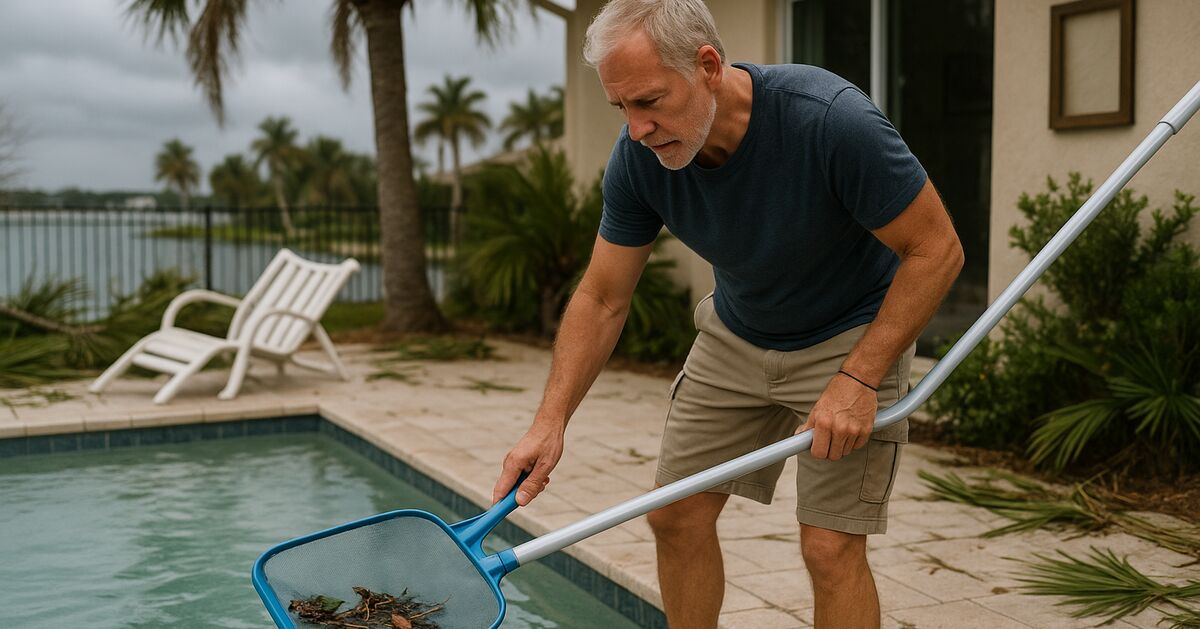
Rain is still dripping off the palms, the wind has finally quit, and the first thing most Longboat Key homeowners do is walk out back and look at the pool. What they see can range from "a few leaves" to "a small lake with a greenish tint" - and how you respond in the next 24 to 48 hours determines whether you're swimming again by the weekend or staring at a chemistry problem that drags on for weeks.
This guide walks you through every step of a proper post-storm pool inspection: what to look for, why each item matters, and what to do if something is off. Whether you just got clipped by a fast-moving thunderstorm or rode out a serious tropical system, the checklist below applies.
1. Stay Out of the Water Until You Have Checked the Electrical Equipment
This is the single most important rule, and it comes before any visual inspection. Florida storms routinely knock out power, topple equipment, and send water flooding across pump pads. Before anyone touches the pool, verify the following:
- The power to your pool equipment is off. If you lost power during the storm and it has just come back on, do not assume your pump, heater, or light fixtures are safe. Walk to your breaker panel and switch off the pool circuits before you do anything else.
- There is no standing water around the equipment pad. Water pooling around your pump and filter housing is a shock hazard. Let it drain or dry before you restore power.
- No electrical conduit or junction boxes are visibly damaged. Cracked conduit, exposed wiring, or a control panel that took a direct hit from flying debris should be assessed by a licensed electrician, not worked around.
- Pool lights are intact. An underwater light with a cracked lens or a broken conduit fitting is a serious hazard. If you see cracks in the light housing, keep swimmers out and call a pool professional.
Only after you are confident the electrical system is intact should you move on to the rest of the inspection.
2. Remove Debris Before Running the Pump
Resist the urge to fire up the pump the moment power is restored. Large storm debris, including branches, seed pods, fronds, and the occasional shingle, can be sucked into the skimmer and either clog the basket or damage the impeller inside your pump.
Work through these steps first:
- Use a leaf rake or long-handled net to remove all large debris from the surface and the floor of the pool.
- Empty the skimmer baskets by hand. They are almost certainly packed full.
- Clear the area around the pump and filter of anything that could be pulled in through the suction line.
- Check the pump strainer basket and clean it out before you turn the system on.
Once the debris load is manageable, you can switch the pump back on and let the filter do the rest. Run it continuously - 24 hours a day if needed - until the water clears.
3. Test and Rebalance Your Water Chemistry Right Away
This is where most homeowners underestimate the damage a storm does. A heavy Florida rainstorm can dump several inches of water into your pool in just a few hours. That influx of rainwater is acidic, has near-zero chlorine, and dilutes every chemical you carefully balanced before the storm. Here is what tends to happen:
- pH drops. Rainwater is slightly acidic. A large volume of it pushes your pool's pH down, which makes the water corrosive to pool surfaces and uncomfortable for swimmers.
- Total alkalinity falls. Low alkalinity causes pH to swing wildly, making it harder to hold a stable reading.
- Chlorine is consumed rapidly. Organic material carried by storm runoff (dirt, leaves, bird droppings, fertilizer) creates a massive chlorine demand. Combined with the dilution effect of rain, your free chlorine can hit zero within hours.
- Phosphate levels spike. Runoff from landscaping is loaded with phosphates, which feed algae. A pool that looks clear on Sunday can be visibly green by Tuesday if phosphates are not addressed.
Grab a good test kit or take a water sample to a pool supply store right after the storm. For a deeper look at why each of these numbers matters and how to correct them, our post on balancing pool chemistry in Florida heat covers the reasoning behind every parameter.
At a minimum, test for:
- Free chlorine
- pH
- Total alkalinity
- Cyanuric acid (stabilizer)
- Phosphates (if you have a kit for it)
Shock the pool with a quality calcium hypochlorite or non-chlorine shock product immediately after you have tested and noted the baseline. Do not wait to see if it recovers on its own - it almost certainly will not.
4. Inspect the Pool Shell for Physical Damage
Once the water is debris-free and you can see the bottom clearly, take a slow walk around the entire perimeter and look for physical damage to the pool itself.
Cracks and chips in plaster or pebble surfaces. These are more common after storm surge events or after heavy objects have been blown into the pool. A hairline crack in plaster may be cosmetic; a crack that follows the bond beam or appears at a step or wall junction can indicate structural movement and needs professional evaluation.
Loose or missing tile. The waterline tile around the pool is bonded with grout and mortar. Storm surge, pressure changes, and flying debris can knock tiles loose. Missing tiles expose the substrate below to water infiltration.
Damage to the coping. The stone or concrete cap that runs around the edge of the pool takes a beating in high winds. Look for cracked, shifted, or missing coping pieces.
Tears or dislodged vinyl liner. If you have a vinyl liner pool, check the entire liner carefully for tears, particularly around return jets, the main drain, and steps. A small tear will worsen quickly if left unrepaired.
5. Check All Equipment for Damage
Work through each piece of equipment systematically.
Pump and motor. Look for cracks in the pump housing, a flooded motor, or displaced plumbing connections. If the motor was submerged in flood water, do not attempt to run it - water and motor windings do not mix.
Filter. Sand filters are generally robust, but the multiport valve can crack from debris impact. Cartridge filter housings can also crack. Check the pressure gauge; a gauge that reads zero or wildly high after start-up signals a problem.
Heater. Pool and spa heaters have heat exchangers, electronic ignition systems, and vent assemblies that are vulnerable to debris and flooding. Check the exhaust vent is clear and the unit has not been physically struck.
Salt chlorine generator (if applicable). The cell housing and flow switch can be damaged by debris or flood water. Inspect before restoring power.
Automation and control panels. Any outdoor control panel, time clock housing, or automation hub that got wet inside should be dried out and inspected before you restore power.
Plumbing fittings and unions. High winds and storm surge can shift equipment slightly, enough to crack a union fitting or pull a glued joint apart. Look for drips or spraying water once you restore pump operation.
6. Inspect Safety Equipment and Pool Surroundings
The pool shell is only part of the picture. A post-storm inspection needs to include everything around it.
- Pool screen enclosure. Torn or missing screen panels need to be repaired promptly - an open enclosure lets in far more debris and gives insects an easy path to the water.
- Fence and gate hardware. Pool safety fences must self-close and self-latch. Storm winds can bend fence posts, warp gate frames, and damage the latch mechanism. Test the gate after every significant storm.
- Deck surface. Check pavers or concrete for shifted sections, cracking, or areas where storm water has eroded the base material underneath. A sunken paver near the pool edge is a tripping hazard.
- Surrounding landscaping. Damaged trees or palms overhanging the pool are a continuing hazard after the storm passes. A weakened palm frond that falls into the pool three days later creates a second debris and chemistry event.
7. Address Algae Proactively - Don't Wait to See Green
In the warm, humid environment of a Longboat Key summer, algae can establish a foothold in under 48 hours when conditions are right: zero chlorine, elevated phosphates, and plenty of organic matter. By the time you actually see green or cloudy water, the bloom is already significant and will take far more chemical and time to correct.
The proactive approach is simple: shock the pool immediately after the storm, brush all surfaces thoroughly (algae clings to plaster and grout before it is visible), and run the pump continuously until your chemistry is stable and the water is sparkling clear. If you have ever had to go through a full green-to-clear recovery, you know how much easier prevention is. Our detailed guide on recovering a neglected or post-storm pool covers what to do if you do end up with a full-blown bloom.
8. When to Call a Professional
Some post-storm situations are genuinely beyond DIY scope. Consider calling a pool service professional if:
- You see cracks in the pool shell or coping that concern you.
- Any electrical equipment was submerged or visibly damaged.
- The water is heavily contaminated with mud or organic debris and you don't have the equipment to handle a large shock treatment.
- The pump or filter is not behaving normally after restart.
- Your water chemistry refuses to stabilize despite multiple chemical additions.
For homeowners on Longboat Key, Lido Key, Bird Key, and Siesta Key, storm events can also mean dealing with salt air corrosion that compounds the equipment damage - something a local technician familiar with barrier island conditions will know to check. Our Longboat Key pool cleaning and maintenance team handles post-storm calls regularly and knows what these storms do to equipment out here specifically.
A Note for Seasonal Residents and Vacation Rental Owners
If you were away when the storm hit, or if your property is a short-term rental that guests use right after a weather event, the urgency of this checklist doubles. You cannot rely on a guest or a caretaker to spot a cracked filter housing or a failed latch on a safety fence. A professional post-storm inspection by a qualified pool technician is the responsible move before anyone enters the water. You can review what our full service offering covers or get in touch directly to schedule a post-storm check.
Preparing for the Next One
The best post-storm experience is one where the storm does as little damage as possible in the first place. Smart pre-storm habits - partially lowering the water level, removing loose deck furniture, protecting equipment panels, and adjusting chemistry before a storm arrives - make the recovery dramatically easier.
Our full pre-storm preparation guide at hurricane season pool prep for waterfront homes is worth bookmarking before the next system forms in the Gulf. And if you're curious about how frequently your pool should be professionally serviced to keep it in condition to recover quickly from weather events, how often to service your pool in summer addresses that question for our local climate.
Storms are part of life on the barrier islands. A methodical inspection after each one keeps your pool safe, your chemistry stable, and your family in the water where they belong.