
Green-to-Clean: Bringing a Neglected Barrier-Island Pool
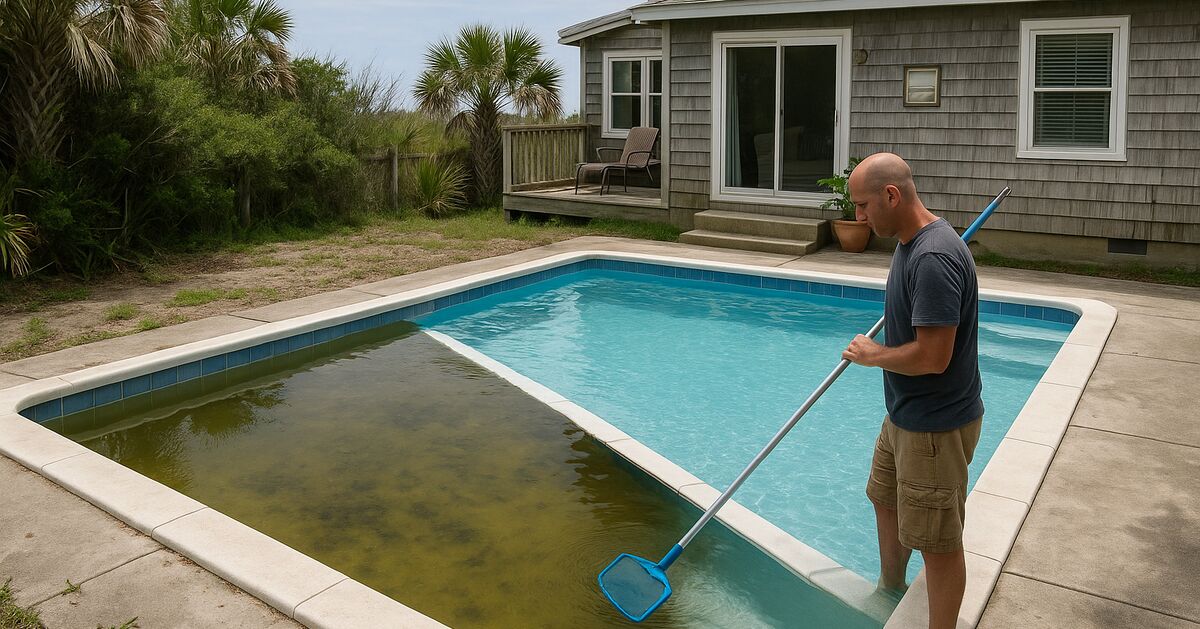
A green pool sitting behind a beautiful barrier-island home is more common than you might think - and almost always fixable. Whether you returned from a long stretch away, inherited a neglected vacation rental, or just had a rough few weeks with equipment trouble, the path from swampy green to sparkling clear follows a clear, methodical process. Let's walk through it completely.
Why Pools Go Green in the First Place
Understanding what went wrong is the first step to making sure it doesn't happen again. Pool water turns green because algae have taken hold. Algae are microscopic plants that exist naturally in the environment; they thrive the moment chlorine levels drop low enough to stop suppressing their growth. A single warm, sunny afternoon with inadequate sanitizer is all it takes to begin a bloom.
On the barrier islands around Sarasota - places like Longboat Key, Siesta Key, Bird Key, and Anna Maria Island - the conditions for algae growth are nearly ideal year-round. Intense UV radiation from Florida's sun burns off free chlorine faster than it would in cooler climates. High humidity keeps bather load steady. Warm water temperatures accelerate algae reproduction. Add in the fact that many pools here belong to seasonal residents or vacation rentals that sit unattended for stretches of time, and you have a recipe for a green pool in a matter of days.
Common triggers include:
- A pump or filter that stopped running (power outage, mechanical failure, tripped breaker)
- Running out of chlorine tablets in the feeder while out of town
- Heavy rain diluting chemicals and dropping pH and sanitizer levels simultaneously
- Extended periods between service visits, especially in summer
- A clogged filter that allowed water to bypass proper circulation
If you've ever wondered how frequently your pool really needs professional attention during Florida's hottest months, our post on how often a Longboat Key pool should be serviced in summer breaks that down in detail.
Assessing the Damage Before You Treat
Not every green pool is the same. Before you pour a single chemical into the water, take a few minutes to evaluate what you're actually dealing with. This assessment changes your approach significantly.
Visibility test: Can you see the bottom of the pool at the shallow end? If yes, you're dealing with a mild-to-moderate bloom - a few days of aggressive treatment will likely resolve it. If the water is opaque and you cannot see the bottom at all, you have a severe bloom on your hands that requires a more intensive approach.
Check the equipment: A green pool is no place to run a filter that's already struggling. Inspect the pump basket and skimmer baskets for debris. Check the filter pressure gauge - if it reads high, the filter is clogged and needs to be backwashed or cleaned before treatment begins. Running a clogged filter during a green-to-clean process is one of the most common mistakes homeowners make; all you accomplish is pushing algae-laden water through a filter that can't capture it properly.
Look for staining: Long-standing algae can stain plaster or grout. Note any discolored patches on the pool walls or floor. These may require brushing or even an acid wash after the water clears.
Test the water: Use a reliable test kit or take a water sample to a pool supply shop. You want to know your current chlorine level, pH, total alkalinity, cyanuric acid (stabilizer) level, and phosphate level. This baseline tells you how far out of balance things have gotten and how aggressive your shock treatment needs to be.
The Green-to-Clean Process, Step by Step
Step 1 - Balance pH First
Before you shock, you must adjust pH to the proper range (7.2 to 7.6). This step is non-negotiable. Chlorine is dramatically less effective at high pH levels. If your pH is sitting at 8.0 or above - which is common in neglected pools, especially after heavy rain - shocking the pool without correcting it first wastes product and time. Add pH decreaser (sodium bisulfate or muriatic acid) carefully, following the manufacturer's dosing instructions for your pool's volume.
Similarly, if total alkalinity is off, correcting it now will help stabilize the pH throughout the treatment process. Our detailed guide on balancing pool chemistry in Florida heat covers these relationships thoroughly if you want to go deeper on the chemistry.
Step 2 - Shock the Pool Aggressively
This is where you fight back against the algae bloom. Use calcium hypochlorite shock (granular) for severe green pools. For a heavily bloomed pool, you may need to super-chlorinate to levels of 20 to 30 ppm of free chlorine or higher. A single shock dose is rarely sufficient for a true green pool; plan on multiple treatments over consecutive days.
Apply shock in the evening or at night. Florida's sun will burn off free chlorine rapidly if you shock during the day, and you'll lose most of your treatment before it has a chance to work. Broadcast the granular shock across the pool surface while the pump is running, targeting the deep end and along the walls. Never add shock through the skimmer.
Step 3 - Brush Everything
Brush every surface of the pool vigorously after shocking: walls, floor, steps, around returns, behind ladders. Algae clings to surfaces in a biofilm that the water alone can't penetrate. Brushing breaks it loose and exposes it to the chlorine in the water column. Use a stiff nylon brush for plaster and a softer brush for vinyl or fiberglass surfaces. Plan to brush daily throughout the treatment process.
Step 4 - Run the Filter Continuously
During an active green-to-clean recovery, your filter needs to run 24 hours a day. There are no shortcuts here. Algae that has been killed by chlorine turns from green to a grayish-white color and must be physically removed from the water by filtration. If you run your filter on a regular schedule (say, eight hours a day), you're giving dead algae half the day to settle back onto your pool floor.
Check the filter pressure every 12 hours and backwash or clean as needed. On sand and DE filters, you may need to backwash multiple times per day during heavy algae die-off. This is normal and expected.
Step 5 - Add an Algaecide
Once your free chlorine is at a high level and the initial shock has had several hours to work, add a quality algaecide as a supplemental treatment. Copper-based algaecides are effective but can cause staining if used improperly or if the water chemistry isn't balanced. A non-metallic, quaternary ammonium or polyquat algaecide is safer and appropriate for most residential pools. Follow label directions carefully.
Step 6 - Add a Clarifier or Flocculent
As the algae dies, fine particles can make the water cloudy or hazy rather than clear. A clarifier helps bind these tiny particles into larger clumps that your filter can capture. For severe cases, a flocculent (also called a "floc") causes particles to drop to the bottom rapidly, where they can be vacuumed directly to waste - bypassing the filter entirely. If you use a flocculent, you'll need to vacuum slowly and carefully the following day before turning the filter back on.
Step 7 - Keep Testing and Adjusting
A green-to-clean recovery is not a one-time event. Test the water every day. Maintain free chlorine levels in the 3 to 5 ppm range as the water clears, and continue to monitor pH, alkalinity, and stabilizer. Cyanuric acid (stabilizer) levels between 30 and 50 ppm help protect chlorine from UV degradation outdoors, which is especially important on sunny barrier-island properties.
How Long Does It Take?
A mild-to-moderate bloom in a well-maintained pool can clear up in three to five days with proper treatment. A severely neglected pool with opaque water and visible debris on the bottom can take seven to fourteen days of consistent effort before it reaches swimmable clarity. In the most extreme cases, a partial or complete drain and acid wash may be necessary - something that should only be done by a professional, particularly here on the barrier islands where wastewater disposal is regulated.
If you've come back to find your pool in truly rough shape after a storm event, our guide on what to check on your pool after a Longboat Key storm walks through the post-storm assessment that often precedes a green-to-clean recovery.
When to Call a Professional
There's no shame in calling in backup. In fact, for most severe green pools on Siesta Key, Anna Maria Island, or elsewhere on the coast, professional treatment is often faster, more thorough, and more economical in the long run than repeated DIY chemical purchases and time investment.
A professional service has commercial-grade equipment, the ability to add chemicals precisely based on actual pool volume, experience reading water test results correctly, and the tools to vacuum directly to waste without making a mess of your yard or violating local disposal regulations. They also know how to avoid common mistakes like over-shocking without balancing pH first, or adding algaecide too early before chlorine levels are high enough to make it effective.
Our pool cleaning and maintenance services include green-to-clean recovery treatments tailored to the specific conditions here on Florida's Gulf Coast barrier islands. We work across the area from Longboat Key and Lido Key down through Bird Key, St. Armands Key, Siesta Key, Sarasota, and Anna Maria Island. If your pool has gotten away from you, we can help you get it back.
Preventing the Next Green Pool
Once you've put in the work to clear a neglected pool, keeping it that way is far easier than starting from scratch. A few straightforward habits make an enormous difference:
- Maintain consistent chlorine levels. Don't let the tablet feeder run empty. In Florida's heat, this happens faster than you'd expect.
- Keep up with regular service. Weekly professional maintenance is the standard for barrier-island pools for good reason. The environment here is simply more demanding than inland locations.
- Monitor your equipment. A pump that stops running even briefly can start a bloom. A simple timer check each week can catch problems before they become expensive.
- Address phosphates. Phosphates are a nutrient source for algae. High phosphate levels make blooms far more likely even when chlorine levels look adequate. Ask your service technician to test for phosphates periodically.
- Brush weekly, even when the pool looks clean. Brushing removes algae spores from surfaces before they can establish a foothold.
- Be extra vigilant after heavy rain. Rain dilutes chemicals, changes pH, and introduces nutrients. After any significant rainfall, test and adjust your chemistry promptly.
For homeowners who want to understand the full scope of what proper ongoing maintenance involves, our frequently asked questions page covers everything from service frequency to what's included in a routine visit.
The Bigger Picture
A barrier-island pool is one of the great pleasures of living or vacationing on Florida's Gulf Coast. The views, the warm evenings, the easy transition from saltwater gulf to your own backyard pool - it's a lifestyle that's hard to match. Letting a pool go green doesn't just undermine that enjoyment; it creates health risks (algae-clouded water can harbor bacteria), puts stress on equipment, and can cause long-term surface damage that's expensive to repair.
The green-to-clean process is absolutely doable, but it demands consistency, the right products applied in the right order, and patience. Whether you tackle it yourself or hand it off to a team that knows these pools, the goal is the same: clean, balanced, inviting water that's ready whenever you are.
If you're ready to get started or want to talk through what your pool needs, reach out to us directly. We've brought plenty of neglected pools back to life up and down this coastline, and we'd be glad to help with yours.