
Hurricane Season Pool Prep for a Waterfront Home - Before
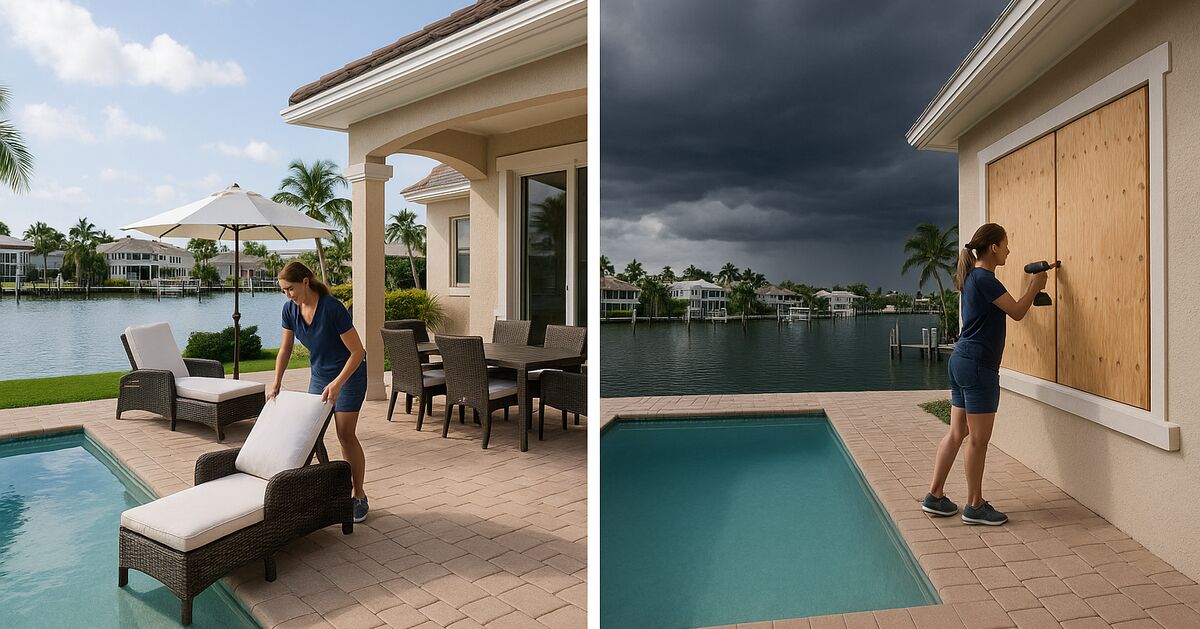
Your pool can survive a direct hurricane hit in great shape, or it can become a weeks-long recovery project - the difference usually comes down to what you did (and didn't do) in the 48 hours before the storm arrived.
Waterfront homes on Longboat Key, Siesta Key, Bird Key, and Anna Maria Island sit in some of the most storm-exposed real estate in Florida. Salt air, surge risk, and the sheer volume of debris that blows in during a serious storm make hurricane prep for a barrier-island pool different from what you'd do at an inland home in Sarasota or Bradenton. This guide walks through every meaningful step, explains the reasoning behind each one, and tells you what to expect when the cleanup begins.
Why Your Pool Needs Its Own Hurricane Plan
Most homeowners think about their roof, their windows, and their lanai furniture when a storm approaches. The pool gets an afterthought at best. That's understandable - but it's also costly. A neglected pool during hurricane season can end up with a cracked shell from pressure differentials, a burned-out pump from flood debris, a green swamp from chemistry chaos, or physical damage from furniture that became a projectile in 100-mph winds.
The good news is that pools are actually quite resilient when owners take a handful of deliberate steps ahead of time. The chemistry side of the recovery is straightforward if you understand what the storm is doing to your water. And knowing what to inspect afterward saves you from missing damage that gets worse with time.
If you're curious how routine service fits into storm readiness, our pool cleaning and maintenance services page explains the full scope of what a professional team manages week to week, including the chemistry monitoring that makes post-storm recovery much faster.
Before the Storm: What to Do (and When to Do It)
72 Hours Out - Start With Chemistry
Three days before a forecasted storm, test your water and adjust it aggressively. You want to raise your free chlorine to the high end of the normal range (around 4-5 ppm). Heavy rain will dilute your water significantly, and floodwater carries algae spores, organic debris, and contaminants that will push your chemistry in the wrong direction fast.
Also adjust your pH and alkalinity now, because once the storm hits you won't be able to add chemicals or circulate them properly. Balanced water going into the storm is far easier to bring back than water that starts out off-spec and then gets hammered with dilution and debris.
Our blog post on balancing pool chemistry in Florida heat covers the baseline targets in detail - those same targets apply here, just pushed to the higher end of the acceptable window before a storm.
48 Hours Out - Remove Everything From the Pool Area
This is the step homeowners consistently underestimate. Anything that can become airborne in high wind needs to come out of the pool enclosure (if you have one) and ideally inside the house or a locked garage.
That means:
- Pool furniture: chairs, loungers, side tables, umbrellas
- Pool toys, floats, and noodles
- Potted plants near the deck
- Skimmer baskets (remove them so they don't get sucked into the plumbing)
- Pole brushes, nets, and vacuum heads
- Any decorative items on the pool deck
A patio chair hitting 90 mph winds becomes a projectile that can crack a screen enclosure panel, shatter a lanai light fixture, or punch through a pool cage frame. On Longboat Key and Lido Key, where lanai enclosures are common and salt-air corrosion already stresses the aluminum framing, the damage compounds quickly.
Do NOT put your furniture in the pool. This is old advice that has mostly been debunked. Heavy furniture can crack or chip the pool finish, damage tiles, and it still has to come back out after the storm, often covered in debris. The pool doesn't benefit from the extra weight, and the furniture doesn't benefit from a salt-water soak.
48 Hours Out - Turn Off the Equipment (But Not Too Early)
Keep your pump running until about 12-24 hours before the storm is expected to hit your area. Circulation helps distribute the chemicals you added earlier and keeps debris from settling. But when winds begin gusting and debris starts flying, shut the system down at the breaker - not just the timer, the actual breaker.
Why at the breaker? Because if floodwater or a power surge reaches your equipment pad during the storm, you don't want the pump trying to restart automatically. A flooded pump motor that turns on will destroy itself. Turning the breaker off protects the equipment from that scenario.
Also turn off your gas heater (if you have one) at both the unit and the gas supply valve.
Should You Lower the Pool Water Level?
This question comes up constantly, and the honest answer is: a little, not a lot. Dropping the water level 6 to 12 inches is reasonable. It gives the pool room to absorb rainwater without overflowing onto the deck and potentially undermining the deck's foundation through erosion.
Do NOT drain your pool significantly before a hurricane. An empty or nearly-empty pool is at serious risk of "floating" - hydrostatic pressure from the saturated ground around it can literally push the shell upward out of the ground. This is especially real on our barrier islands, where the water table is high and the soil is sandy. A pool that pops out of the ground is a catastrophic and extremely expensive repair.
Six inches down. That's the target.
Protect Your Equipment Pad
If you have a screen enclosure, it may or may not survive the storm - that's somewhat out of your hands. But you can protect the equipment pad. Consider sandbagging around the pump, filter, and heater if surge flooding is forecast for your neighborhood. Sarasota County and Manatee County both publish surge zone maps; if you're in Zone A or B, take this step seriously.
If you have a heat pump rather than a gas heater, elevating it slightly on a platform (something that should be done at installation but often isn't) is the right long-term answer. It's worth discussing with a service professional if your equipment is at ground level.
After the Storm: Don't Rush Back In
Wait for the All-Clear
This sounds obvious, but every storm season people injure themselves returning to their property too soon. Wait for local authorities to confirm it's safe to travel in your neighborhood. On Longboat Key and Anna Maria Island especially, road conditions after a major storm can be severe - flooded causeways, downed power lines, and debris in the roads are all real hazards.
When you do get back to your property, do a visual walk-around before touching anything electrical near the pool.
The Post-Storm Inspection Checklist
Once it's safe, here's what to look at systematically:
Structural and cosmetic:
- Check the pool shell for visible cracks, especially along the waterline tile and around fittings
- Look at the deck for heaving, cracking, or separation from the coping
- Inspect the coping itself for chips or loose sections
- Check the pool cage frame (if present) for bent or broken sections
Equipment pad:
- Look for flood debris packed around or inside the equipment
- Check that all electrical connections and conduit are intact and dry before restoring power
- Look for visible damage to the pump housing, filter tank, and any automation panels
Water condition:
- Note the color of the water (green tint means algae; brown or black means heavy organic contamination)
- Check the water level - it's almost certainly higher than you left it
Our detailed post-storm pool inspection checklist goes deeper on each of these points and tells you which issues to address yourself versus which ones require a professional.
Restoring the Water First
Before you turn the equipment back on, remove large debris by hand with a net. Leaves, sticks, and anything else sitting on the bottom can get pulled into the plumbing and clog or damage the pump impeller.
Once debris is cleared and you've confirmed the equipment looks undamaged and dry, restore power at the breaker and let the pump run. Now test the water chemistry. After a Florida hurricane, you should expect:
- Elevated pH from rainwater and fresh organic material
- Depleted chlorine from oxidation demand of all that debris
- Lowered alkalinity, possibly significantly
- High phosphates from leaves and organic matter, which fuel algae growth
Shock the pool with a large dose of chlorine (a "super-chlorination") and run the pump continuously until the water clears. This may take 24-72 hours depending on how contaminated the water became.
If your pool turned fully green, don't panic - but do act quickly. Algae establish themselves fast in warm Florida water, and the longer you wait, the more chlorine and physical brushing it takes to recover. See our guide on bringing a neglected barrier-island pool back to life for a step-by-step recovery process.
When to Call a Professional
Some post-storm situations call for a professional immediately rather than a DIY recovery:
- Any visible structural crack in the shell or fittings
- Equipment that was submerged in floodwater
- Water that remains green or black after 48 hours of shocking and circulation
- A pool that has "floated" (shifted or risen from the ground)
- Any situation where you're unsure about electrical safety at the equipment pad
If you're a seasonal resident who wasn't on the island when the storm hit, having a local service team do the first post-storm inspection and chemistry recovery is especially smart. A pool that sits unattended for even a week after a hurricane can develop algae and chemistry problems that take much longer and cost more to resolve.
Our team covers pool maintenance on Longboat Key and across the barrier islands, and we do post-storm check-ins as part of our ongoing service relationships. If you're not sure whether your pool needs professional attention after a storm, our FAQ page covers many of the most common questions, and you can always get in touch directly for a straight answer.
A Note on Saltwater Pools
Saltwater pools have one additional concern during hurricane season: freshwater dilution from heavy rain can drop the salt level below the minimum threshold for the chlorine generator to function. After a storm, test your salt level before assuming your generator is producing chlorine. You may need to add salt and run the generator manually for a cycle before it returns to normal operation.
For a broader comparison of how saltwater and traditional chlorine pools each behave in our coastal environment, see our post on saltwater vs. traditional chlorine for Sarasota island pools.
Build the Habit Before Hurricane Season Peaks
The Atlantic hurricane season runs June through November, with the peak period from mid-August through mid-October. The best time to review your pool's hurricane readiness is early June - before you're watching a cone of uncertainty creep toward Sarasota on the Weather Channel.
A pre-season pool check by a professional will catch worn equipment, chemistry imbalances, and deck issues that could become bigger problems if a storm hits. It's also a good time to discuss your emergency plan with whoever services your pool, so there are no surprises about what they'll do (and what you need to do) when a storm is on the way.
Waterfront living on Florida's Gulf Coast is genuinely wonderful - and staying a step ahead of hurricane season is part of what makes it sustainable and enjoyable year after year.