
What a pool inspector looks for on Anna Maria Island that differs from an inland report
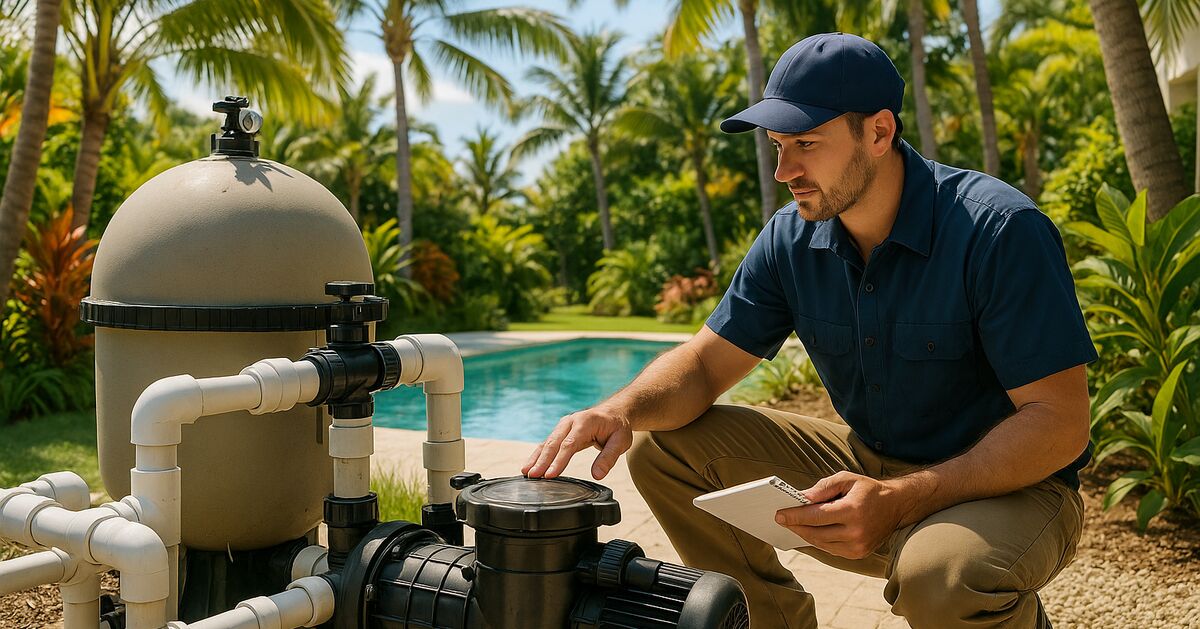
Salt air changes everything. A pool inspector walking a property on Anna Maria Island is dealing with a set of conditions that simply do not exist on an inland lot in, say, eastern Sarasota County - and a standard inspection template written for a subdivision pool in Lakeland or Orlando will leave real problems completely invisible. If you are buying, selling, or just doing due diligence on an island home, understanding what a competent coastal inspection actually covers can save you from a very expensive surprise.
Why island pools are a different animal
Pools on Anna Maria Island, and across the barrier islands generally, sit in a genuinely hostile environment. The Gulf of Mexico is a few hundred yards away at most. Salt-laden air drifts across every surface every single day. The soil beneath the pool shell is a mix of sand and fill that shifts with rainfall, tidal fluctuation, and storm surge. Groundwater levels on a barrier island can be surprisingly high and change with the season. None of these factors show up on a generic inspection checklist designed for a concrete-slab suburban home.
An inspector who works inland regularly may be perfectly competent at spotting a worn O-ring or a cracked light niche. But spotting the early signs of shell movement caused by hydrostatic pressure, or identifying the specific corrosion pattern that salt air creates on a heat pump versus a gas heater, requires familiarity with coastal conditions specifically. The difference between those two inspection reports can be tens of thousands of dollars in deferred costs that never made it into your offer.
Our post on why a pre-purchase pool inspection on Siesta Key or Bird Key can uncover costs that change your offer goes into the financial side of this in detail. What we want to focus on here is the actual physical checklist - what a thorough inspector should be looking at on an island property that simply would not appear in a standard inland report.
The shell and its relationship with the ground beneath it
Inland pools generally sit on stable, compacted soil. Island pools sit on sand, often fill sand brought in during original construction, and that sand behaves differently over time. It migrates. It compresses unevenly. It can be washed out partially by storm water moving under the deck.
A coastal inspector should look closely at the pool shell for:
- Pattern cracking versus settlement cracking. Shrinkage cracks in plaster are cosmetic. Cracks that follow a diagonal line from a corner, or that appear at the transition between the floor and the wall, suggest movement in the shell itself. That is a structural conversation, not a resurfacing conversation.
- Hydrostatic relief valve condition. Most pools have a hydrostatic relief valve at the main drain to allow groundwater pressure to equalize when the pool is drained. On Anna Maria Island, where the water table can be quite shallow, this valve does real work. An inspector should confirm it is present, accessible, and functional - not just note its existence.
- Deck separation at the bond beam. If the deck has pulled away from the pool's top edge, even by a small amount, that gap is evidence that either the deck or the shell has moved. On sand-based lots, deck settlement is common and often benign, but the inspector needs to determine whether the pool moved, the deck moved, or both.
- Hollow spots under the deck. A competent inspector will walk the deck and listen. A hollow sound underfoot means the sand beneath has migrated and left a void. Voids lead to slab cracking and eventually to deck collapse into the void. This is common on island properties after significant rain events or storm surge.
The related conversation about what groundwater movement does to pool plumbing specifically is covered in depth in our post on what shifting groundwater does to your pool plumbing on Longboat Key - the same dynamics apply across all the barrier islands, including Anna Maria.
Equipment corrosion: the coastal standard versus the inland standard
This is the category where an inland inspection report most consistently undersells the problem. An inspector working on an Anna Maria Island property needs to evaluate every piece of equipment not just for function, but for the stage of salt-air corrosion it has reached.
Salt air is a fine mist of sodium chloride that settles on every metal surface. On a Bradenton property five miles from the water, equipment might show surface rust after a decade. On a pool sitting 200 feet from the Gulf on the west end of Anna Maria, the same equipment can show significant corrosion in three to four years without proper protection.
Here is what a coastal-specific equipment inspection should cover:
- Pump motor housing and wiring conduit. The housing itself corrodes, but so does the conduit connecting the motor to the electrical panel. Inspectors should look for green or white oxidation on copper wiring where conduit has cracked or separated, not just at the motor housing.
- Heat pump evaporator coils. Heat pumps extract warmth from ambient air by pulling it across an aluminum fin coil. Those fins are extremely vulnerable to salt air. A heat pump on an island property that looks functional may have 30 or 40 percent of its fin surface corroded to the point where efficiency is severely degraded. This does not throw an error code - it just runs longer and costs more to operate. An inland inspector rarely looks at fin condition as a specific line item.
- Gas heater components. If the property has a gas heater, the inspector should look at the burner tray, the heat exchanger, and the cabinet seams. Salt air penetrates cabinet gaps and corrodes the heat exchanger from the outside while combustion gases corrode it from the inside. The result is a heater that looks intact but is a year or two from failure.
- Control board and automation housing. Automation systems on island pools are exposed to the same salt air and humidity. Corrosion on control board terminals causes intermittent failures that are maddening to diagnose. An inspector should open the control panel housing and look at terminal condition, not just confirm that the system powers on.
- Filter housing and valve bodies. Multiport valves on sand filters and the housing itself can corrode at threads and fittings even when the interior is perfectly fine. An inspector should check every union fitting and valve handle for brittleness and corrosion at connection points.
Our overview of pool cleaning and maintenance services gives a sense of what ongoing coastal equipment care looks like - which is a useful frame for understanding how quickly things deteriorate without it.
The salt air timeline: understanding equipment age differently
One of the most important things an inspector does on an island property is interpret equipment age in coastal terms. A pump that is five years old on a Sarasota inland property is middle-aged. A pump that is five years old on the west side of Anna Maria Island, without any corrosion inhibitor applied to the housing, may already be showing late-stage housing corrosion.
This means the inspector should be asking not just "how old is this equipment?" but "has this equipment been maintained for a coastal environment?" A pump that is three years old but has never had an anti-corrosion spray applied and sits in a non-ventilated equipment pad against a west-facing wall may be in worse condition than a six-year-old pump that received quarterly attention.
Questions an inspector should try to answer:
- Is there evidence of regular, professional maintenance (service logs, clean equipment pads, sealed conduit)?
- Is the equipment pad covered or enclosed, and is there ventilation?
- Is the equipment oriented to minimize direct salt air exposure?
- Has any anti-corrosion coating been applied to metal surfaces?
Plumbing and underground lines
On inland properties, underground plumbing is fairly stable. The soil does not move much, and inspectors can focus mainly on visible fittings and return jets for evidence of leaks.
On Anna Maria Island, the situation is different. The sand-and-fill substrate shifts. Underground plumbing can develop stress cracks at joints when sections of pipe move relative to each other. This does not always present as an obvious visible leak - it may show up only as unexplained water loss, or it may be dormant until the ground shifts further.
A thorough island inspection should include:
- A pressure test of the plumbing lines where practical, or at least a careful evaluation of water-loss history if the current owner can provide it.
- Visual inspection of every visible fitting and return jet for crystalline calcium deposits, which indicate water has been seeping past a fitting and evaporating.
- Inspection of the main drain area for evidence of movement or offset in the drain body.
Water loss on an island property is a topic worth understanding carefully. Our post on draining and refilling your Longboat Key pool touches on the groundwater dynamics that make pool water management on the barrier islands fundamentally different from an inland pool.
The finish and waterline tile
The pool finish on an island property takes on chemical stress from two directions. From inside, the water chemistry is harder to manage because of the ambient conditions - humidity, heat, and the effect of salt air on evaporation rates all affect the chemistry balance. From outside, the area above the waterline is exposed to salt air that accelerates calcium scaling and etching.
An inspector evaluating the finish on an Anna Maria Island pool should:
- Look at the tile line carefully for calcium scale buildup, which on barrier islands often forms faster than the owner expects.
- Distinguish between surface etching (a chemistry problem that has been present for a while) and delamination or hollow spots in the plaster (a structural finish problem).
- Identify any staining by color and location, since different stains indicate different problems. Our detailed breakdown of pool tile and waterline stains and what each color is telling you is the best reference for this specifically.
- Note the age of the finish and evaluate it in coastal terms - a ten-year-old plaster finish on an island property is almost certainly at or past end of life, whereas inland that same finish might have several years left.
Screen enclosures and their structural condition
Many Anna Maria Island pools have screen enclosures, and the enclosure is part of the pool system in a meaningful way. Screen enclosures are subjected to wind loading from Gulf storms that inland structures simply never experience. An inspector should assess:
- Frame condition at the base, where salt air and ground moisture attack the aluminum.
- Screen tension and any torn panels that would allow debris and organic material into the pool.
- Attachment to the main structure of the home, particularly if the enclosure connects to the home's soffit or fascia.
- Evidence of previous storm damage repair, which can leave the structure weaker than it appears.
A compromised screen enclosure is not just a cosmetic problem. As our post on why your pool screen enclosure matters for water chemistry explains, the enclosure has a direct effect on how stable your water chemistry is over time.
What to ask for after the inspection
Once an inspection is complete on an island property, the written report should reflect coastal-specific findings, not just a pass/fail for each component. Specifically, you want to see:
- A remaining service life estimate for each major piece of equipment, in coastal terms.
- A clear distinction between cosmetic findings and structural or functional findings.
- Specific notes on any evidence of shell movement or deck voiding.
- A recommendation on whether a plumbing pressure test is warranted if the inspector could not perform one directly.
- Notes on the corrosion stage of all metal equipment with photos.
If the report you receive does not address these items, the inspector may have used an inland template and simply applied it to an island property. That is a meaningful gap.
For homeowners across Anna Maria Island, Longboat Key, Lido Key, and the broader barrier island service area, understanding what a proper coastal inspection looks like is the first step toward knowing whether you are getting one. If you have questions about what you have found in a report, or if you want a professional eye on a pool before or after a purchase, our team is happy to help - just get in touch and we can talk through what you are looking at.