
Draining and refilling your Longboat Key pool: what you
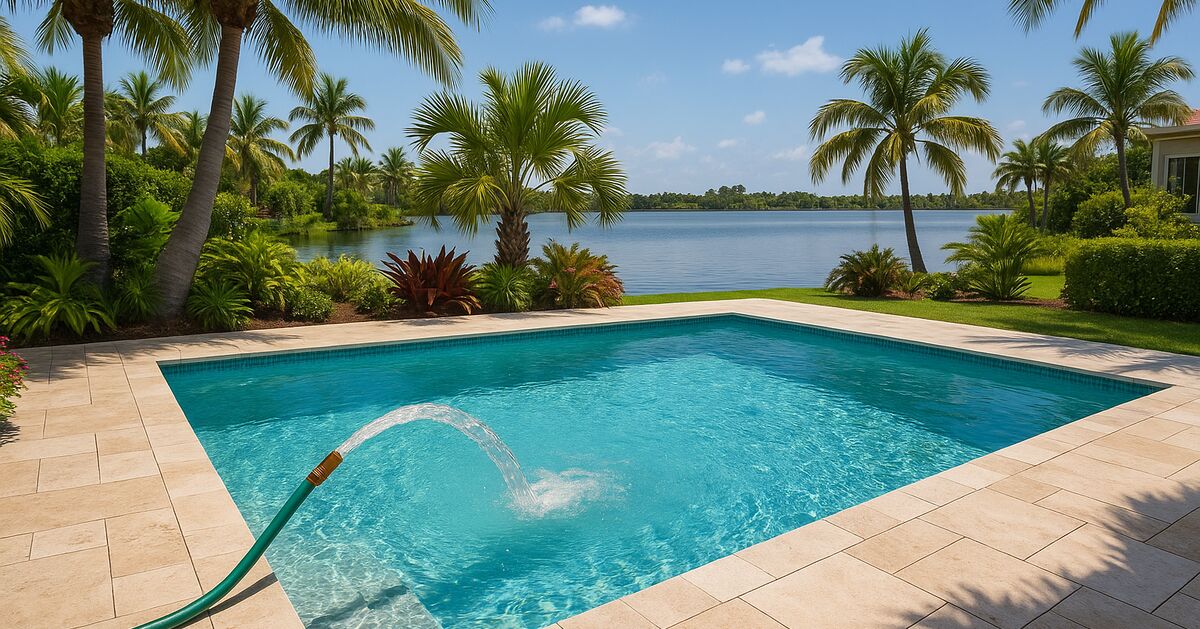
Draining a pool sounds like a routine chore until the shell pops out of the ground, the surface cracks, or you end up paying for emergency repairs that cost more than a year of weekly service. On Longboat Key and the surrounding barrier islands, the decision to drain and refill carries a few extra layers of risk that mainland homeowners simply don't face. This guide walks through every part of that decision so you can make it with confidence.
Why you would ever need to drain a pool in the first place
Most of the time, proper chemistry keeps a pool healthy without touching the water level. But there are real situations where a partial or full drain is the right call.
Total dissolved solids (TDS) are too high. Every time water evaporates, the minerals and chemicals it carried stay behind. Over years, this builds up as total dissolved solids. When TDS climbs past roughly 1,500 to 2,000 parts per million above your fill-water baseline, chemicals stop working efficiently. You add shock and the water barely responds. You balance the pH and it drifts back within hours. That is TDS talking, and the only cure is dilution or a full replacement.
Cyanuric acid (stabilizer) has accumulated. Cyanuric acid (CYA) protects chlorine from UV breakdown, which is genuinely useful here in Southwest Florida. The problem is it never leaves the water on its own. If a pool has been dosed with stabilizer or trichlor tabs for several seasons without dilution, CYA can climb to 100 ppm or beyond. At that point it actually locks up your chlorine and makes it functionally useless. Draining is the only practical fix because there is no chemical that removes CYA reliably.
Calcium hardness is out of control. Our local fill water tends to be fairly hard to begin with. Combine that with years of evaporation and top-offs and calcium hardness can scale well past 600 ppm. You will see it as white chalky deposits on tile, equipment, and surfaces. A partial drain and refill with softer water brings this back into range. Sometimes a full drain and an acid wash of the shell is warranted if the scale has etched into the plaster.
The surface needs resurfacing or repair. If your plaster, pebble, or quartz finish has reached the end of its life, the pool has to come down to empty. The same is true for major structural crack repairs. This is a planned event, not an emergency, and the timing can be chosen carefully.
A severe algae infestation that won't respond to treatment. Occasionally a pool gets so far gone that the chemical cost of restoring it approaches or exceeds the cost of draining, cleaning, and refilling. This is less common than people think, but it does happen with pools that have been neglected for a season or more.
When draining is NOT the answer
A lot of homeowners reach for "just drain it" when the real problem is something else entirely. Cloudy water, green tinges, and stubborn chemistry imbalances are almost always correctable without draining if you catch them early. Draining wastes thousands of gallons of water, temporarily takes your pool out of service, and introduces all the structural risks covered below. Before you decide to drain, it is worth having a professional test your water and walk through whether a chemical correction is possible. You can read more about our approach to pool maintenance and why regular water testing catches most of these problems long before they require a drain.
The structural risk that catches people off guard: hydrostatic pressure
This is the big one on Longboat Key, Lido Key, Siesta Key, and really any barrier island along this stretch of the coast.
An empty pool shell is basically a bowl sitting in the ground. What keeps it from floating upward or cracking is the weight of the water inside pressing outward and downward. When that water is gone, the surrounding soil takes over. In a high-water-table environment like a barrier island, the soil is often saturated. The pressure pushing inward and upward on an empty shell can be enormous.
The result is called "pool pop" or hydrostatic uplift. The entire shell lifts up out of the ground, sometimes by inches, sometimes by a foot or more. It is not subtle and it is not cheap to fix. Plumbing connections shear, the shell itself can crack through, and the deck surrounding the pool often buckles and heaves. Repairs easily run into five figures.
This is not a fringe scenario. It happens on the barrier islands every few years to someone who drained their pool without accounting for the water table or during a wet period. The sandy, low-lying soil on Longboat Key, Anna Maria Island, and Bird Key holds groundwater close to the surface for much of the year.
Most inground pools have hydrostatic relief valves at the bottom of the deep end. These small valves are designed to open when groundwater pressure gets high enough, letting water into the pool rather than allowing the shell to pop. The problem is these valves are often corroded, stuck, or simply unknown to the current homeowner. You cannot assume yours is functional without testing it.
Why coastal timing matters more than you might think
On Longboat Key and the surrounding keys, there is a tight seasonal window when draining is genuinely safer.
Rainy season runs roughly June through September. During those months the water table is as high as it gets. Draining during rainy season dramatically increases hydrostatic risk. Even a brief partial drain carries more danger in July than it does in March. Heavy afternoon thunderstorms can raise the local water table measurably within a day.
The safest window is generally November through April. The dry season lowers the water table, reduces the risk of sudden rainfall during the drain-and-refill, and keeps temperatures moderate enough that an empty white shell sitting in the sun does not heat to extreme temperatures and stress the surface finish.
Sun exposure matters for the surface. An empty pool shell, especially one with a light plaster or quartz finish, left empty in the Florida sun will dry and crack faster than most people expect. The rule of thumb among pool professionals is to minimize the time the shell is empty and to keep the process moving from drain to refill without unnecessary delays. Overnight empties in summer are especially risky.
Fill water temperature and chemistry vary by season too. Fresh fill water in winter can be slightly harder or softer depending on municipal supply fluctuations. Testing your fill water before you finalize your chemistry targets after a refill is a step that saves guesswork later.
What a proper drain-and-refill actually involves
If the decision is made and the timing is right, here is what the process should look like:
- Test the water first. Confirm what you are dealing with, whether it is TDS, CYA, calcium, or something else. This tells you whether a full drain is needed or whether a partial dilution will get you there.
- Check the hydrostatic relief valves. A professional should verify they are free and functional before the pump-down begins.
- Pump down continuously and quickly. The goal is to minimize the time the shell is at risk. Stopping halfway and leaving the pool partially drained for days is one of the worst things you can do.
- Inspect the shell while it is accessible. With the water out, any plaster cracks, delamination, surface etching, or plumbing issues at the fittings become visible. This is a good time to document them and decide whether a surface repair or acid wash makes sense before you refill.
- Acid wash only if needed. An acid wash strips a thin layer of the plaster surface to remove staining and calcium scale. It should not be done routinely because each wash removes material and shortens the life of the finish. If the surface is generally sound and just discolored, an enzyme treatment or stain remover may achieve a similar result without the wear.
- Refill promptly and begin chemistry immediately. Fresh water sitting in an empty shell with no circulation and no chemistry is vulnerable to early algae colonization, especially in warm weather. Get the pump running and begin balancing as soon as there is enough water to circulate safely.
- Do not run the pump dry. Most pool pumps should not run until the water level is above the skimmer inlet and pump is primed. Running a dry pump damages the seal and impeller quickly.
How much water does a refill actually use?
A typical residential pool in this area holds between 15,000 and 30,000 gallons depending on size and depth. A full drain and refill at those volumes is a meaningful water use event. Many communities in Sarasota County have landscape irrigation restrictions but residential pool refills are generally treated differently. Still, it is worth checking your local utility if you are on a metered connection, because the bill will reflect it. Partial drains of 20 to 30 percent of the pool volume are often enough to address TDS and calcium issues, using a fraction of the water and cutting structural risk significantly.
How often does a well-maintained pool actually need to be drained?
For a pool that gets consistent, professional maintenance, a full drain is needed roughly every five to seven years under normal conditions. Some pools go longer. The key factors are how heavily the pool is used, whether it is on a salt chlorine generator or traditional chlorine, and the quality of the fill water.
Pools that rely heavily on stabilized chlorine tablets (trichlor pucks) accumulate CYA faster than pools using liquid chlorine or salt systems, because every trichlor tablet contains both chlorine and stabilizer. If your service uses tabs as the primary chlorine source, expect to deal with rising CYA sooner. Switching the chlorination method can extend time between drains meaningfully.
Regular water testing is the best early-warning system. A professional testing your water every week or every visit catches TDS and CYA trends before they require emergency intervention. If you are curious about what that service looks like in practice, our pool cleaning and maintenance services page explains what we check at each visit.
For homeowners on Longboat Key or Lido Key with pools that see heavy rental use, the chemistry cycles faster because of the higher bather load. More people, more sunscreen, more organic contamination, more demand on your chlorine. That does not necessarily mean more frequent drains, but it does mean you need eyes on your water chemistry more often. Our post on keeping your pool safe and ready for rental guests all season long covers the rental-specific chemistry demands in detail.
What about partial drains versus full drains?
A partial drain is exactly what it sounds like: you pump down to half or one-third of the pool volume, refill with fresh water, and let the dilution do the work. This is appropriate when:
- CYA is elevated but not extreme (60 to 90 ppm range)
- Calcium hardness is high but TDS is not completely off the charts
- You want to reduce mineral buildup without taking on the full risk and cost of a complete drain
The math works in your favor more often than people realize. Dropping to half-volume and refilling roughly halves your TDS, CYA, and calcium readings in one step. Sometimes a second partial drain a few weeks later finishes the job. The structural risk is lower because you still have water weight in the shell.
The tradeoff is that a partial drain does not give you access to the shell for inspection or resurfacing. If the surface needs work, a full drain is unavoidable.
What to do if you are not sure
The honest answer is: have a professional test your water and look at the pool before committing to anything. The combination of your test results and a visual inspection of the shell, equipment, and tile will tell you whether a drain is actually needed, what kind of drain makes sense, and when the safest timing window is given where we are in the year.
If you are on any of the barrier islands, including Siesta Key, Bird Key, or Anna Maria Island, the water table question is not optional consideration, it is the first thing a good pool professional should be thinking about before the pump-down starts.
Our team covers all of these areas and understands the specific soil and drainage conditions on each key. You can get in touch with us to schedule a water test or a site visit before you make any decisions. And if you want to understand more about how the chemistry in your local water affects your pool's long-term health, our post on why your Longboat Key pool burns through chemicals so fast is a good companion read to this one.
A pool drain done right, at the right time, for the right reason, is a completely manageable event. A pool drain done wrong is a very expensive lesson. The barrier-island environment makes timing and preparation more important here than almost anywhere else in Florida, which is why it is worth getting the decision right before you pull the plug.