
How to keep your pool safe and ready for rental guests all
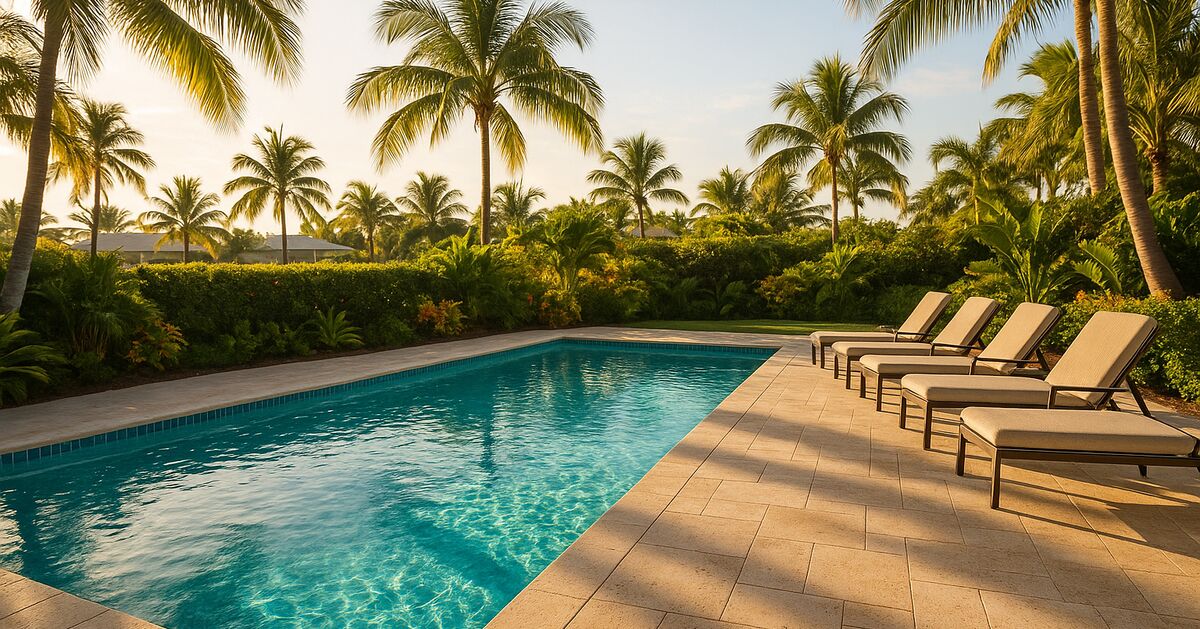
Every rental guest expects to slide into a sparkling, safe pool within hours of dropping their luggage. What they don't see is the work that makes that possible when a different family was swimming in that same water just two or three days earlier.
Managing a vacation rental pool on Longboat Key, Lido Key, Siesta Key, or any of the barrier islands is genuinely different from managing a pool used by one household. The bather load swings wildly from week to week. Sunscreen, body oils, and hair products pile into the water in concentrated bursts. Equipment takes a beating from near-constant use. And because you may not be on the island yourself, a problem that would take you five minutes to spot can quietly grow for days before anyone notices.
This post is a practical guide to the systems, habits, and service schedules that keep a rental pool consistently safe and guest-ready all season.
Why rental pools are harder on water chemistry than you think
A residential pool used by the same family settles into a rhythm. The bather load is predictable, the chemistry swings are manageable, and small corrections happen before anything gets out of hand.
A rental pool does not have that rhythm. A party of eight checks in on Saturday, uses the pool heavily all week, and checks out Friday. A family of three arrives Saturday afternoon, barely swims, and leaves Sunday. The next group is twelve adults celebrating a milestone birthday. Each of those scenarios places a completely different demand on your water chemistry.
The biggest invisible stressor is combined chloramines. When chlorine reacts with the nitrogen compounds that come from sweat, sunscreen, and body oils, it forms chloramines rather than destroying contaminants. Chloramines give pool water that sharp chemical smell people often mistake for "too much chlorine." In reality, it means the free chlorine that actually sanitizes the water has been used up faster than it is being replaced. Guests in a pool with depleted free chlorine are not swimming in properly sanitized water, even if the water looks clear.
High bather loads also drive pH upward quickly. As pH rises, chlorine becomes dramatically less effective. At a pH of 7.8, chlorine is only about half as effective as it is at 7.4. At 8.0, you have lost roughly 80 percent of your sanitizing power. Add in the Gulf Coast heat that accelerates chemical reactions, and the window between "fine" and "problem" gets very short.
The practical takeaway: a rental pool needs chemistry checks more frequently than a private pool, and it needs a service visit timed around turnover, not just around the calendar.
Build your service schedule around checkout and check-in days
The single most impactful change a rental owner can make is to schedule professional pool service on or just after checkout day, not on a fixed day of the week that may fall mid-stay when the water is at peak bather load.
Here is why the timing matters. If guests check out on Saturday and new guests arrive Saturday afternoon, a service visit on the following Tuesday means new guests have already been swimming in water that was not properly adjusted after the previous group left. Flip that around: a service visit on Saturday morning (or late Friday when checkout is Saturday) means every incoming group starts with freshly balanced, properly sanitized water.
Work with your property manager or rental platform to share your turnover calendar with your pool service provider. A good local service company will build that schedule into their routing. Our pool cleaning and maintenance services are set up exactly this way for owners across the islands.
If you manage multiple rental weeks back to back through peak season, from roughly December through April on Longboat Key and through the summer on the Gulf-side beaches, you may want service twice per week rather than once. The cost is far lower than the damage a single bad review about a green or cloudy pool can do to your rental calendar.
The pre-arrival checklist every rental pool owner should use
Beyond chemistry, there is a physical checklist worth running through before every guest arrival. You can do this yourself on properties you visit between stays, or build it into your pool service contract.
Water appearance and clarity The water should be visually clear to the bottom of the deep end. If you can see the main drain clearly, you are in good shape. Hazy or tinted water needs investigation before guests arrive. Our post on cloudy pool water on the barrier islands: causes and fixes covers the most common culprits in detail.
Water level The water line should sit at the midpoint of the tile or skimmer opening. Too low and the pump runs dry; too high and the skimmer loses suction. On barrier-island properties, evaporation and splash-out from active use can drop the level faster than owners expect. If you notice the level dropping more than expected, it's worth reading about why your pool may be losing water before assuming it's just evaporation.
Skimmer and pump baskets These should be emptied and rinsed. A full skimmer basket is one of the most common causes of poor circulation, and poor circulation is one of the fastest paths to water quality problems.
Pool deck and surrounds Check for broken or lifted deck tiles, sharp edges, slippery surfaces that need to be addressed, or furniture that has fallen into the pool area. Guests unfamiliar with the property move around it quickly and confidently. A trip hazard you would notice in your own yard is easy to miss when you are excited about a vacation.
Safety equipment Every rental pool should have a reaching pole and ring buoy accessible at the pool deck, not locked in a storage room. Confirm they are present, visible, and functional before each arrival. In Florida, specific barrier and safety requirements apply to residential pools that are rented out. Confirm your property is compliant with local codes.
Equipment operation Run through the equipment pad. Is the pump running without unusual noise? Is the filter pressure within normal range? Is the heater (if you have one) responding correctly? Unusual noises from a pump or a filter pressure that has crept up from its normal baseline are early signs of a problem worth addressing before guests arrive rather than after.
Guest communication reduces chemistry disasters
A surprising amount of water chemistry trouble comes not from neglect but from well-meaning guests who do not know the rules. A short, friendly pool guide left at the property can prevent a lot of headaches.
A few things worth including:
- Shower before swimming. This is not just a courtesy request. Showering before getting in the pool removes the sunscreen, body oils, and sweat that burn through your chlorine. Even a quick rinse makes a real difference with multiple swimmers.
- No glass in the pool area. This protects feet and protects you from liability.
- Don't add anything to the pool. Well-intentioned guests occasionally add pool chemicals they bring from home or find in a cabinet. A guest adding the wrong chemical, or the right chemical in the wrong quantity, can throw your chemistry off in ways that take more than one service visit to correct.
- Report any issues. Give guests a direct contact number for pool problems. A guest who notices the water looking off on day two of a week-long stay should have a way to report it that actually gets addressed.
What to watch for when something goes wrong mid-stay
Even with the best preparation, problems happen. Here are the most common mid-stay issues on rental properties and what they usually mean.
Water turns cloudy or hazy. Usually a chemistry imbalance, often driven by high bather load depleting chlorine or pH drifting upward. It can also be a filtration issue. It needs attention within 24 to 48 hours because a truly cloudy pool is a safety risk, not just an aesthetic one. You cannot see a child in distress at the bottom of a cloudy pool.
Water takes on a green tint. This is algae beginning to establish itself. It can develop very quickly in Gulf Coast heat, particularly after a period of rain dilutes chemistry or heavy use depletes sanitizer. Do not wait on this one.
Strong chemical smell. As covered above, this usually means combined chloramines and depleted free chlorine, not excess chlorine. Shocking the pool breaks up the chloramines and restores free chlorine levels.
Equipment making new sounds. A pump that starts rattling, grinding, or cycling on and off unexpectedly is asking for attention. Catching equipment issues early is almost always cheaper than dealing with a failure mid-season. Our post on how to know when coastal pool equipment needs replacing gives a clear picture of what early warning signs look like.
The case for weekly professional service on rental properties
Some owners try to manage rental pool chemistry themselves with test kits and a weekly supply of chemicals. For a lightly used residential pool, that can work reasonably well. For a rental property with rotating guests through peak season, the margin for error is slim enough that professional service typically pays for itself.
A professional service visit does more than adjust chemicals. An experienced technician notices the pump basket that is getting harder to seat, the O-ring on the filter that is starting to dry out, the slow drop in water level that might be worth investigating. Those small observations, caught early, prevent the expensive failures and the bad reviews.
Owners across Longboat Key, Lido Key, Siesta Key, and Anna Maria Island running active rental programs tend to settle on weekly service as their baseline during peak season, stepping up to twice weekly during the heaviest rental stretches. If you are unsure what frequency makes sense for your property, our FAQ page covers some common questions, and we are always happy to talk through your specific situation via the contact page.
End-of-season and shoulder-season considerations
Longboat Key rental seasons have two distinct peaks: the winter snowbird season that runs roughly December through April, and the summer family season through July and August. In between, many properties see lighter use but are rarely truly idle.
In the shoulder months, it can be tempting to drop service frequency to save money. The risk is that a pool sitting with reduced chemistry monitoring through the rainy season, typically June through September on the Gulf Coast, is a pool that can develop algae and chemistry problems faster than at any other time of year. The combination of rain diluting the water, warm temperatures accelerating growth, and less bather-driven chemical consumption creating a false sense of stability makes the rainy season quietly dangerous for pool water quality.
At the end of each rental season, a more thorough service visit is worthwhile: brushing walls and floor, checking all equipment carefully, inspecting the pool shell for any developing cracks or surface issues, and ensuring the chemistry is well balanced before the pool sits for any period with reduced supervision.
Protecting your investment and your guests
A vacation rental pool is a significant part of what guests are paying for in a barrier-island property. They chose your home partly because of that pool. When it is clean, clear, and properly maintained, it earns five-star reviews and repeat bookings. When it is not, the reviews reflect that very directly.
Keeping it in that first category through a full season of turnover is not complicated, but it does require a consistent system: turnover-timed service visits, a pre-arrival checklist, clear guest communication, and a service relationship with someone who knows your equipment and can catch problems early.
If you are looking for pool cleaning and maintenance on Longboat Key and the surrounding islands, we are glad to talk through what a service plan for your rental property would look like. The goal is simple: every guest arrives to a pool that is ready for them.