
Why a pre-purchase pool inspection on Siesta Key or Bird Key can uncover costs that change your offer
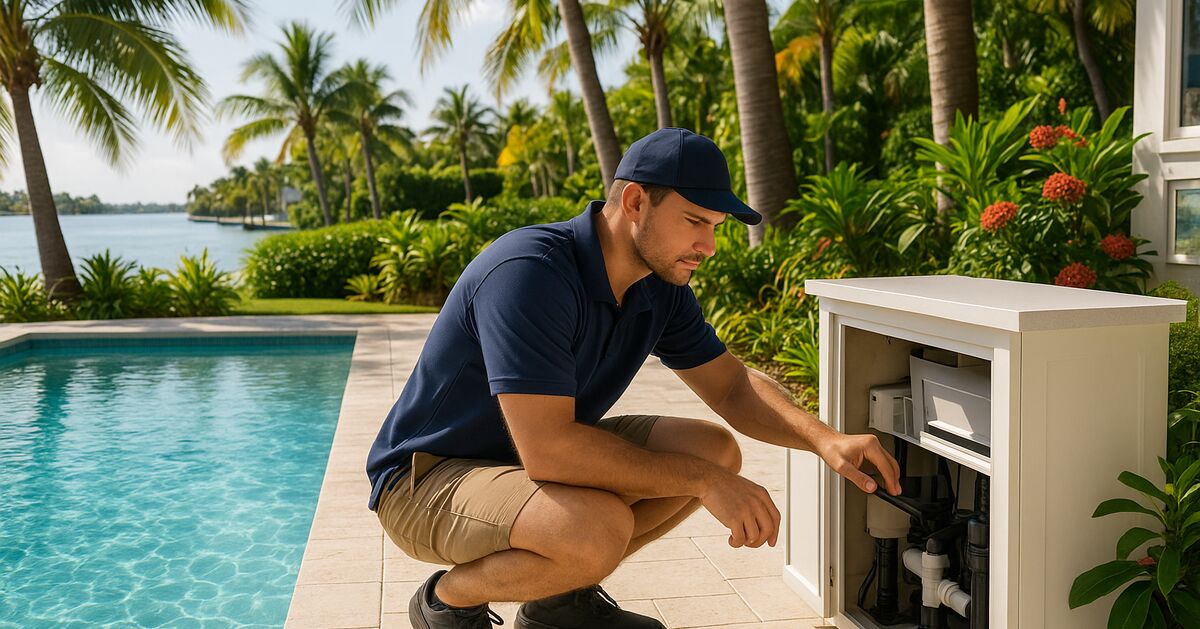
Skipping the pool inspection when you buy a barrier-island home is one of the most expensive mistakes a buyer can make, and it happens more often than you'd think.
A standard home inspection covers the house. The pool might get a quick visual scan, a note about the pump running, and that's roughly it. What it almost never covers is whether the equipment is at the end of its service life, whether there's a slow structural leak in the shell, whether the salt air has already eaten through the motor housing, or whether the water chemistry has been so chronically mismanaged that the plaster is pitting from the inside. On Siesta Key and Bird Key, where saltwater air, sandy soil, intense UV, and heavy seasonal rental use combine, every one of those problems is genuinely common. Knowing about them before you close can change your offer price, your repair budget, or your decision to walk away entirely.
What a home inspection actually covers (and what it misses)
A licensed home inspector is trained to look at the house. Most are not pool specialists. When they examine a pool, they typically confirm that the pump turns on, the water isn't green, and there are no obvious cracks in the deck. That's a reasonable place to start, but it leaves out a long list of things that determine whether the pool is a functional asset or a deferred maintenance project waiting to happen.
Here's what a general home inspection routinely misses:
- The remaining lifespan of the pump, filter, and heater
- Whether variable-speed pump programming is correct and efficient
- Evidence of a slow plumbing leak, either at fittings or in the underground lines
- The condition of the interior finish (plaster, pebble, or tile) and whether it needs resurfacing soon
- Salt cell condition if the pool is a saltwater system
- Automation system functionality and whether it's communicating correctly with equipment
- Water chemistry history and whether chronic imbalance has caused cumulative damage
- The state of the pool screen enclosure structure and screen material
- Deck and coping separation that may indicate soil movement or root intrusion below
None of these are exotic findings. They show up regularly on pre-purchase inspections in this area, and each one carries a real dollar figure.
Why the barrier islands are harder on pools than most places
If you're buying on Siesta Key, Bird Key, or anywhere else in our service area, you're dealing with a coastal environment that accelerates wear in ways that inland Florida doesn't.
Salt air off the Gulf is corrosive. It attacks pump motors, electrical connections, heater heat exchangers, and any exposed metal component at a faster rate than you'd see just a few miles inland. A pool heater that might last twelve years in an Orlando backyard might need replacement in seven to nine years on Longboat Key or Anna Maria Island. A pump motor that looks clean from the outside can have corroded windings inside.
Sandy, shell-rich soil on the keys also shifts more than stable inland soil. That movement can cause underground plumbing joints to separate gradually, creating leaks that lose thousands of gallons a month without ever producing a visible wet spot. It can also cause deck coping to separate from the bond beam, which looks cosmetic but can allow water to migrate under the deck and undermine the shell.
Seasonal rental use is another factor. Homes on Siesta Key and Bird Key are often rented heavily during peak season, meaning the pool may see far more bather load and chemical demand than a primary residence pool. High bather loads burn through sanitizer quickly, can push phosphate levels up, and put physical stress on covers, steps, and returns. A pool that was rented for twenty weeks a year for five years has more wear on it than its calendar age suggests.
What a dedicated pool inspection actually looks at
A proper pre-purchase pool inspection goes well beyond confirming the pump turns on. Here's what a thorough evaluation covers.
Equipment condition and estimated remaining life
The pump, filter, heater, automation system, salt cell (if applicable), and all associated valves and actuators get examined individually. The inspector notes not just whether each component works today, but what condition it's in and how long it's likely to last. That distinction matters enormously. A pump that runs fine right now but is running hot, showing corrosion on the housing, and drawing high amperage may have eighteen months left. Knowing that before you close lets you negotiate.
Leak detection assessment
A good pool inspection includes a bucket test or similar assessment to determine whether the pool is losing water beyond normal evaporation. In our climate, evaporation alone can account for a quarter inch or more per day in summer. Anything beyond that warrants further investigation. If there's reason to suspect a plumbing leak, a pressure test of the lines can isolate where the problem is. Underground plumbing repairs are not inexpensive, and knowing about them before closing is far better than discovering them in month three of ownership.
Interior finish condition
The plaster, pebble, or tile finish on the pool shell has a finite lifespan, typically ten to fifteen years for standard plaster under good maintenance, longer for pebble finishes. Chronic water chemistry imbalance shortens that lifespan significantly. An inspector who knows what to look for can spot early etching, calcium scaling, surface pitting, and delamination. Resurfacing a pool in this area is a meaningful expense, and if the finish is two or three years from needing replacement, that's a negotiating point.
Electrical and safety systems
GFCI protection at pool equipment, bonding of the pool shell and metal components, and the condition of underwater lighting are all safety items that should be verified. Substandard bonding is a genuine safety hazard, not just a code issue. Older homes on Bird Key and Siesta Key may have pool electrical systems that predate current code requirements.
Deck and coping
Coping separation, deck cracking, and the condition of the waterline tile often signal what's happening at and below the bond beam. A few hairline cracks in a concrete deck may be cosmetic. Wide cracks, settled sections, or coping that has lifted away from the shell can indicate deeper structural movement. Your pool deck and coping can tell you a lot if you know how to read the signs.
Water chemistry and equipment settings
Running a full water chemistry test is part of a thorough inspection. Extremely high calcium hardness, elevated cyanuric acid, or evidence of chronic low pH can each point to maintenance habits that may have done cumulative damage. In our area, calcium hardness is a particular challenge given the mineral content of Gulf-influenced water. If the calcium is very high and the interior finish is already showing scale, that combination tells a story.
What findings typically cost, and how they affect your offer
Here's where a pre-purchase pool inspection becomes a financial tool rather than just a due-diligence checkbox.
Common findings and their rough implications:
- Pump replacement: Variable-speed pumps for a residential pool typically run several hundred to over a thousand dollars installed. If the pump is at end of life, that's a straightforward negotiation point.
- Heater replacement: Pool heaters in a coastal environment have a shorter effective life. Replacement costs vary by heater type (gas vs. heat pump) and pool size, but it's a meaningful number either way.
- Plumbing leak repair: A minor fitting repair is modest. Underground pipe repair that requires excavation is considerably more. Knowing which you're dealing with matters.
- Pool resurfacing: Depending on the finish type and pool size, resurfacing can range from a few thousand dollars for basic plaster to significantly more for premium pebble finishes.
- Screen enclosure repair or replacement: Screen material degrades in UV and salt air. Frame corrosion is common on older enclosures. A full enclosure replacement on a larger pool deck can be a substantial project.
- Electrical remediation: Bonding corrections, GFCI upgrades, or new underwater light fixtures add up, especially if the system is significantly out of current compliance.
The point is not that any one of these findings should kill a deal. The point is that you deserve to know what you're buying. A pool that needs a new pump, a heater, and a resurface in the next two to three years is a different asset than a pool that was just resurfaced and has new equipment. The asking price should reflect the difference, and it rarely does unless a buyer has an inspection to back up the conversation.
How to arrange a pre-purchase pool inspection
Your real estate agent can request that the seller allow pool access during the inspection window. Many buyers schedule a home inspector and a pool specialist on the same day to minimize the number of access requests. The cost of a dedicated pool inspection is modest relative to what it can uncover.
When choosing who does your pool inspection, look for someone who actually services pools in the area day to day, not just a generalist who checks boxes. Local experience matters because a technician who regularly works on pools on Bird Key, Siesta Key, and throughout the Sarasota barrier islands knows exactly what salt air does to equipment at various ages, what the common failure points are on pool systems in these neighborhoods, and what a reasonable maintenance history looks like for a pool of a given age and type.
If you end up buying the home, having that pre-purchase relationship with a local pool service means you already have someone who knows the pool's condition from day one. You're not starting from scratch. You know what's been deferred, what's in good shape, and what to watch. That continuity is worth something. Our full pool cleaning and maintenance services are designed exactly for new owners who want to start on solid footing.
What if the inspection turns up nothing major?
That's a good outcome, and not an uncommon one. A well-maintained pool on Siesta Key or Bird Key, owned by someone who had it serviced regularly and kept the chemistry balanced, can be in excellent condition even after ten or twelve years. In that case, the inspection confirms what the seller claims, gives you confidence in the asset you're buying, and helps you understand what routine maintenance should look like going forward.
Even a clean inspection report gives you a baseline. You know the current state of every component, you have a sense of the maintenance history, and you have a starting point for budgeting future upkeep. Pools aren't maintenance-free on the Gulf coast, and understanding what you're taking on is simply smart ownership. You can read more about the full range of pool care considerations for barrier-island owners to get a sense of what ongoing upkeep involves.
The bottom line
A pool can be one of the best features of a barrier-island home. On Siesta Key, where the public beach draws visitors from around the world, or on Bird Key, where private waterfront properties command serious prices, a beautiful, functional pool adds genuine value. But a pool that needs significant work is a liability that rarely shows up in the listing photos.
A pre-purchase pool inspection is not about finding a reason to walk away. It's about knowing exactly what you're buying so you can make a clear-eyed decision. If you're under contract on a home with a pool anywhere in our service area, including Siesta Key, Bird Key, Sarasota, Anna Maria Island, or Longboat Key, we're glad to help. Reach out through our contact page to schedule an inspection or just to talk through what to look for before you close.