
What your pool deck and coping are telling you - when to
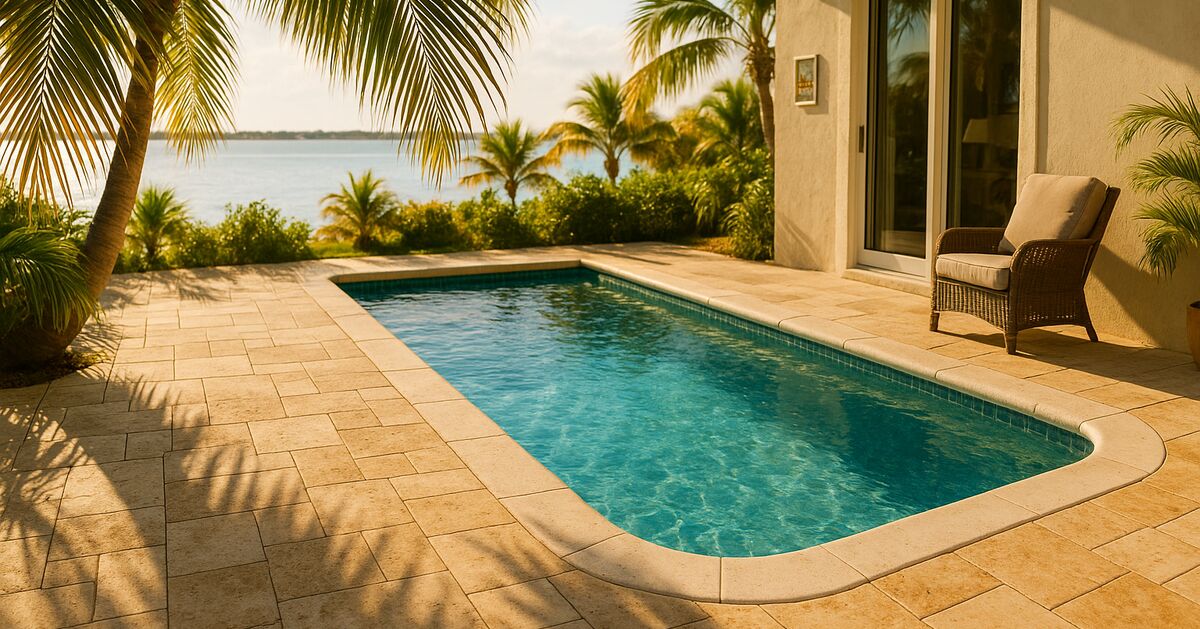
Salt air, relentless sun, and the slow movement of sandy soil beneath your feet - the barrier islands around Sarasota are genuinely beautiful places to own a pool, but they are also genuinely hard on the concrete and stone that surrounds it. Your pool deck and coping quietly absorb all of that stress, and when they start to speak up, the message is worth listening to.
This post is for homeowners on Longboat Key, Siesta Key, Bird Key, Lido Key, Anna Maria Island, and the surrounding Sarasota area who have noticed something "off" around the pool edge and are wondering whether it is a weekend DIY project or a call-your-pool-pro situation. Spoiler: the difference matters more than most people realize.
What the deck and coping actually do
Before diving into the warning signs, it helps to understand what these two components are actually for - because their jobs go well beyond looking good.
Coping is the cap material that runs along the top edge of the pool shell, right where the pool meets the deck. It exists to protect the bond beam (the structural concrete ring that holds the pool shell together), to give swimmers a safe edge to grab, and to redirect splash water away from the pool wall and toward the deck's drainage path.
The pool deck surrounds the coping and serves as the transition zone between your pool and the rest of your yard or lanai. Its slope - ideally a gentle grade away from the water - keeps rainwater and splash water from pooling against the pool shell and, critically, from seeping underneath.
When either of these components fails, the consequences ripple inward. Water finds paths it was never meant to travel, soil erodes or shifts beneath the slab, and what started as a surface problem becomes a structural one.
The five warning signs homeowners most often ignore
1. Cracks that are wider than a hairline
Every concrete surface develops hairline cracks eventually - especially in Florida, where the ground never truly stops moving and temperature swings (modest as they are) still cause materials to expand and contract. A crack you can barely see and cannot fit a credit card into is usually just cosmetic.
A crack you can slip a coin into is a different conversation. Wide or growing cracks in the coping or deck allow water to travel directly downward into the substrate. On barrier islands like Longboat Key and Siesta Key, where the soil profile is mostly sand and shell, that water moves fast. It carries fine particles with it, slowly creating voids beneath the slab. Voids lead to sinking, which leads to more cracking, which leads to a much larger repair bill.
If you see a crack that runs the full thickness of a coping piece - top to front face - that is a sign the bond beam behind it may be stressed. That is genuinely worth a professional eye before the next heavy rain.
2. Coping that has separated from the pool shell
Run your hand along the underside of your coping where it meets the tile or plaster at the waterline. If you feel a gap, or if you can see daylight between the coping and the shell, the adhesive or mortar bed that holds it has failed.
This happens regularly in coastal environments. Salt air accelerates the breakdown of mortar and grout. Thermal movement (warm days, cooler nights) works the bond loose over years. On properties close to the Gulf - think Lido Key or Bird Key where the breeze is nearly constant - this process simply happens faster than it would inland.
A separated coping piece is a safety hazard (it can rock underfoot) and a water intrusion point. It should not wait.
3. Lifting or sunken pavers
Travertine, brick, and concrete pavers are popular on Sarasota-area pools because they look beautiful and stay cooler underfoot than solid-poured concrete. Their weakness is that each individual paver is only as stable as the sand bed beneath it.
When pavers lift at the edges or sink in isolated spots, the most common culprit on barrier islands is washout: water carrying away the fine sand that was supposed to stay put under the paver. This can happen through cracks in the grout joints, through gaps where the deck meets screen enclosure footings, or after heavy rain overwhelms the deck's drainage slope.
A single lifted paver is a trip hazard. A pattern of lifted or sunken pavers across a section of deck is evidence of a drainage or substrate problem that will keep creating new lifted pavers until the underlying cause is fixed. Re-setting a handful of pavers without addressing why they moved is money wasted.
4. Efflorescence and white staining along the coping face
Efflorescence is the white, chalky, sometimes crystalline deposit that appears on the face of concrete and natural stone. It forms when water moves through a material, dissolves soluble salts inside it, and then evaporates on the surface - leaving the salts behind.
A little efflorescence on a pool deck in Florida is common and manageable. A lot of it, especially if it appears quickly after rain or after the pool level rises, is telling you that water is moving through your coping or deck material in volume. That migration weakens the material from the inside and can eventually cause spalling (surface flaking) and deeper deterioration.
On pools in our Longboat Key service area, we see efflorescence accelerate when grout joints between coping pieces have begun to open up - another reason the small stuff is worth addressing early.
5. Rust stains radiating from the deck or coping
Rust stains on pool decks are almost always coming from one of two places: corroding rebar inside the concrete, or corroding fasteners in screen enclosure footings and railings.
Corroding rebar is the more serious situation. When rebar inside a concrete pool deck or bond beam rusts, the rust expands and literally pushes the surrounding concrete apart from the inside. This process is called spalling, and once it begins it accelerates. Salt air on barrier islands like Anna Maria Island and Longboat Key contributes to this because airborne chlorides penetrate concrete and reach the metal faster than they would in a non-coastal environment.
A rust stain the size of a dinner plate on your pool deck deserves investigation before it becomes a fist-sized hole with crumbling edges.
Why the coastal environment on Longboat Key makes all of this worse
If you have owned property away from the coast, you might be surprised how quickly pool decks and coping age here. There are a few reasons specific to this area.
Sandy substrate. The barrier islands sit on sand and shell fill with limited bearing capacity compared to inland soils. Slabs shift more readily, and when water carries that fine sand away, voids form quickly.
Salt air. Airborne salt from the Gulf and the bays accelerates corrosion of metal components and the breakdown of mortar, grout, and some sealers. Our post on how salt air attacks pool equipment covers the equipment side of this, but the deck and coping face the same enemy.
Rain intensity. Southwest Florida's rainy season brings intense, concentrated downpours that overwhelm drainage systems. If your deck slope has settled even slightly, water that used to sheet away now pools against the pool shell or collects in low spots on the deck.
Freeze-thaw is not the issue, but heat cycles are. Unlike northern climates, Florida decks do not suffer freeze-thaw damage. But daily heat cycles - a deck surface that hits 130 degrees in July afternoon sun and cools 40 degrees overnight - still stress materials and work mortar joints loose over years.
When is it really a pool pro call versus a general contractor?
This is where homeowners often get confused, and it is a fair question. Pool decks exist in a gray zone between what a pool service company handles and what a general contractor or tile/stone specialist handles.
Here is a practical way to think about it. If the problem is at or below the coping, or if you suspect it involves the bond beam or the pool shell itself, start with your pool service professional. They can assess whether the structure of the pool is involved and coordinate with the right specialists. They also know your pool's history in a way a general contractor walking in cold does not.
If the problem is clearly isolated to the deck surface several feet away from the water, a paver contractor or concrete specialist may be the right first call - but looping in your pool pro to confirm the pool itself is not involved is still smart.
Our pool cleaning and maintenance services include regular visual inspections of the deck and coping as part of every visit, precisely so that small issues get flagged before they become coordination projects.
What a professional is actually looking for
When a pool technician walks your deck during a service visit, they are not just glancing at the surface. A thorough look includes:
- Checking coping joints for gaps, cracking, or failed grout
- Pressing on coping pieces to feel for movement or hollow spots
- Looking for the early signs of bond beam stress at the waterline tile
- Checking the deck slope visually (does water naturally drain away from the pool?)
- Noting any rust staining, efflorescence patterns, or areas of surface spalling
- Checking that any expansion joints in the deck are intact and not bridged with hard grout (expansion joints need to remain flexible to do their job)
- Looking at where the deck meets vertical structures: screen enclosure footings, steps, handrail anchors
None of this requires pulling up pavers or invasive investigation. It is a trained eye doing a systematic walk, and it catches the majority of developing problems while they are still inexpensive to address.
If you are not sure what your pool technician looks for on a typical visit, our FAQ page covers a lot of the common questions homeowners ask about what professional service actually includes.
A note on DIY sealing and crack filling
Hardware stores sell crack fillers and concrete sealers that are tempting when you spot a small issue. There is a place for sealers in deck maintenance, but a few cautions.
Filling a crack with flexible caulk or polyurethane filler works well for a stable crack that has stopped moving. If the crack is active (still widening or shifting), a surface filler will re-open within a season and may trap water underneath in the meantime.
Sealers can meaningfully extend the life of a porous deck surface by reducing water intrusion, but they need to be the right product for your deck material, and they need to be applied to a properly prepared, clean surface. A sealer applied over efflorescence, algae residue, or loose material simply peels and looks worse than no sealer at all.
When in doubt, describe what you are seeing to your pool professional before reaching for a product. What looks like a sealable crack sometimes has a cause that sealing will only conceal.
Connecting deck problems to pool water and chemistry
This connection surprises some homeowners, but it is real. A pool deck or coping that is allowing soil and debris to migrate toward the pool edge will eventually affect your water. Decomposing organic material changes your phosphate levels, which feeds algae. Dust and fine particles contribute to cloudiness. If you have been fighting recurring chemistry or clarity issues and cannot pin down the cause, a compromised deck edge is worth putting on the checklist.
For more on the factors that drive unusual chemical consumption, our post on why your Longboat Key pool burns through chemicals so fast covers the full picture.
When to pick up the phone
To make this as practical as possible, here is a plain list of situations where the right move is to call your pool professional rather than wait for the next scheduled visit:
- A coping piece is cracked all the way through or has visibly moved
- You can see a gap between the coping and the pool shell
- A section of deck has sunk noticeably (more than half an inch) relative to surrounding areas
- Rust staining has appeared or grown significantly since your last visit
- Water seems to be pooling against the pool shell after rain
- You notice the waterline tile is cracking or separating in the same spot where the coping looks stressed
None of these are panic situations, but all of them benefit from being looked at promptly. The gap between a $300 repair and a $3,000 repair is almost always a matter of how long the underlying problem was allowed to continue.
Getting eyes on your deck regularly matters
The simplest thing you can do is make sure someone qualified is looking at your deck and coping on a regular schedule. That is one of the reasons consistent professional service pays for itself on barrier island properties, where the coastal environment quietly works on every surface all year long.
Whether you are on Siesta Key, Bird Key, or anywhere else in our full service area, a professional who knows your pool and visits it regularly will catch the early signals that a homeowner who only looks at the water tends to miss.
If something on your deck or coping caught your eye recently and you want a professional opinion, get in touch with us. A quick look now is almost always the cheaper path.