
How We Look After Your Longboat Key Pool While You're Away
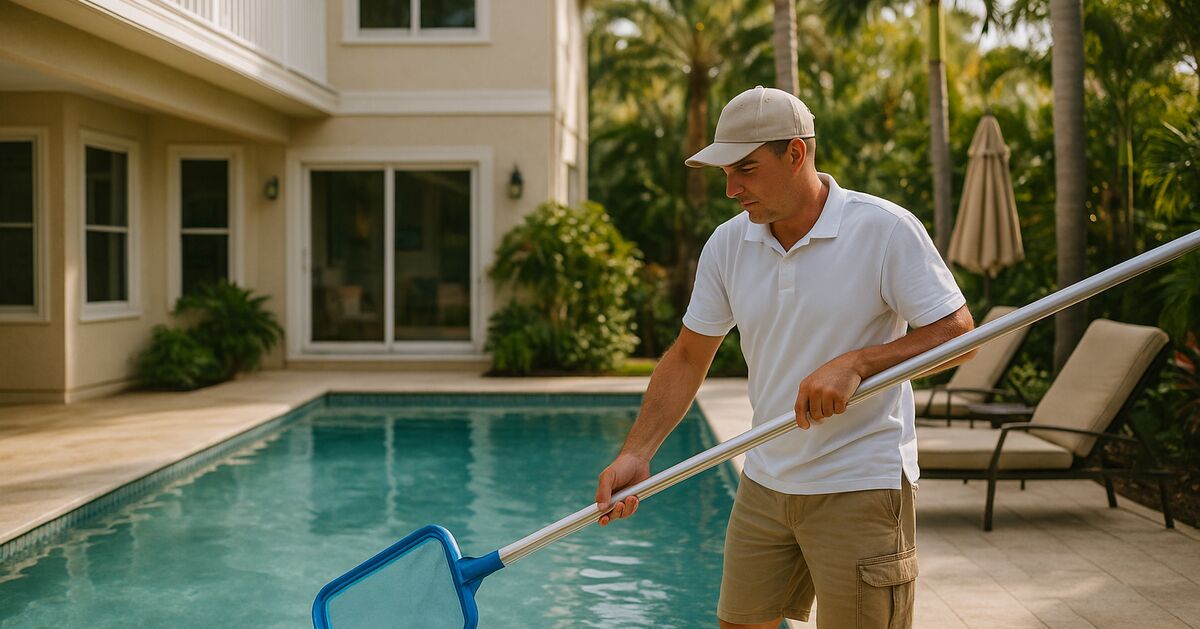
Every seasonal owner on Longboat Key has the same quiet worry when they lock up and head north: what is happening to my pool right now? It is a fair concern. A Florida pool left without consistent attention does not simply sit still and wait for you. It drifts, grows, corrodes, and costs you money. The good news is that a well-planned care routine prevents every one of those problems, and understanding exactly what that routine looks like will help you feel genuinely confident the moment you pull out of the driveway.
This post walks through the full picture - what we check, what we adjust, what we watch for, and why each step matters for a barrier-island pool specifically. Because Longboat Key is not the same as a suburb in Phoenix: the salt air, the subtropical heat, the intense UV, the afternoon thunderstorms, and the occasional tropical system all put pressure on a pool in ways that demand local knowledge.
Why Seasonal Absence Is Hard on a Florida Pool
Chemistry does not take a vacation. Water chemistry is a living balance, and when it tips in the wrong direction, it tips fast in Florida's heat. Chlorine burns off quickly under direct sun. Rain dilutes the water and drives pH upward. Evaporation concentrates calcium and other minerals. Algae spores, carried in on the wind or through the air, need only a small window of low sanitizer to get a foothold, and once they do, you are looking at a green-to-clean recovery process rather than a simple weekly visit.
Beyond chemistry, equipment suffers during neglect. Pumps and filters left running without inspection can run with low water levels, clogged baskets, or cracked fittings and not alert anyone until real damage is done. Automated systems - salt cells, robotic cleaners, heaters - can throw fault codes and sit idle for weeks if nobody is watching. Tiles collect calcium scale that hardens over time. Skimmer baskets overflow with debris, reducing flow and forcing the pump to work harder.
This is the environment our pool cleaning and maintenance services are built for.
What a Weekly Visit Actually Looks Like
"Someone comes by weekly" sounds simple. In practice, a thorough visit covers more than most owners expect.
Water testing and chemical adjustment
Every visit starts with a multi-point water test. We check free chlorine, combined chlorine, pH, total alkalinity, calcium hardness, and cyanuric acid (stabilizer). Each reading tells a different story. Low free chlorine means sanitizer is depleted - algae's invitation. High pH means chlorine becomes less effective even when levels look fine on a basic test. Low alkalinity means pH will swing wildly day to day. On Longboat Key and the other barrier islands, calcium hardness tends to creep upward because the air itself carries calcium from the Gulf, and we watch that number carefully. For a deeper look at the chemistry involved, our guide on balancing pool chemistry in Florida heat covers each parameter in plain language.
We add only what the water actually needs - not a fixed dose, but a targeted one based on the test results. Over-treating is as damaging as under-treating, and we do not guess.
Brushing walls, steps, and waterline tile
Algae does not start in the open water. It starts in the places that get the least circulation: behind ladder rails, along the waterline, in the corners of steps, along grout lines. Brushing those surfaces disrupts early colonies before they can take hold. On saltwater pools, which are very common on Longboat Key, we also watch the tile line for calcium carbonate deposits that the salt system's higher pH can accelerate. Caught early, they wipe off. Left alone for a season, they require acid washing or professional tile cleaning.
Skimmer and pump basket cleaning
In a coastal environment, skimmer baskets fill with organic material faster than most people expect. Spanish moss, palm fronds, leaves, insects, and airborne debris all find their way in. A full basket restricts water flow, which strains the pump and reduces the filter's ability to do its job. We clear both baskets on every visit.
Vacuuming or confirming the automatic cleaner is working
If you have a robotic or suction cleaner, we check that it is operating properly, not stuck in a corner, not tangled, and not sitting idle with a fault. If debris has settled on the floor, we vacuum it out manually. Fine sediment that sits on the pool floor can stain plaster or pebble surfaces over time, especially when chemistry is slightly off.
Equipment inspection
This is the part that matters most when you are not around to notice something is wrong. Every visit we look at the pump for leaks, listen for unusual noise, check the filter pressure gauge, inspect the salt cell if you have one, and verify that the timer or automation system is running correctly. We note any changes from visit to visit. A pressure gauge reading that creeps up week over week tells us the filter needs cleaning before it becomes a problem. A salt cell that is showing scale tells us it needs an acid rinse. Catching these things early is nearly always cheaper than repairing the consequence.
Water level check
Evaporation is significant in a Florida summer, and if you have an auto-fill valve, we confirm it is working. A pool that drops below the skimmer mouth will run air through the pump - a quick path to equipment damage.
Communicating With You When You Are Not Here
One of the most important things we do for seasonal owners is keep them informed. When something requires your attention or a decision - a failing seal, a cracked fitting, a piece of equipment that needs replacement - we contact you directly with a clear description of the issue and our recommendation. We do not simply fix the most expensive option. We explain what we found, what it means, and what the realistic choices are.
Many of our seasonal clients on Longboat Key and Lido Key tell us this communication is what they value most. They want to know their property is in good hands without having to call and wonder.
If you have questions about how we handle specific situations, our FAQ page covers many of the most common scenarios seasonal owners ask about.
Storm Season Monitoring - a Barrier-Island Reality
Hurricane season runs from June through November, which overlaps almost exactly with the period when many seasonal residents are away. That is not a coincidence you can ignore if you own a pool on a Gulf-barrier island.
Our approach to storm preparation and post-storm inspection is detailed in a separate guide on hurricane season pool prep for waterfront homes, but the short version is this: before a named storm we secure or remove loose equipment and accessories, adjust chemistry to handle the incoming rain dilution, and check that the system is positioned to ride out wind and debris. After the storm passes, we perform a full inspection - checking for structural damage, inspecting equipment, testing water that has likely been heavily diluted and possibly contaminated, and restoring chemistry to safe levels.
For owners up north during a storm, knowing that someone is physically at the property within a day or two of a storm passing is a significant piece of mind. We also document what we find with notes and, when needed, photos, so you have a clear record for any insurance purposes.
Saltwater Pools Deserve a Specific Mention
A large share of pools on Longboat Key and the surrounding barrier islands - Bird Key, St. Armands Key, Siesta Key, and Anna Maria Island - run on salt chlorine generators. These systems are excellent but they are not "set it and forget it," especially when the owner is away for months.
Salt cells produce chlorine through electrolysis, and that process is sensitive to water temperature, salt concentration, pH, and stabilizer level. In the summer heat, cells often need to run at a higher output setting. In cooler months, they may not produce enough unless adjusted. They also develop calcium scale on the cell plates over time and need periodic acid cleaning to maintain efficiency. A cell that is 30 percent scaled produces far less chlorine than a clean one, and a pool that looks chemically balanced on paper can still turn green if the cell is not actually working at rated capacity.
If you are deciding whether a salt system is right for your pool, our comparison of saltwater vs. traditional chlorine for Sarasota island pools lays out the real trade-offs without the sales pitch.
What Happens When You Return
The goal of everything we do while you are away is a simple one: you come back to a pool that is ready to swim in that day. Not next week after a shock treatment. Not after a tile cleaning and an algae battle. That day.
We schedule a pre-arrival visit timed around your return date. We confirm chemistry is dialed in, the equipment is running well, and the pool looks the way it should. If you are a new client coming from a previous service that was not keeping up, we offer a thorough inspection and recovery visit before you put that trust in us going forward.
We cover Longboat Key and the full surrounding area - including Siesta Key, Bird Key, Anna Maria Island, and Sarasota proper. Wherever your island property is, we are local, and we are already familiar with the specific conditions your pool faces.
How to Get Started Before You Leave
The easiest thing you can do before you head north is contact us and walk us through your setup. We will note your equipment, your preferences, any quirks your pool has, and the best way to reach you during the season. From that point on, the pool is ours to care for, and yours to enjoy when you return.
You can reach out through our contact page to get a conversation started, or take a look at our full list of service areas to confirm we cover your property. Setting up care before you leave is almost always easier than calling from Minnesota in August because something has gone wrong.
Your pool should be the best part of coming home. With consistent, knowledgeable care through the off-season, it will be.