
Sarasota County setback rules and where your pool can legally go
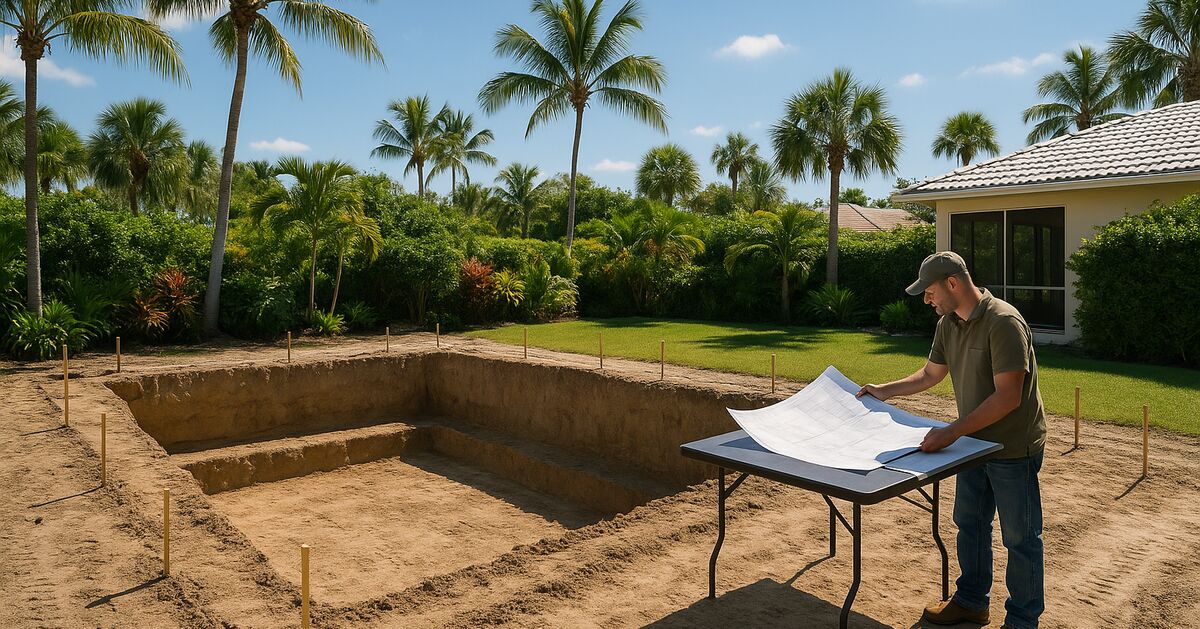
Your surveyor drives stakes, your contractor pulls a tape measure, and then someone says the words no pool owner wants to hear: "it won't fit where you planned." That moment happens more often on barrier-island lots in Sarasota County than almost anywhere else in Florida, because the rules that govern where a pool or equipment pad can legally sit stack on top of each other in ways that genuinely surprise even experienced homeowners. Understanding those layers before you spend money on design drawings can save you thousands of dollars and months of frustration.
Why barrier-island lots play by different rules
Every parcel in unincorporated Sarasota County is subject to the Sarasota County Zoning Ordinance, which establishes base setback requirements that vary by zoning district. A standard residential setback might require a pool to sit a certain number of feet from a rear property line and a side property line, and those numbers differ depending on whether the zone is RSF-1, RSF-2, or one of several other residential designations.
But on the barrier islands, the base zoning is only the starting point. Several additional layers apply:
- The Coastal Construction Control Line (CCCL). The Florida Department of Environmental Protection administers the CCCL, a line established under Chapter 161 of the Florida Statutes. Any pool or permanent structure built seaward of the CCCL requires a separate state permit from the DEP in addition to local permits. The CCCL is not the same as the property line, and on oceanfront or Gulf-front parcels it can cut well into what looks like buildable backyard. On many lots on Longboat Key, Lido Key, and Siesta Key, the CCCL essentially defines the rearmost point where a pool shell can end.
- Flood zone overlays. FEMA Flood Insurance Rate Maps (FIRMs) can assign barrier-island parcels to Zone VE (coastal high-hazard) or Zone AE, so check the FEMA Flood Map Service Center for your specific parcel. Both zones may carry construction requirements affecting excavation depth and shell standards, so confirm specifics with your local building department. VE zones may restrict the amount of fill that can be placed on a lot; verify this with your local building department, as FEMA's flood maps do not specify fill rules directly.
- Municipal zoning for incorporated areas. Longboat Key, the Town of Longboat Key, has its own Land Development Regulations separate from the county code. The City of Sarasota similarly has its own zoning rules for parcels within city limits, including parts of Lido Key and Bird Key. Bird Key and St. Armands Key fall within the City of Sarasota's jurisdiction, so those homeowners apply to the city, not the county, for their pool permits. Siesta Key is largely unincorporated and falls under county jurisdiction, with some additional coastal overlay provisions. Anna Maria Island sits in Manatee County, not Sarasota County, and has its own set of rules through the City of Anna Maria, the City of Bradenton Beach, and the City of Holmes Beach.
Understanding which jurisdiction governs your parcel is step one. Getting that wrong means you could be preparing an application for the wrong agency entirely.
The base setbacks: what the county requires
For unincorporated Sarasota County residential zones, the Sarasota County Development Standards Code sets out setback minimums for pools. As a general orientation (always verify your specific parcel and zoning district directly with Sarasota County):
- Pools are typically treated as accessory structures and must meet the rear and side setbacks of the zoning district, which in many residential zones run from five to ten feet from side property lines and ten to twenty feet from rear lines.
- The water's edge of the pool, not the coping or deck edge, is often the measured point, though your surveyor and the plan reviewer will confirm this for your parcel.
- Screen enclosures, when added, may have their own setback allowances that differ from the pool shell itself, and in some cases the enclosure can be placed closer to a property line than the pool could be without it.
These baseline numbers can feel generous on a large inland lot but become very tight on the narrow barrier-island parcels that are common on Siesta Key, Longboat Key, and the other keys. A lot that is 70 feet wide with a five-foot side setback on each side leaves you 60 feet of buildable width, but once you subtract the house footprint the math gets constrictive quickly.
Equipment pad placement: the part owners often overlook
A lot of the setback conversation focuses on the pool shell itself, but the equipment pad, the concrete slab where your pump, filter, heater, and salt chlorinator sit, has its own placement requirements and practical constraints.
From a code standpoint, the equipment pad is typically an accessory structure and must meet the same setback lines as other accessory structures in the zoning district. Many districts allow equipment pads and mechanical equipment closer to the side or rear property line than the main pool structure, but you need to verify this in the applicable code, not assume it.
From a practical standpoint on barrier-island lots:
- Distance from the pool matters for plumbing runs. A longer run of suction-side pipe between the pool and the pump increases the chances of air infiltration and reduces pumping efficiency. Contractors often recommend keeping the pad reasonably close to the pool to limit suction-side pipe length, though the exact tolerance depends on your specific equipment and plumbing design.
- Prevailing wind direction matters for equipment longevity. On Gulf-facing lots, positioning the equipment pad on the lee side of a structure, a wall, a fence, or the house itself, reduces direct salt-air exposure. Our post on why a pre-purchase pool inspection on Siesta Key or Bird Key can uncover costs that change your offer touches on how corrosion damage to equipment in poor locations shows up at inspection time and affects property value.
- Noise ordinances. Pool pumps, especially older single-speed models, generate noise. Sarasota County and the municipalities on the keys have noise ordinances, and a pump pad placed against a shared property line in a quiet residential neighborhood can draw complaints. Variable-speed pumps tend to run quieter at low speeds, but placement near property lines still matters for noise concerns.
The CCCL in practice: what "seaward of the line" actually means
The Florida DEP's CCCL is surveyed and recorded, and its location on any given parcel can be found through the DEP's Beaches and Coastal Systems program. The line is established by reference to a survey baseline and is generally set back from the mean high water line by a distance tied to historical erosion rates, dune stability, and storm surge modeling.
What this means for pool planning: if any part of your proposed pool, deck, coping, or equipment pad falls seaward of the CCCL, you must apply for a DEP Coastal Construction Permit in addition to your local building permit. That state permit process involves a review of the proposed construction's effect on the beach and dune system, and the DEP may impose conditions, require the use of specific materials, or in some cases deny a permit for structures that would destabilize the dune system.
On some Gulf-front lots on Longboat Key and Lido Key, the CCCL may fall well inland of the water's edge, so have your surveyor confirm the exact line on your parcel. This is one of the reasons that pool plumbing on Longboat Key involves complications that inland pool owners simply do not face.
DEP Coastal Construction Permits can take additional time and add to overall project cost; contact DEP directly for current review timelines. DEP may require a licensed engineer to certify the structural design of the permitted structure; confirm this requirement directly with DEP before finalizing your budget. Factor this into your project timeline and budget before you finalize a design.
Impervious surface limits and how they shrink your options
Beyond setbacks and coastal lines, Sarasota County limits the total amount of impervious surface (paved or covered area that does not allow water infiltration) on a residential lot. This limit is expressed as a percentage of the total lot area and varies by zoning district.
A pool shell, pool deck, equipment pad, driveway, and the house footprint all count toward that impervious surface cap. On a small barrier-island lot that already has a substantial house footprint, adding a pool deck and coping can push the total impervious surface close to or above the allowable percentage. Contractors sometimes address this by specifying permeable pavers for deck areas, which may or may not count against the impervious limit depending on how the county calculates the surface in your zone. Ask the plan reviewer explicitly.
This is a constraint that pool buyers on Sarasota's barrier islands discover late in the design process surprisingly often, and it is worth asking your contractor to calculate the impervious surface total early, before design drawings are complete.
Setbacks for the Village and other non-island areas
The service area for our pool cleaning and maintenance work extends beyond the keys to include The Village and other Sarasota mainland neighborhoods. In those areas, the CCCL and VE-zone complications generally do not apply, but standard Sarasota County setback rules still govern pool placement, and the impervious surface limits still apply. Lots in older subdivisions in Sarasota were sometimes platted with utility easements running along rear and side property lines, and a pool or equipment pad cannot be built over a recorded easement. Your surveyor's report will show those easements, and they are non-negotiable.
Practical steps before you commit to a design
Given the layering of rules described above, a thoughtful sequence before you invest in full architectural or engineering drawings can prevent expensive surprises:
- Confirm jurisdiction. Is your parcel in unincorporated Sarasota County, the Town of Longboat Key, the City of Sarasota, or a municipality in Manatee County? The answer determines which code applies and which agency issues your permit.
- Order or review your survey. A current boundary survey showing all easements, the CCCL (if applicable), flood zone designation, and lot dimensions is the foundation of any permit application. If your survey is more than a few years old, the CCCL may have shifted, particularly after major storm seasons.
- Calculate your buildable envelope. With setbacks applied to all four sides of the lot, and the CCCL subtracted from the rear if applicable, sketch out what area remains. Then subtract any recorded easements. What is left is where you can actually build.
- Check impervious surface headroom. Add up your existing impervious surfaces and subtract from the allowable percentage. What remains tells you how large the pool deck can be.
- Talk to the permit desk early. Both Sarasota County and the Town of Longboat Key allow pre-application meetings with their building and zoning staff. A short conversation with a plan reviewer before you finalize a design can surface issues that would otherwise stop your permit application in review.
- Understand the DEP process if you are Gulf-front. If any part of your project falls seaward of the CCCL, budget for a licensed engineer, the DEP application fee, and additional calendar time.
Our team sees the downstream effects of pool placement decisions regularly. Equipment pads tucked into corners with poor drainage develop corrosion problems faster. Pools built too close to a property line can complicate future fence permits and neighbor relationships. These are issues our frequently asked questions page addresses in part, and they come up in the conversations we have with homeowners across our service area from week to week.
What happens if a pool was built without proper permits?
It is not unusual on older barrier-island properties to find a pool, a deck addition, or an equipment pad that was built without a permit or without a final inspection. This becomes a real problem at the time of sale, when a title search or home inspection uncovers the unpermitted work. The resolution typically involves a retroactive permit application, an as-built survey, and sometimes structural modifications to bring the construction into compliance with current code, all at the current owner's expense before closing.
If you are buying a property and the pool or any pool-related structure appears to have been added after original construction, ask for permit history records from the applicable building department. Our related post on what a pool inspector looks for on Anna Maria Island that differs from an inland report covers the inspection angle of this issue in more detail.
Getting the big picture right from the start
Pool construction on Florida's barrier islands is genuinely more complicated than it is in most other parts of the country, and the rules that govern where a pool can sit are a meaningful part of that complexity. The CCCL, flood zone overlays, impervious surface limits, municipal zoning distinctions, and recorded easements all interact, and getting any one of them wrong can delay a project by months or force a redesign.
The good news is that these rules are knowable, the permit staff in both Sarasota County and the keys municipalities are generally approachable, and an experienced local contractor will already be familiar with the typical constraints on the types of lots they work on regularly.
If you have questions about what is possible on your specific parcel, or if you are looking for ongoing care for a pool that is already in place, explore our full range of pool cleaning and maintenance services or reach out through our contact page to talk through your situation. We work on pools across Longboat Key, Lido Key, Bird Key, St. Armands Key, Siesta Key, Sarasota, Anna Maria Island, and The Village, and we are happy to point you in the right direction even before the first shovel hits the ground.
Sources & further reading
- Florida Statutes Chapter 161 - Beach and Shore Preservation (Florida Legislature)
- FEMA Flood Map Service Center (Federal Emergency Management Agency)
Claim-by-claim audit (10 checked)
- “Any pool or permanent structure built seaward of the CCCL requires a separate state permit from the DEP in addition to local permits.” (cited → flsenate.gov)
- “FEMA Flood Insurance Rate Maps (FIRMs) can assign barrier-island parcels to Zone VE (coastal high-hazard) or Zone AE, so check the FEMA Flood Map Service Center for your specific p…” (cited → msc.fema.gov)
- “VE zones may restrict the amount of fill that can be placed on a lot; verify this with your local building department, as FEMA's flood maps do not specify fill rules directly.” (rewritten to what the article can stand behind)
- “A longer run of suction-side pipe between the pool and the pump increases the chances of air infiltration and reduces pumping efficiency.” (reasoning shown in the article)
- “Contractors often recommend keeping the pad reasonably close to the pool to limit suction-side pipe length, though the exact tolerance depends on your specific equipment and plumbi…” (rewritten to what the article can stand behind)
- “Variable-speed pumps tend to run quieter at low speeds, but placement near property lines still matters for noise concerns.” (rewritten to what the article can stand behind)
- “The line is established by reference to a survey baseline and is generally set back from the mean high water line by a distance tied to historical erosion rates, dune stability, an…” (cited → flsenate.gov)
- “That state permit process involves a review of the proposed construction's effect on the beach and dune system, and the DEP may impose conditions, require the use of specific mater…” (cited → flsenate.gov)
- “DEP Coastal Construction Permits can take additional time and add to overall project cost; contact DEP directly for current review timelines.” (rewritten to what the article can stand behind)
- “DEP may require a licensed engineer to certify the structural design of the permitted structure; confirm this requirement directly with DEP before finalizing your budget.” (rewritten to what the article can stand behind)