
Sand, cartridge, or DE filter: which suits a barrier-island pool best?
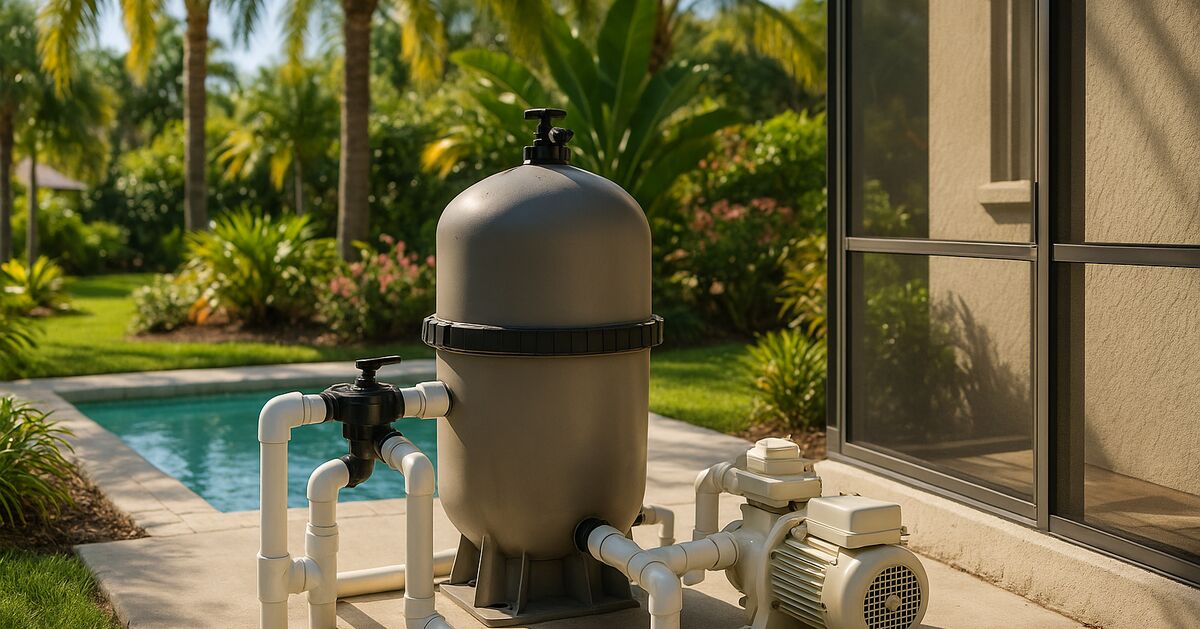
Salt air drifts off the Gulf around the clock, red-tide blooms dust your pool deck with fine particulates, and the same warm temperatures that make Longboat Key living so good also make your pool work overtime. In that environment, the filter sitting quietly in your equipment bay is doing a lot more work than most homeowners realize - and the type of filter you have shapes nearly every other maintenance decision you make.
This post walks through exactly how sand, cartridge, and diatomaceous earth (DE) filters work, what each one demands from you, and which tends to hold up best given the specific conditions found on barrier islands like Longboat Key, Lido Key, Siesta Key, and Anna Maria Island.
What a pool filter is actually doing
Before comparing types, it helps to understand the job. Your filter's only task is to trap particles that your sanitizer cannot destroy: dead algae cells, windblown pollen, fine sand tracked in from the beach, body oils, sunscreen, and the microscopic debris that makes water look dull or cloudy.
A sanitizer (chlorine or salt-generated chlorine) kills living organisms. The filter catches the physical residue. When either system lags, the other gets overwhelmed. That's why a filter that is slightly undersized or overdue for service can make your chemical costs spike even when dosing is correct. If you've ever wondered why your pool eats through chemicals so quickly, a struggling filter is often part of the answer - and our post on why your Longboat Key pool burns through chemicals so fast covers that connection in detail.
Sand filters: the most common setup you'll find in older Florida homes
How they work
A sand filter is a fiberglass or polyethylene tank filled with specially graded silica sand, usually about 20 inches deep. Water from the pump enters at the top, pushes through the sand bed, and returns to the pool clean. Particles as small as about 20 to 40 microns get trapped between sand grains.
When pressure builds (typically 8 to 10 PSI above the clean starting pressure), you backwash - reversing the water flow to flush trapped debris out through a waste line.
The case for sand on the barrier islands
Sand filters are rugged, inexpensive, and nearly foolproof. There are no fragile cartridges to tear, no DE powder to measure, and backwashing takes about two minutes. For a vacation rental home where a guest might not know anything about pool equipment, or for a seasonal property where the owner is away for months, the simplicity is genuinely valuable.
The downside for barrier-island conditions is filtration fineness. At 20 to 40 microns, a sand filter misses a lot. Fine red-tide particles, the superfine quartz dust that blows in from beach traffic, and many species of algae cells are small enough to pass right through. You'll often notice this as a persistent dull haze in the water even when chemistry is balanced.
There's a workaround: adding a flocculant (pool clarifier) causes fine particles to clump together until they're large enough for the sand to catch. It works, but it adds a chemical step and increases backwash frequency, which wastes water and sends balanced pool water down the drain. On Longboat Key, where water quality and conservation both matter, that adds up.
Maintenance reality
Backwash roughly every one to four weeks depending on bather load and debris. Replace the sand every five to seven years; sand slowly rounds off at the edges and loses its ability to trap particles efficiently. The laterals inside the tank (the plastic fingers at the bottom that direct water flow) can crack after years of use and allow sand to return to the pool - a sign that service is overdue.
Cartridge filters: the quiet workhorse for modern Gulf-coast pools
How they work
A cartridge filter replaces the sand bed with one or more pleated polyester filter elements - essentially the same concept as an air filter in your car. Water passes through the pleated fabric, which catches particles down to about 10 to 15 microns. There is no backwashing. When pressure rises, you remove the cartridges, rinse them with a garden hose, and reinstall.
Why cartridge filters are popular on barrier islands
Cartridge filters have become the most commonly recommended option for newer construction on Longboat Key and surrounding islands, and for good reason.
- No backwash waste. With no backwash cycle, you're not sending treated water down the drain every few weeks. Given how hard it can be to keep chemistry stable when you regularly dilute and refill (see our guide on draining and refilling your Longboat Key pool), avoiding unnecessary water loss matters.
- Finer filtration than sand. At 10 to 15 microns, cartridge filters catch significantly more fine debris - helpful when Gulf breezes deposit red-tide particulates, pollen, or airborne dust directly into your water.
- Lower operating pressure. Cartridge systems generally run at lower pressure than sand filters, which reduces stress on your pump motor and plumbing fittings. Salt air already works on those fittings; anything that reduces wear is a net positive.
- No plumbing for a backwash line. Older homes sometimes lack a convenient waste line location, and cartridge filters sidestep that problem entirely.
The main trade-off is that cartridges do need to be removed and cleaned - typically every one to three months depending on debris load. On an open property facing the water on Longboat Key or Lido Key, heavy wind events can load a cartridge with pollen and fine organics in a matter of days. A filter that goes too long between cleanings becomes a breeding ground for phosphates and organic buildup, which then feeds algae. Our piece on phosphates in your pool and why barrier islands have it worse explains exactly how that cycle starts.
Maintenance reality
Rinse cartridges every one to three months. Every three to four cleanings, soak the cartridges overnight in a commercial cartridge cleaner to dissolve sunscreen oils and calcium deposits that hosing alone won't remove. Cartridges typically last two to five years before the fabric breaks down or pleats collapse. On the coast, calcium scale from hard fill water can clog pleats faster, so regular acid soaking is important - not optional. A cartridge that looks clean but is calcium-loaded will still restrict flow and mislead your pressure gauge.
DE filters: the highest filtration rating available for residential pools
How they work
Diatomaceous earth is the fossilized skeletal remains of tiny aquatic organisms. Ground into a fine powder, it is coated onto a set of fabric-covered grids inside the filter tank. Water passes through this powder coating and the fabric beneath it, trapping particles down to 2 to 5 microns - far smaller than either sand or cartridge can manage.
When the filter is due for cleaning, you backwash (like a sand filter) to remove the spent DE, then recharge by adding fresh DE powder through the skimmer.
When DE makes the most sense on the barrier islands
For homeowners who want the clearest possible water and have the patience for slightly more involved maintenance, DE is genuinely impressive. At 2 to 5 microns, it captures particles invisible to the naked eye: fine algae, many bacteria, and the ultrafine mineral dust common near coastal construction. Pools serviced with a well-maintained DE filter often look different - noticeably brighter and more transparent - compared to those on sand or cartridge alone.
DE also performs well when combined with a good weekly service routine. Because the filtration is so fine, the DE grid captures debris fast, which means water clears quickly after a wind event or heavy rain. For properties on open lots facing the Gulf on Longboat Key, that speed can matter after a squall dumps leaves and debris into an uncovered pool.
The complications to be aware of
DE adds steps that cartridge and sand do not require. You need to measure and add DE powder after every backwash. Too little and the grids are undercoated, reducing filtration quality. Too much and you can return visible DE powder to the pool through a torn grid. Grids do tear, especially as they age - a common service call on older equipment.
DE powder disposal also requires care. It should not be discharged into storm drains, which matters in a coastal community where drainage often connects to Gulf-adjacent waterways.
The filter grids need a full teardown cleaning (called a filter breakdown) at least once per year. This involves disassembling the tank, removing all grids, and inspecting each one for tears. It's a job most homeowners hand off to their pool service tech, and for good reason.
Head-to-head: how each type handles specific barrier-island challenges
| Challenge | Sand | Cartridge | DE | |---|---|---|---| | Red-tide fine particulates | Struggles (40 micron limit) | Better (15 micron) | Best (5 micron) | | Gulf pollen and organic debris | Moderate | Good with regular cleaning | Excellent | | Salt-air corrosion on hardware | Minimal (few metal parts) | Minimal | Moderate (metal grids) | | Water conservation (no backwash waste) | Poor | Excellent | Moderate | | Maintenance simplicity | Best | Good | Most involved | | Upfront cost | Lowest | Middle | Highest | | Ongoing DIY ease | Easy | Easy to moderate | Moderate to involved |
What we actually see in the field across Longboat Key and the surrounding islands
On Longboat Key pool service calls, cartridge filters are the most common type on homes built in the last fifteen years, and they generally perform well when maintained on schedule. The biggest issue we encounter is cartridges that go too long between cleanings - often on seasonal properties where no one is watching the pressure gauge. An overloaded cartridge lets water bypass the filter media, and suddenly chemistry problems that looked chemical are actually filtration problems.
Sand filters appear frequently on older construction across Siesta Key and inland Sarasota. They work reliably, but property owners often don't realize the sand should have been replaced years ago. Rounded, exhausted sand feels fine to the touch but filters almost nothing; the telltale sign is water that stays faintly hazy despite clean chemistry.
DE filters show up most often on homes where a previous owner (or their pool builder) prioritized water clarity above all else. When the grids are in good condition and the service routine is solid, these pools genuinely look spectacular. The challenge is keeping up with the annual breakdown and ensuring grids are inspected, because a single torn grid can pass DE powder back into the pool and coat the entire surface with a fine white film that takes significant work to remove.
For a closer look at all the pool cleaning and maintenance services that keep each filter type performing correctly, our services page lays out what a professional weekly visit actually covers.
A note on oversizing and undersizing
Regardless of filter type, size matters more on barrier islands than inland. A filter sized for an average debris load will be overwhelmed when a summer squall drops organic material into the pool, or when red-tide season pushes fine particles onto every outdoor surface. We generally recommend going one size up from the minimum calculation for any open, exposed property - particularly on the Gulf side of Longboat Key or the north end of Anna Maria Island where wind exposure is significant.
An undersized filter runs at high pressure constantly, wears out sooner, and never truly clears the water. It also sends your pump motor into a harder working range, shortening its lifespan. Our locations page gives a sense of just how varied the exposure conditions are across our service area, from the protected bay-side lots on Bird Key to the fully open Gulf-front properties further south.
Matching your filter choice to your actual situation
Here is a plain summary of who tends to do best with each type:
Sand filter is a reasonable choice if:
- You want minimal maintenance involvement and you have a reliable backwash line
- The pool is well-screened or has lower debris exposure
- Budget is the primary constraint and you're comfortable with slightly less filtration fineness
Cartridge filter is the most balanced choice for most barrier-island homes if:
- Water conservation matters to you (no backwash waste)
- You want meaningfully better filtration than sand without the complexity of DE
- You have a service tech who cleans and inspects cartridges on a regular schedule
DE filter is worth considering if:
- You want the clearest possible water and your pool is subject to fine particulate events (red tide, construction dust, heavy pollen)
- You have a professional maintaining the system, including annual grid inspections
- You are willing to invest more in equipment and service time
When it's time for a filter upgrade
If your current filter is more than ten years old, frequently runs at elevated pressure, or leaves your water consistently hazy despite correct chemistry, replacement is worth a serious conversation. Coastal conditions are harder on equipment than manufacturers' average-use estimates assume, and an aging filter costs you more in chemical waste and pump wear than a new one would.
If you're not sure where your filter stands, the frequently asked questions page covers a number of common filter and equipment questions, and getting in touch for a service assessment is always a reasonable next step.
A good filter running properly is one of those things you simply stop thinking about - because the water stays clear, chemistry holds, and nothing downstream causes trouble. Getting there starts with knowing what you actually have and whether it's right for where you live.