
Why your pool light keeps tripping the GFCI - and what it means for a barrier-island home's electrical bonding
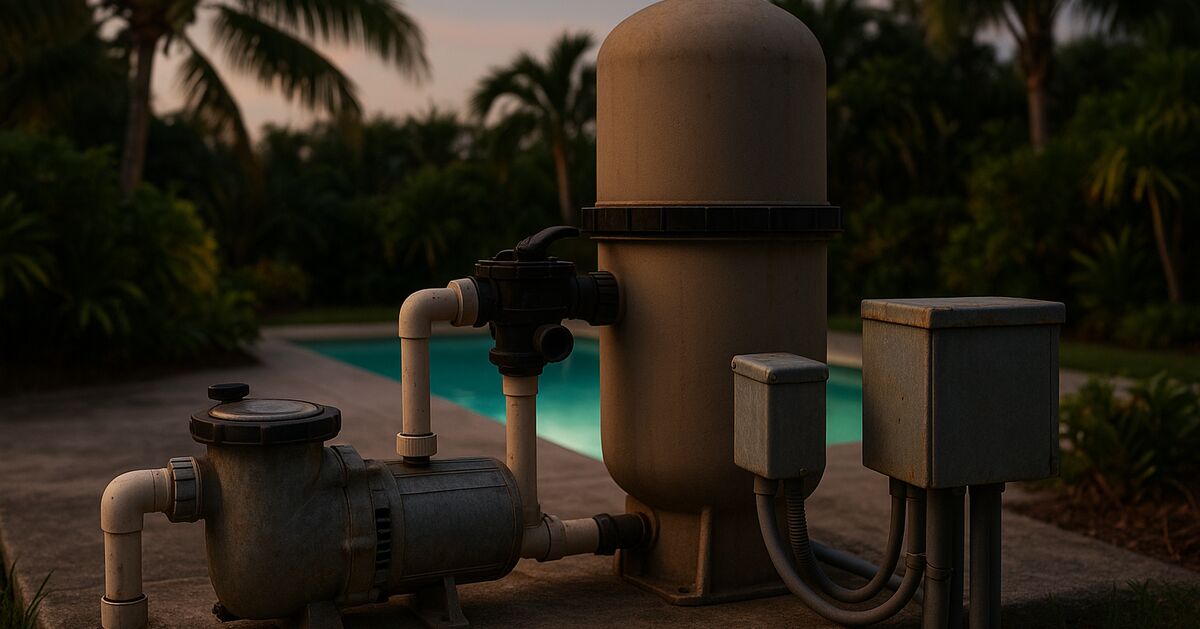
A GFCI that trips the moment you switch on the pool light is not a random glitch. It is your home's electrical system doing exactly what it was designed to do: telling you that electricity is going somewhere it should not go. On a barrier island like Longboat Key, Siesta Key, or Bird Key, that message carries extra weight, because the combination of saltwater exposure, shifting soils, and aging wiring can turn a minor electrical fault into a genuine hazard faster than it would inland.
This post explains what a GFCI trip actually means, why pool lights are particularly prone to triggering it in coastal environments, and what electrical bonding has to do with any of it.
What a GFCI actually does - and why it matters in a pool setting
GFCI stands for Ground Fault Circuit Interrupter. The device constantly compares how much current is flowing out through the hot wire versus how much is returning through the neutral wire. Under normal conditions those two values are nearly identical. When they diverge by as little as 5 milliamps, the GFCI interprets that as current leaking somewhere unintended, and it cuts power in about one-thirtieth of a second.
That speed matters because it takes less than 100 milliamps to cause cardiac arrest. Pool water, wet decking, and bare feet create exactly the conditions where stray current becomes lethal. The National Electrical Code has required GFCI protection on all pool-related circuits for decades, and Florida's building code mirrors and in some cases exceeds those requirements.
So when your pool light trips the GFCI, the device is working perfectly. The question is what fault it detected.
The most common reasons a pool light trips a GFCI
Water intrusion into the fixture itself. Pool light housings are sealed, but the seals degrade. O-rings crack, gaskets compress and lose their shape, and conduit fittings that pass through the pool shell can develop small gaps over years of thermal expansion and contraction. Once water reaches the lamp socket or the wiring connections inside the niche, you have a direct path for leakage current. The GFCI will trip every single time.
Damaged or deteriorated wiring inside the conduit. The conduit that carries the light's wiring runs through the pool shell and then underground or under the deck to the equipment pad. On barrier islands, that conduit passes through soil that is often sandy, saturated with groundwater, and mildly saline. As we have covered in what shifting groundwater does to your pool plumbing on Longboat Key, moving ground can stress conduit joints and create entry points for moisture. Wire insulation that is sitting in brackish water year after year will eventually fail.
A faulty or end-of-life GFCI receptacle or breaker. GFCI devices themselves wear out, especially in humid, salt-air environments. A receptacle rated for ten to fifteen years inland may degrade much faster at a home on Lido Key or Anna Maria Island. Before concluding the light itself is the problem, a licensed electrician will test the GFCI device independently.
LED retrofit mismatches. Many homeowners swap old incandescent pool lights for LED color fixtures, which is a smart move for energy savings and bulb longevity. However, some LED drivers have small amounts of leakage current by design. If the existing GFCI is particularly sensitive or already on the edge of failing, an otherwise healthy LED fixture can trip it. This is worth checking if the tripping started right after a bulb or fixture change.
A problem elsewhere on the shared circuit. Pool lights, underwater speakers, and other low-voltage accessories sometimes share a circuit. A fault in any one of them will trip the GFCI protecting the whole circuit.
What electrical bonding is - and why it is a separate issue
Here is where homeowners often get confused: bonding and grounding are not the same thing, and the GFCI does not directly test your bonding system.
Grounding gives fault current a safe path back to the panel so a breaker or GFCI can detect it and trip. Bonding is something different. Bonding connects all the metal components in and around the pool, including the light niches, ladder rails, handrails, pump and filter housings, heat exchanger, and any reinforcing steel in the shell, to each other with a continuous copper conductor. The purpose is to equalize the electrical potential across every surface a swimmer might touch simultaneously.
Without proper bonding, two metal objects can sit at slightly different voltages. Step into water that bridges those two objects, and current flows through your body to equalize the difference. This phenomenon is called voltage gradient or, in severe cases, electric shock drowning. It does not require a dramatic wiring failure. Even very small potential differences, just a few volts, can cause muscle paralysis in the water.
Why barrier-island homes face elevated bonding risk:
- Salt spray accelerates corrosion of bonding conductors and their connections at clamps and lugs
- Sandy, shifting soils can physically pull bonding conductors away from connection points over time
- Older homes on Bird Key, St. Armands Key, and Longboat Key were built under earlier code editions that required less extensive bonding than today's NEC demands
- Pool resurfacings and equipment replacements sometimes miss re-bonding new components properly, a detail worth confirming as described in our guide to reading a pool resurfacing quote
- Additions such as new heat pumps, automation controllers, or underwater speakers introduce new metal into the bonding grid that must be tied in
A GFCI trip will not tell you that your bonding is inadequate. Bonding faults tend to be invisible until tested with a volt meter across conductors or until something goes wrong. That is precisely why bonding inspections need to be deliberate, not reactive.
How a licensed electrician and your pool technician work together
When a pool light repeatedly trips the GFCI, the diagnostic process typically goes like this:
- Isolate the fixture. The electrician disconnects the light from the circuit and tests the GFCI with everything else still connected. If the GFCI holds, the fixture or its wiring is the culprit.
- Inspect the conduit and wiring. Using a megohmmeter (an insulation resistance tester), the electrician measures the resistance of the wire insulation. Healthy insulation reads in the hundreds of megaohms. A reading in the low thousands of ohms or below means the insulation has broken down and the wiring needs replacement.
- Inspect the light niche and housing. The fixture is pulled from the niche and the gasket, O-ring, and lens are examined. Even a pinhole in the lens seal will eventually allow enough water into the housing to cause a fault.
- Test the GFCI device itself. The breaker or receptacle is tested with a GFCI tester to verify its trip current and response time are within spec.
- Inspect bonding continuity. Using a low-resistance ohmmeter, the electrician checks that all bonded components are truly connected to each other and that resistance across the bonding grid is near zero.
Your pool service technician plays an important supporting role here: they can flag early warning signs during routine visits, including rust streaks around the light niche, a dimming or flickering light before it fails outright, bubbling or blistering around conduit fittings, or a burning smell near the equipment pad. Our pool cleaning and maintenance services include visual checks of the equipment pad and visible electrical components at every visit, which is one reason regular professional service catches problems before they become emergencies.
What "up to code" actually means for an older coastal pool
Many pools on Longboat Key, Siesta Key, and Sarasota's keys were built in the 1970s, 1980s, and early 1990s. The NEC has been revised many times since then. Key changes that affect pool electrical safety include:
- 1999 and later NEC editions significantly expanded bonding requirements to include all metal within five feet of the pool's interior wall, including furniture, light poles, and junction boxes
- 2008 NEC required GFCI protection on all 120-volt and 240-volt pool pump motors
- 2014 and 2017 NEC tightened requirements on equipotential bonding grids and introduced requirements for listed low-voltage lighting systems
A home that passed its original inspection was legal at the time. That does not mean it meets today's safety standards. If you are buying a home with a pool on Siesta Key or Bird Key, a pre-purchase electrical inspection of the pool's bonding and GFCI protection is just as important as checking the shell and equipment. Our post on why a pre-purchase pool inspection can uncover costs that change your offer goes deeper on what that inspection should include.
The role of salt air and humidity in accelerating electrical problems
We talk a lot about what salt air does to pumps and filters, but it is equally destructive to electrical connections. Copper bonding wire develops a patina of copper oxide and, in the presence of chloride ions from salt air, copper chloride compounds that are far more conductive than the surrounding insulation. Connection points at lugs, clamps, and junction box terminals are especially vulnerable because dissimilar metals touching each other in a humid, salty environment corrode faster than either metal alone.
Junction boxes at the equipment pad on a home in Longboat Key or Lido Key can look fine from the outside while the terminals inside are heavily corroded. The electrical resistance at those connections rises, generating heat, which accelerates insulation breakdown, which eventually produces a ground fault, which trips the GFCI. It is a slow process, often taking years, which is why many homeowners are surprised when equipment that "seemed fine" fails suddenly.
Annual inspection of junction box interiors, bonding conductor connections, and conduit fittings by a licensed pool electrician is the kind of preventive maintenance that keeps the slow process from becoming an emergency.
What you should not do when the GFCI trips
It bears saying plainly: do not reset the GFCI and leave the light on. Do not tape over the reset button. Do not swap the GFCI for a standard breaker to stop the tripping.
Each of those approaches removes the warning system while leaving the underlying fault in place. In pool water, where the path between a fault and a swimmer is essentially zero resistance, that is a serious risk.
Also avoid the temptation to diagnose the problem yourself by poking around in the light niche or the junction box without the power confirmed off at the panel and tested with a non-contact voltage tester. Pool electrical work involves specific safety requirements, and in Florida it must be performed by a licensed electrical contractor.
Putting it together: what to do next
If your pool light is tripping the GFCI, here is a clear sequence to follow:
- Leave the light circuit off until it has been inspected
- Call a licensed electrician who has experience with pool electrical systems
- Have them test GFCI function, wire insulation integrity, fixture seals, and bonding continuity at the same visit
- Ask specifically for a bonding inspection, not just a fixture repair, especially if your pool is more than fifteen years old
- If your pool is due for resurfacing or equipment replacement, coordinate so new components are bonded at the time of installation rather than retrofitted later
Our team works alongside licensed electricians throughout Sarasota, Anna Maria Island, and the surrounding barrier islands. If you want to talk through what you are seeing or have us take a look at the equipment pad during a scheduled visit, reach out through our contact page. For general questions about pool safety and maintenance on coastal properties, our FAQ page is also a good starting point.
A tripping GFCI is your pool's electrical system doing its job well. The right response is to take it seriously, get the right professional involved, and understand that in a salt-air environment, bonding and insulation need ongoing attention, not just a one-time fix.