
Salt Air Is Already Attacking Your Pool Pump - Here's What
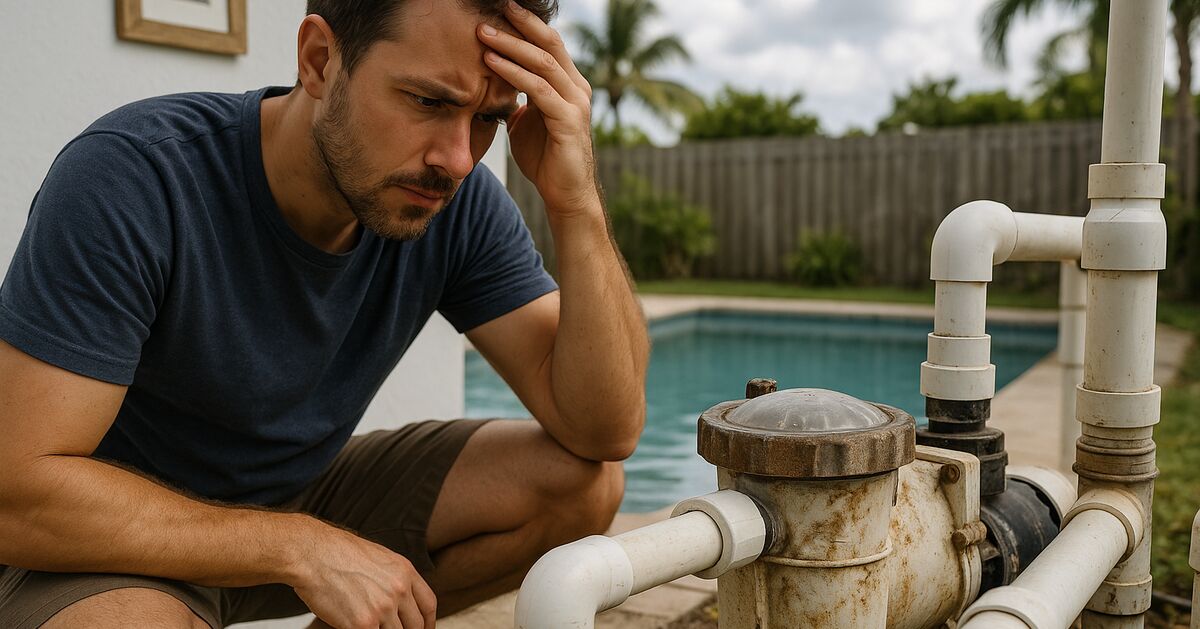
Salt air is invisible, relentless, and it has been working on your pool pump since the day it was installed. If you live on Longboat Key, Siesta Key, Lido Key, Bird Key, or anywhere else along the Sarasota barrier islands, this is not a hypothetical problem. It is happening right now, at this moment, whether or not you can see it yet.
The good news is that corrosion follows a predictable pattern. Once you know what to look for and understand why salt air causes the damage it does, you can catch small problems before they become expensive ones. This guide walks you through the science, the warning signs, the inspection routine, and the steps that actually slow corrosion down in a coastal Florida environment.
Why Salt Air Is Harder on Equipment Than You Might Think
Most homeowners understand that salt causes rust. What surprises them is how fast it happens here and why a pool pump is especially vulnerable compared to other outdoor equipment.
Salt air is not just salty. The aerosol particles that drift off the Gulf of Mexico and Tampa Bay carry chloride ions that are electrochemically aggressive. When those particles land on metal surfaces, including the motor housing, terminal box, conduit fittings, and volute of your pump, they create tiny electrochemical cells. Moisture (and Florida never runs short of it) completes the circuit, and oxidation accelerates at a rate that simply does not occur even fifty miles inland.
Pump motors are particularly susceptible because they generate heat during operation. Heat causes metal to expand slightly, opening microscopic gaps in paint and coatings. As the motor cools overnight, it contracts and draws in humid, salt-laden air. Repeat this cycle every single day for a few years and you have a motor that has been marinating in corrosive aerosol from the inside out.
Add to that our intense UV exposure, which degrades plastic housings, lid gaskets, and wiring insulation faster than the manufacturer's specs were designed for, and you start to understand why pool maintenance on Longboat Key looks quite different from pool ownership in, say, Ohio.
The Six Warning Signs to Look For Right Now
You do not need to be an electrician or a plumber to spot the early signs of salt-air damage. Walk out to your equipment pad today and check for each of the following.
1. Surface Rust on the Motor Housing
This is the most obvious sign and the one most homeowners notice first. A little surface rust on cast iron or mild steel components is common, but pay attention to where it is appearing. Rust that is spreading outward from bolt holes, seams, or ventilation slots is more serious than a small surface blush on a flat face. Those entry points allow moisture and salt to penetrate into the motor windings, which are the most expensive part to replace or rewind.
Run your finger lightly across any rusty area. Powdery, flaking rust means the corrosion is active and progressing. A hard, stable, dark-brown layer is less immediately alarming but still worth monitoring.
2. White Chalky Deposits on Wiring and Terminals
Open the terminal box cover on your pump motor. You should see clean, color-coded wiring and tightly seated wire nuts or terminal connections. If you see white or grayish powder coating the terminals, that is oxidized aluminum or corroded copper. This "galvanic corrosion" is a serious warning sign because it increases electrical resistance at the connection points.
Increased resistance means heat. Heat at an electrical connection in a wet environment is a fire and failure risk. If you see significant white or green buildup on any terminal, call a pool professional promptly. Do not simply wipe it off and move on.
3. Pitting or Bubbling on the Pump Body
The volute (the snail-shaped housing that directs water through the impeller) is typically made of thermoplastic on modern pumps, which resists corrosion well. However, older pumps use bronze or cast iron volutes, and these can develop pitting on the exterior that eventually works through the wall.
Even on plastic-body pumps, look at the brass fittings and union threads. These are common spots where salt deposits concentrate, especially if the area under the pump lid gets wet during service and the water runs down and evaporates repeatedly. Pitting around unions and fitting threads can cause slow leaks that are easy to miss until the soil under the equipment pad becomes saturated.
4. Corroded or Brittle Conduit and Junction Connections
Follow the electrical conduit that runs from your breaker panel to the pump. Salt air attacks the steel or aluminum fittings where sections of conduit join together and where conduit enters the motor. Look for greenish-white staining, loose-feeling connectors, or visible gaps between fitting and conduit body. PVC conduit handles the coastal environment better than metal, but the fittings and junction boxes are often still metal.
A loose conduit connection is not just a corrosion problem. It is also a pathway for insects, lizards, and moisture to enter the wiring run, compounding the damage.
5. Lid Gasket Deterioration
The large O-ring or gasket that seals your pump's strainer lid keeps suction where it belongs and keeps air out of the system. UV radiation and ozone exposure cause rubber gaskets to harden, crack, and shrink over time. A damaged lid gasket allows the pump to draw in air, which reduces priming efficiency, increases cavitation noise, and puts additional strain on the bearings.
This is a cheap and easy fix, but many homeowners do not realize the gasket needs periodic replacement. On the Sarasota coast, with intense sun and ozone from the nearby water, plan on inspecting the lid gasket every six months and replacing it every one to two years.
6. Unusual Noise or Vibration
Salt air attacks bearings indirectly. When motor windings degrade, the motor runs hotter. When it runs hotter, bearing grease breaks down faster. The result is a grinding or rattling noise, particularly at startup or when the pump is working against high head pressure.
A screaming or grinding pump is already in late-stage failure. A faint rumble or a sound that was not there six months ago is an early warning worth acting on. If you are unsure whether a sound is normal, check our FAQ for guidance or schedule an inspection before the noise becomes silence and you are looking at an emergency replacement mid-summer.
An Inspection Routine You Can Actually Stick To
Knowing what to look for only helps if you look regularly. Here is a simple monthly visual inspection that takes about five minutes.
- Visual scan of motor housing - any new rust spots, bubbling paint, or cracks?
- Check conduit fittings - still snug, no visible corrosion at joints?
- Open the strainer basket lid - inspect gasket condition, clean debris from basket
- Listen at startup - any new grinding, rattling, or high-pitched noise?
- Look at the ground under the equipment pad - any wet soil or staining suggesting a slow leak?
- Touch-test wiring at the terminal box (with the breaker OFF) - any brittleness, discoloration, or white powder?
Once a year, have a professional do a deeper inspection that includes checking amp draw, testing capacitor health, and evaluating bearing condition. Our pool cleaning and maintenance services include equipment checks as part of regular visits, which is one of the advantages of having a consistent service technician who notices when something has changed.
What You Can Do to Slow the Damage
You cannot eliminate salt air on Anna Maria Island or Bird Key. But you can significantly slow its effects with a few practical habits.
Rinse the equipment pad after service. When your pool technician backwashes the filter or you get splash-out during maintenance, the drying mineral residue leaves behind concentrated salt. A quick rinse of the equipment pad with fresh water after any service visit removes that residue before it can wick into fittings and motor vents.
Apply a corrosion inhibitor. Products like Corrosion Block or CRC Heavy Duty Corrosion Inhibitor (both are available at marine supply stores, which are well-stocked here in Sarasota) can be applied to external motor surfaces, conduit fittings, and terminal connections. These displace moisture and leave a protective film. This is standard practice for marine outboard motors and works equally well on pump motors. Reapply once or twice a year.
Keep vegetation trimmed back from the equipment pad. Plants and shrubs trap moisture and restrict airflow. They also decompose and release organic acids that accelerate metal corrosion. A foot of clear space around the equipment pad makes a real difference.
Consider a pump cover or enclosure. A simple vented equipment enclosure blocks direct salt-spray exposure without trapping heat. Make sure any enclosure allows adequate airflow so the motor can cool properly. Blocking airflow to save the motor from salt air and then cooking it with heat is not a trade worth making.
Use marine-grade hardware whenever anything is replaced. When a fitting, screw, or bracket is replaced on your equipment pad, specify stainless steel or hot-dip galvanized hardware rather than standard zinc-coated fasteners. On St. Armands Key or Siesta Key, a standard zinc-plated screw can fail in months. Stainless will last years.
The Cost of Ignoring These Signs
Pool pump motors on barrier islands typically have a shorter service life than inland motors, but catching problems early can add meaningful years to a pump's life. A corroded terminal connection that costs a modest amount to clean and re-terminate can become a burned-out motor winding if left alone. A failing bearing that announces itself with a low rumble will eventually seize, potentially damaging the impeller and requiring full pump replacement.
Beyond the equipment itself, a failed pump means stagnant water. In the Florida summer heat, a pool without circulation can turn green in 48 to 72 hours. Recovering a neglected or green pool takes significant chemical treatment and labor, all of which is far more expensive than the preventive maintenance that would have kept the pump running.
Our pool chemistry guide for Florida heat goes deeper on why circulation and chemistry are inseparably linked. A pump that runs poorly leads to chemistry problems almost immediately in our climate.
When to Call a Professional
Any of the following situations should prompt a call rather than a wait-and-see approach:
- White or green powder on electrical terminals
- Grinding, screeching, or rattling sounds at startup
- The pump loses prime repeatedly within the same week
- You notice a burning smell near the equipment pad
- The pump runs but suction at the skimmer or main drain feels weak
- You see water pooling under the pump body
These are not signs to monitor. They are signs to act on. Our team serves homeowners across the barrier islands including Lido Key, Siesta Key, and the Sarasota mainland, and we know how quickly minor equipment issues escalate in this environment. Catching a problem during a routine visit is always less disruptive and less expensive than an emergency call.
A Final Note on Variable-Speed Pumps
If your pump is more than eight to ten years old and you are already considering replacement due to corrosion, this is a good moment to evaluate variable-speed pumps. They run at lower RPMs for the majority of their cycle, which means less heat, less bearing wear, and longer motor life. They are also substantially more energy-efficient, which matters when running costs add up across a long Florida pool season.
A variable-speed pump is not a solution to salt air corrosion on its own. You still need to do the maintenance described above. But it gives you a head start on equipment longevity, and that is worth factoring into a replacement decision.
Salt air is patient, but so are informed homeowners. Reach out to us if you would like a professional eye on your equipment pad. A quick inspection now is the cheapest service call you will ever make.