
Year-round pool maintenance schedule for barrier islands
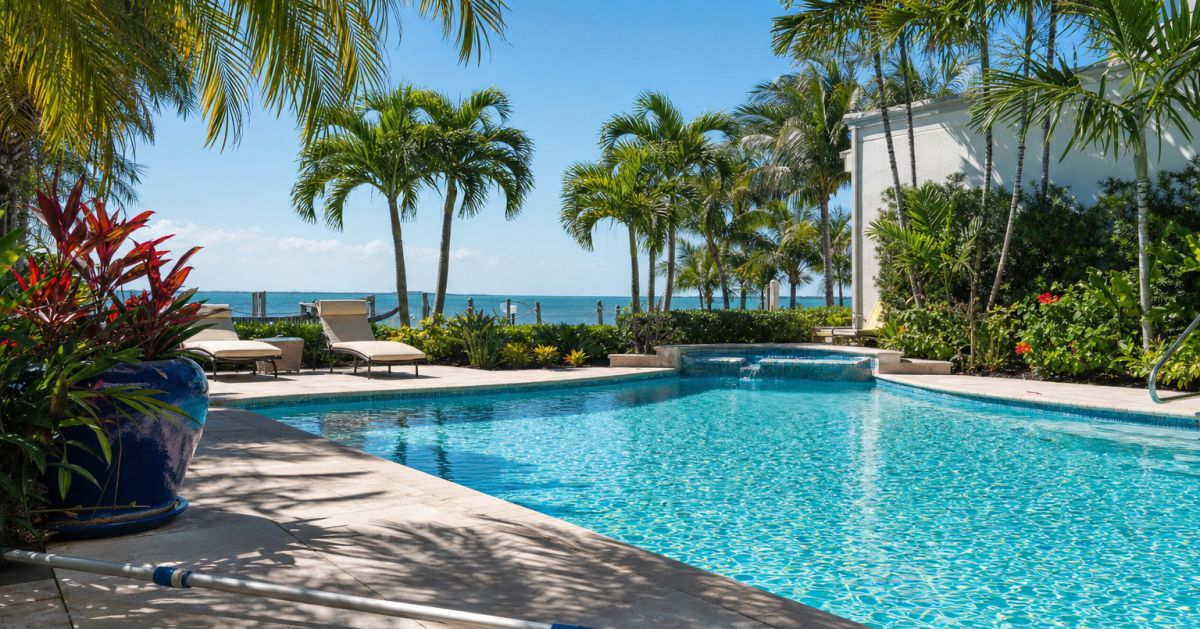
Salt air rolls in off the Gulf every single day of the year, and your pool chemistry shifts with every thunderstorm, every sandstorm, and every sunscreen-covered swimmer who jumps in. If you own a pool on one of Sarasota's barrier islands, a seasonal maintenance schedule built for northern climates simply won't cut it. This guide breaks down what actually needs to happen each month so your pool stays safe, clear, and equipment stays intact for the long haul.
Why barrier island pools are different
Before diving into the calendar, it helps to understand what makes pool care on Longboat Key, Lido Key, Bird Key, Siesta Key, Anna Maria Island, or St. Armands Key genuinely different from inland pool ownership.
Salt air and humidity. The Gulf breeze that makes island living so pleasant also carries microscopic salt particles and high humidity year-round. Those particles land on your pool equipment, your deck, and your water surface. Over time, salt accelerates corrosion on metal fittings, pump housings, and electrical connections. We've covered the full mechanics of that process in our post on how salt air and sand wear out pool equipment, but the short version is: your equipment ages faster here than it would fifty miles inland, and your maintenance schedule needs to reflect that.
No real off-season. Homeowners in colder states close their pools in October and open them in April. That's not life on a Sarasota barrier island. Water temperatures rarely dip below 60°F even in January, and many homeowners and their guests swim in December and February without a second thought. Algae doesn't take a winter break when your water stays warm, and neither should your maintenance routine.
Tourist and rental traffic. Many properties on these keys carry vacation rental guests through the fall and winter. That means bather load, sunscreen, body oils, and pH stress don't ease off after Labor Day. Your chemical demand can actually spike in January when northern snowbirds arrive.
Sand infiltration. Anyone who has tracked sand off a Siesta Key beach and into a pool knows how quickly it settles on the bottom and clogs skimmer baskets. Fine quartz sand, which Siesta Key's beach is famous for, can also act as a mild abrasive on certain pool surfaces when it circulates through the pump.
With that context in hand, here is the month-by-month framework that our team works from when caring for barrier island pools.
January and February: Snowbird season surge
Water temperature: roughly 62-70°F depending on the year. Bather load: potentially at its highest if you have rental guests or family visiting from up north.
- Test chemistry twice per week. Higher bather loads drive up combined chlorine (chloramines) and consume your free chlorine faster than the water temperature alone would suggest. Per the CDC's healthy swimming guidelines, free chlorine should stay at or above 1 ppm in residential pools, and pH should sit between 7.2 and 7.8.
- Shock after heavy use. After a weekend of heavy swimming, shocking the pool with a full oxidizing treatment breaks down the chloramines that cause eye irritation and that "chlorine smell." That odor is not too much chlorine - it is chlorine that has already been used up.
- Inspect equipment monthly. The combination of humidity and salt air means pump lid O-rings, union fittings, and electrical conduit should be visually checked every four to six weeks. Look for white mineral deposits around fittings (a sign of a slow leak) and any rust staining near metal components.
- Keep the pump running longer. Shorter winter days mean less UV, so algae growth slows slightly, but higher bather loads offset that. Aim for a minimum of eight hours of daily circulation.
March and April: Pollen and spring rain
March brings pollen season to coastal Sarasota, and you will see it. That yellow-green dust settles on the water surface and feeds algae if it isn't cleared promptly. April begins the transition into rainy season, with afternoon storms that can dilute your chemistry and introduce phosphates from runoff.
- Brush walls and floor weekly. Pollen tends to cling to plaster and tile. Brushing prevents it from becoming a food source for algae.
- Check phosphate levels. Phosphates are algae's preferred fertilizer. If your pool is showing early green tinting despite adequate chlorine, a phosphate remover treatment is worth considering before the summer sun intensifies.
- Test after every significant rain. A heavy rain can drop pH and alkalinity noticeably because Florida rainwater is slightly acidic. Test within 24 hours of any storm that dumps more than half an inch.
- Service your salt cell if applicable. If your pool uses a salt chlorine generator, spring is a good time to pull the cell and inspect it for calcium scale buildup. Scale reduces chlorine output just as UV demand starts climbing.
May and June: UV intensity ramps up
By May, UV index values in Sarasota regularly reach 10 or 11 on the NOAA scale - classified as "very high" to "extreme." Chlorine is photosensitive; sunlight degrades unstabilized chlorine within hours. This is the month when chemistry management becomes non-negotiable.
- Maintain cyanuric acid (CYA) between 30-50 ppm. CYA acts as a sunscreen for chlorine, dramatically extending how long it remains active in the water. The CDC and pool industry consensus put the ideal range at 30-50 ppm for outdoor residential pools. Above 80-100 ppm, CYA begins to suppress chlorine effectiveness, so more isn't better.
- Switch to a seven-day testing rhythm. Once-a-week professional testing plus your own mid-week check is a reasonable baseline for the high-UV months.
- Check your skimmer and pump baskets every two to three days. Storm debris, insects, and blooming vegetation hit the water hard in May and June. Clogged baskets starve the pump of flow and can cause it to overheat or run dry.
- Watch for algae on pool steps and in corners. Steps and low-flow zones are where algae establish a foothold first. If you see any greenish or yellowish tint on surfaces, treat immediately rather than waiting for the next scheduled service.
July and August: Peak summer, peak heat
Water temperature in a screened or unshaded pool can exceed 90°F in August. Hot water holds less dissolved oxygen and allows bacteria to multiply faster. Your chlorine demand increases significantly.
- Increase free chlorine target to 2-3 ppm. At elevated water temperatures, the standard 1 ppm minimum does not leave much of a buffer. Keeping free chlorine closer to 2-3 ppm provides margin for the heat.
- Test cyanuric acid monthly. Hot, sunny conditions can gradually reduce CYA. Check it monthly and top up as needed.
- Inspect your pool heater or heat pump for scale. If you use a heater to maintain temperature in cooler months, summer is the time it sits idle. Scale can form inside the heat exchanger when it isn't cycling. A quick inspection now avoids a surprise repair when you need it in December.
- Check auto-fill valves. Evaporation in July and August is significant. Auto-fill valves top off the pool continuously, and a stuck valve can quietly overflow the pool for days, throwing off chemistry and wasting water.
September and October: Hurricane season vigilance
Florida's Atlantic hurricane season peaks statistically in September, per NOAA. Even if a named storm doesn't make landfall near Sarasota, tropical systems routinely dump three to eight inches of rain in a single event and blow significant debris into pools.
- Before a named storm: Remove any loose pool accessories, furniture, and toys from the deck. Do NOT drain your pool before a storm - a full pool is heavier and resists popping out of the ground if the water table rises. Raise your chlorine levels (superchlorinate to 10 ppm) so you have a buffer when the storm dilutes your chemistry.
- After a named storm: Skim and vacuum the pool before running the pump for extended periods. Running debris-laden water through the filter continuously can damage filter media. Test and rebalance all chemistry. Check the pump and motor for signs of water intrusion or debris impact.
- Watch for algae blooms post-storm. Storm runoff carries phosphates, nitrates, and organic material. Even a well-maintained pool can turn green within 48-72 hours after a large rain event if chemistry isn't restored quickly.
Owners on Longboat Key and Anna Maria Island should be especially attentive here, as both are narrow barrier islands where storm surge and tidal flooding can complicate post-storm recovery.
November and December: The "easy" months that still need attention
Cooler air temperatures, lower UV, reduced bather loads - November and December are genuinely the lower-maintenance months. But "lower" doesn't mean "no."
- Extend the interval between shocks, but don't skip it. Monthly shocking is still a good practice through the winter, even if heavy swim sessions aren't happening.
- Reduce pump run time modestly. Eight hours a day can often be trimmed to six in December and January if the pool is lightly used. But don't go below six hours; adequate circulation is still essential for sanitizer distribution and preventing stagnation.
- Schedule your annual equipment inspection. November is an ideal time to have a technician go over the pump, motor, filter, salt cell, automation system, and all fittings before the snowbird season arrives in January and February. Catching a cracked union or a failing capacitor in November beats dealing with it during a busy rental weekend in February.
- Clean your filter. Whether you have a cartridge, DE, or sand filter, end-of-fall is a natural time for a thorough clean or backwash. Cartridge filters should be soaked in a filter cleaner solution to dissolve oils and minerals; DE filters should be fully disassembled and re-charged with fresh DE after backwashing.
Property owners on Siesta Key and Lido Key who manage vacation rentals should plan their annual inspection during a gap in bookings before the winter rental peak begins.
The tasks that happen every single week, all year long
Regardless of the month, certain tasks don't get a break:
- Test free chlorine and pH at least twice per week (or verify your automation system is doing so accurately).
- Empty skimmer and pump baskets every two to three days.
- Brush pool walls, steps, and floor once per week to prevent algae from getting a grip on surfaces.
- Skim the water surface after any windy day or storm.
- Confirm the pump is running for the full programmed duration and is not making unusual noises.
Monthly and quarterly tasks at a glance
Monthly:
- Shock (oxidize) the pool
- Inspect all equipment visually for leaks, corrosion, or unusual wear
- Check cyanuric acid level
- Test calcium hardness (ideal range: 200-400 ppm per industry consensus)
- Test total alkalinity (ideal range: 80-120 ppm)
Quarterly (every three months):
- Clean or backwash the filter
- Inspect and lubricate all O-rings with a silicone-based lubricant
- Check and clean salt cell if applicable
- Inspect pool light lenses and seals for moisture intrusion
- Review automation schedules and time clocks for accuracy
Annually:
- Full equipment inspection by a professional
- Acid wash or tile cleaning if calcium deposits are significant
- Inspect pool surface for cracks, chips, or delamination
What happens when you fall behind
The barrier island environment does not forgive neglect the way a cool-climate, shaded inland pool might. A week without testing during July and August can allow algae to establish a full bloom that takes days of chemicals and labor to reverse. A cracked union left to drip for two months can corrode a pump housing to the point where the entire pump needs replacing. The economics of consistent maintenance almost always beat the cost of remediation.
If staying on top of this schedule feels like a second job - because it is - our pool cleaning and maintenance services are built around exactly this kind of systematic care. We work with homeowners across Sarasota, Bird Key, St. Armands Key, and throughout our full service area to keep barrier island pools healthy every week of the year.
If you have questions about your specific pool or want to talk through a maintenance plan, our FAQ page covers common questions, and you're always welcome to get in touch directly.
A note on chemistry testing accuracy
Home test strips are convenient, but they are significantly less accurate than liquid reagent kits or professional digital photometers, particularly when measuring cyanuric acid and combined chlorine. For the weekly spot-checks listed above, a liquid reagent kit is worth the small additional cost. For the monthly and quarterly parameters (calcium hardness, phosphates, TDS), a professional test is the most reliable option. Errors in chemistry readings lead to either over-treatment (wasted chemicals, potential surface damage) or under-treatment (algae, bacteria). Neither outcome is cheap.
Maintaining a pool on a Sarasota barrier island takes genuine, year-round attention. The good news is that when you work from a consistent schedule rather than reacting to problems as they appear, the total time and cost involved is quite manageable. The pool ends up being what it should be: something you enjoy every single month of the year.