
Pool bonding and grounding on a waterfront property: what
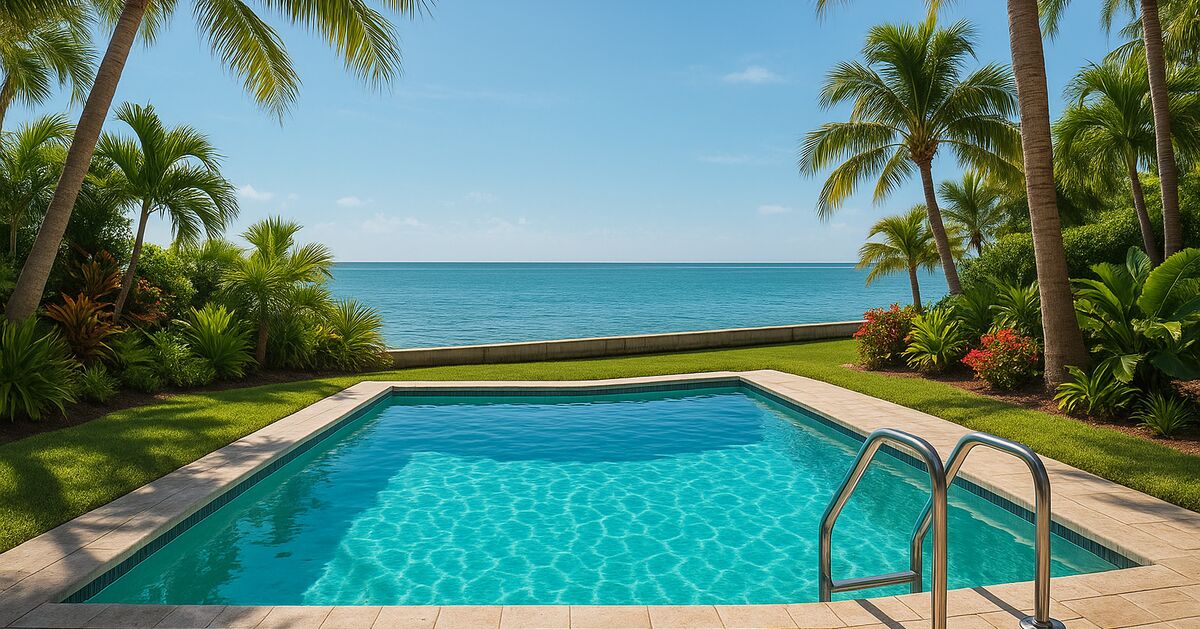
Salt water is an excellent conductor of electricity. That single fact explains why pool bonding and grounding rules exist, why they are stricter than many homeowners expect, and why a waterfront property on Longboat Key, Siesta Key, or Anna Maria Island carries electrical risks that an inland pool simply does not face to the same degree.
This is not an abstract code-compliance exercise. Electric shock drowning (ESD) is a recognized hazard caused by voltage differences in the water around swimmers, and it can cause serious injury or death. Understanding what bonding and grounding actually do, what the National Electrical Code (NEC) and Florida Building Code require, and how the coastal environment complicates both will help you ask the right questions when you hire an electrician or a pool service professional.
Bonding and grounding are not the same thing
The two terms are used interchangeably in casual conversation, but they describe completely different functions.
Bonding connects all metal components in and around the pool into a single continuous network so that every conductive surface sits at the same electrical potential. When everything is at the same potential, current has no reason to flow through a swimmer who touches two different metal objects. The bonding grid typically includes the pool shell's reinforcing steel (rebar), all metal ladders and handrails, light niches, pump motors, filter housings, any metal within five feet of the water's edge, and, critically for waterfront homes, any deck equipment or dock hardware that could be electrically connected to the pool environment.
Grounding connects the electrical equipment (pumps, lights, heaters, automation systems) to the earth so that a fault current has a safe path to follow and will trip the breaker rather than pass through a person. Grounding protects equipment users; bonding protects swimmers in the water itself.
Both are required. Neither one substitutes for the other.
What the NEC Article 680 requires for pools
The National Electrical Code governs pool electrical installations. Article 680 is the controlling section. Among its core requirements:
- A minimum 8 AWG (American Wire Gauge) solid copper bonding conductor must be used to tie all metal parts together, including a copper ring that runs around the perimeter of the pool.
- The bonding grid must include all metal within five feet of the inside wall of the pool, measured horizontally.
- All electrical equipment that serves the pool must be grounded through the equipment grounding conductor in each circuit.
- GFCI (ground-fault circuit interrupter) protection is required for all receptacles within 20 feet of the pool, all lighting within 10 feet of the water's surface (with exceptions for 15V or less underwater lighting on certain listed systems), and all pump motors.
- Metal forming shells and light niches must be bonded to the grid.
Florida adopts the NEC by reference through the Florida Building Code, Electrical volume. Local jurisdictions, including Sarasota County, enforce these requirements through the permitting and inspection process. Any new pool construction, any significant electrical modification, and any equipment replacement that changes a circuit requires a permit and a final electrical inspection.
If you are buying a home with an existing pool in Siesta Key, Bird Key, or anywhere along our service area, it is worth asking whether the electrical work has ever been inspected and whether the bonding grid is intact. An aging pool on a waterfront lot may have been built to an older version of the code and may have corroded bonding connections that nobody has checked in years.
Why saltwater raises the stakes dramatically
Seawater is dramatically more conductive than fresh water due to its dissolved salt content. The Gulf water that makes our barrier islands so beautiful is an excellent electrical pathway. Here is how that reality creates compounding risks on a waterfront property.
Saltwater pool systems themselves change the equation. A saltwater chlorine generator (SCSG) works by running pool water across titanium electrodes and using low-level electrolysis to produce chlorine from dissolved salt. That process works beautifully for sanitation, but it also means there is an active low-voltage current continuously present in the water. If the bonding grid is compromised, that current has nowhere safe to go.
Salt in the air and water accelerates corrosion. On Longboat Key and Lido Key, the 8 AWG copper bonding conductor, the bonding lugs on metal fittings, and the grounding conductors in conduit all sit in an environment that is far more corrosive than the national standard assumed when those conductor sizes were set. Copper oxidizes, connections loosen, and the continuity of the bonding grid degrades over time. A visual inspection from the deck will not catch a corroded lug buried in a junction box.
Dock and seawall interactions. Many waterfront homes on Bird Key, St. Armands Key, and along the Anna Maria Island shoreline have aluminum or steel docks, metal seawall tie-backs, and boat lift wiring all within proximity of the pool. If any of those structures develop a wiring fault, and they sometimes do, the fault current can travel through the water and saltwater-saturated soil between the dock and the pool. If the pool bonding grid is not properly installed and connected to a grounding electrode system, that fault current can end up in the pool water.
Stray current corrosion. Even without a fault, small DC currents from nearby boats, marinas, or aging shore power pedestals can flow through the water and soil in a phenomenon called galvanic corrosion. These currents actively attack metal fittings, bonding conductors, and pool shells over time. A well-maintained bonding system provides a controlled path for these currents; a degraded one leaves the pool structure itself as the sacrificial metal.
What a proper bonding inspection actually covers
If an electrician or pool professional tells you they checked the bonding and everything is fine, it is reasonable to ask exactly what they checked. A credible inspection includes:
- Continuity testing of the entire bonding grid with a low-resistance ohmmeter. The resistance between any two points in the bonding network should be very low; higher-than-expected readings indicate a broken or corroded connection somewhere. Higher resistance means a broken or corroded connection somewhere.
- Visual inspection of all accessible bonding lugs and connections, looking for green corrosion, loose terminal screws, and wire that has been nicked or abraded.
- Verification that the bonding conductor reaches all required metal components, including the pump motor, filter housing, heater, automation equipment, and any metal within five feet of the pool edge.
- Confirmation that GFCI breakers are properly installed and functional for all required circuits. Our pool cleaning and maintenance services include routine GFCI testing as part of equipment checks, because a GFCI that has tripped and been reset repeatedly may indicate an underlying bonding or grounding issue rather than a simple nuisance trip.
- Review of any dock or seawall wiring that is near the pool environment, flagging anything that a licensed marine electrician should examine separately.
Common problems found on coastal properties
A pattern that comes up repeatedly in service calls on Longboat Key and along the barrier islands involves pools where some or all of the following have degraded:
- The bonding lug on the older pump motor has corroded through and is no longer making electrical contact with the bonding conductor.
- The 8 AWG bonding wire that was originally run around the perimeter of the pool has been partially cut or left disconnected after a deck resurfacing or pool renovation, because the contractor who did that work was not thinking about pool electrical systems.
- A saltwater chlorine generator was added as an aftermarket upgrade without any inspection or update to the bonding system, which the original installation was not designed for.
- The bonding conductor was run through conduit that has since corroded and filled with water, trapping the conductor in a corrosive environment.
None of these failures is visible to a homeowner doing a weekend walkaround. They require testing.
The role of GFCI protection and why it is not a substitute for bonding
A correctly installed GFCI breaker will trip in about 25 milliseconds when it detects as little as 5 milliamps of leakage current going somewhere other than the return conductor. That is genuinely fast, and GFCI protection saves lives. But it is not a substitute for bonding, for two reasons.
First, the shock hazard that bonding prevents, namely, a voltage difference between two metal surfaces that a swimmer could simultaneously touch, does not necessarily involve current leaving the circuit in a way that a GFCI will detect. Both metal surfaces might be part of the same closed circuit, with the GFCI seeing a balanced load.
Second, in a saltwater pool with a chlorine generator running, the micro-currents that could cause a sensation of tingling or muscle cramping in a swimmer may be below the GFCI trip threshold. Bonding eliminates the voltage difference that drives those currents; the GFCI only reacts after current flows.
Think of bonding as prevention and GFCI as a backup. You need both.
Permits, inspections, and what to do if you are not sure
In Sarasota County, any new pool electrical work, including adding a saltwater system, replacing a pump with a variable-speed motor on a new circuit, or adding automation or lighting, requires an electrical permit. The inspection that follows a permit is the only way to get an independent licensed inspector to put eyes on the work before the walls or deck are closed back up.
If you have an older pool and no record of a bonding inspection, the right next step is to hire a licensed electrician who specializes in pool and spa electrical work (often referred to as an Article 680 specialist) and ask for a full bonding continuity test and GFCI verification. This is separate from your pool service company's role, though a good pool service professional will alert you to visible problems and recommend you make that call.
Our team covers Longboat Key pool service, Lido Key, Siesta Key, Anna Maria Island, and the surrounding areas. When we see something during routine maintenance that raises an electrical concern, we document it and tell you clearly what kind of licensed professional needs to be involved next. We do not perform licensed electrical work ourselves, but we do know what healthy equipment looks like and what warning signs warrant a call to someone who does.
What to watch for between professional inspections
While a homeowner cannot perform a bonding continuity test without equipment, there are observable signals worth paying attention to:
- Tingling sensation in the water. Any swimmer reporting a mild tingle, pins-and-needles feeling, or muscle stiffness near a particular part of the pool should be treated as an emergency. Get everyone out of the water immediately and call a licensed electrician before anyone goes back in.
- **Lights that flicker or GFCI breakers that trip repeatedly.Occasional trips are worth investigating; recurring trips often indicate a real leakage path somewhere in the system. The FAQ page has more context on what GFCI trips can indicate.
- Visible corrosion on bonding lugs or conductors near the equipment pad.
- New equipment added without a permit. If a previous owner upgraded the salt system or added a spa heater and you have no permit record for it, that work may not have been inspected.
- Recent deck or coping work. Contractors who resurface decks sometimes inadvertently damage bonding conductors run just beneath the surface. If you have had deck work done recently, a bonding continuity test afterward is a reasonable precaution.
For more on how deck and coping conditions relate to pool safety and structure on our Gulf-coast properties, see our post on what your pool deck and coping are telling you.
The bottom line for waterfront homeowners
A waterfront pool on a barrier island is not a standard pool. The salt in the air, the salt in the water, the proximity to docks and seawalls with their own electrical systems, and the use of saltwater chlorine generators all create an environment where the bonding and grounding requirements in NEC Article 680 are not optional formalities. They are the difference between a pool that is safe for your family and guests and one that is waiting for the wrong combination of circumstances to cause serious harm.
Get the bonding system tested by a licensed electrician if you do not have a recent continuity test on record. Do it before the busy swim season, not after. And if you want a pool service team that will flag electrical concerns when they see them during routine visits, reach out through our contact page or explore what routine pool maintenance looks like for coastal properties like yours.
Sources & further reading
- NEC Article 680: Swimming Pools, Spas, Hot Tubs, Fountains, and Similar Installations (National Fire Protection Association (NFPA))
- Florida Building Code, Electrical Volume (adopts NEC by reference) (Florida Department of Business and Professional Regulation)
Claim-by-claim audit (4 checked)
- “Electric shock drowning (ESD) is a recognized hazard caused by voltage differences in the water around swimmers, and it can cause serious injury or death.” (rewritten to what the article can stand behind)
- “Seawater is dramatically more conductive than fresh water due to its dissolved salt content.” (rewritten to what the article can stand behind)
- “A correctly installed GFCI breaker will trip in about 25 milliseconds when it detects as little as 5 milliamps of leakage current going somewhere other than the return conductor.” (reasoning shown in the article)
- “The resistance between any two points in the bonding network should be very low; higher-than-expected readings indicate a broken or corroded connection somewhere.” (rewritten to what the article can stand behind)