
Choose the right pool sanitization system
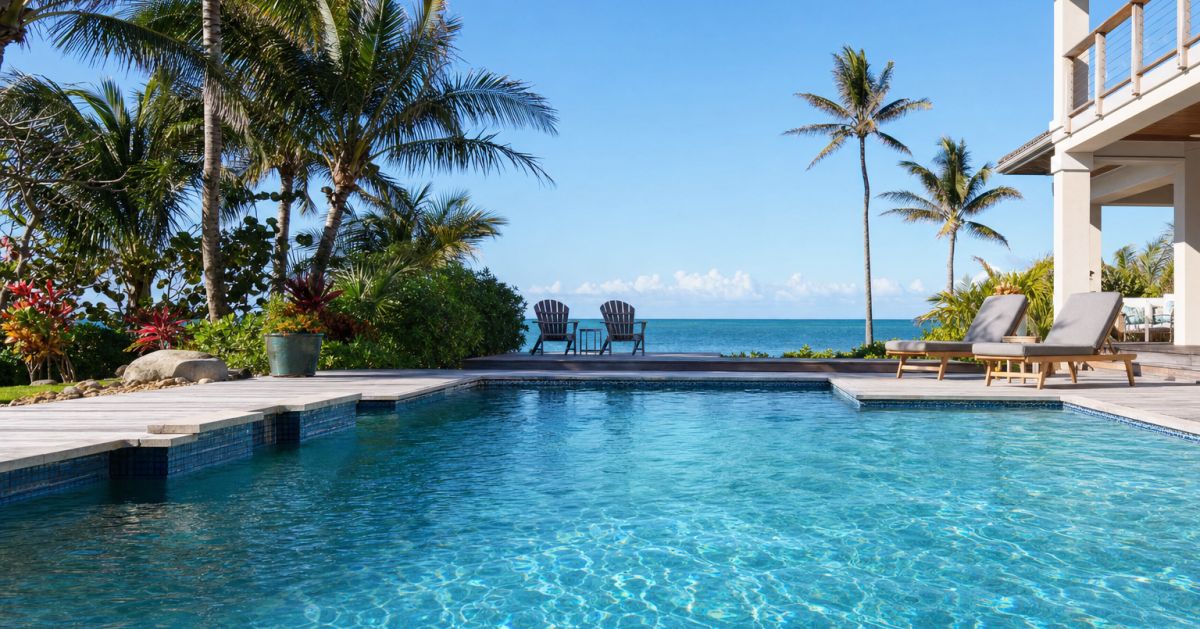
Salt air rolling in off the Gulf, afternoon thunderstorms that dilute your water chemistry in minutes, sand tracked in from the beach on every towel and swimsuit - owning a pool on a barrier island like Longboat Key, Siesta Key, or Anna Maria Island means your sanitization system works harder than one sitting inland. Choosing the wrong system doesn't just cost money upfront; it costs money every month in chemicals, repairs, and shortened equipment life. This guide walks you through every mainstream option, explains the real trade-offs in a coastal context, and gives you a framework for making the right call for your specific home.
Why the barrier island environment changes everything
Before comparing systems, it helps to understand what your pool is up against. Pools on Longboat Key, Lido Key, Bird Key, and neighboring islands face a combination of stressors that rarely exist together anywhere else:
- Airborne salt and chloride. Salt particles land on your pool deck, blow into the water, and deposit on every metal surface. Chloride ions are corrosive to many metals and can interact with your sanitizer in unexpected ways.
- High bather loads and sunscreen. Barrier island pools tend to see heavy use during visitor season. Sunscreen, body oils, and cosmetics are organic compounds that consume sanitizer rapidly and generate chloramines (the chemical responsible for that "pool smell" and eye irritation).
- Intense UV radiation. Southwest Florida receives some of the highest solar UV index readings in the continental United States. Free chlorine degrades quickly under UV exposure unless it is stabilized or constantly replenished.
- Frequent rain dilution. Summer afternoon storms are a fixture in the Sarasota area. A heavy rain event can drop your pH, dilute your sanitizer, and introduce phosphates from runoff, all in about 20 minutes.
- Warm water temperatures. Warmer water accelerates algae growth and speeds up the consumption of sanitizer. A pool sitting at 88°F needs more active sanitizer than the same pool at 78°F.
No single sanitization system handles all of these factors perfectly. The goal is to find the system that handles most of them well and pairs sensibly with your pool size, budget, and how much hands-on involvement you want.
The main sanitization options, explained plainly
Traditional chlorine (tablet or liquid)
Trichlor tablets dissolved in a floating feeder or an inline erosion feeder are probably the system you have if your pool was built more than a decade ago. They are reliable, widely understood, and inexpensive to set up.
How it works: Trichlor is a stabilized form of chlorine. As it dissolves, it releases free chlorine (the active sanitizer) and cyanuric acid (a UV stabilizer). Liquid chlorine (sodium hypochlorite) releases free chlorine without adding cyanuric acid.
The barrier island catch: Trichlor tablets continuously add cyanuric acid. Over time - especially in a pool that isn't drained and refilled regularly - cyanuric acid can build up to levels above 80 ppm. Per guidance from the Centers for Disease Control and Prevention (CDC) on healthy swimming, high cyanuric acid levels significantly reduce chlorine's ability to kill pathogens, a phenomenon sometimes called "chlorine lock." In a warm, heavily used island pool, this creates a situation where you are adding plenty of chlorine but getting poor sanitation. The fix is a partial drain and refill, which is straightforward but worth factoring into your ongoing costs and water usage.
Liquid chlorine avoids the cyanuric acid buildup problem but requires more frequent dosing and careful storage, since sodium hypochlorite degrades quickly in heat and sunlight.
Best for: Owners who want the lowest upfront equipment cost, have a service technician visiting regularly, and don't mind monitoring cyanuric acid levels carefully.
Saltwater chlorine generation (SWG)
Saltwater pools are not chlorine-free - they generate chlorine continuously from dissolved salt using a process called electrolysis. A salt cell installed in your plumbing splits sodium chloride molecules into free chlorine, which sanitizes the water, and then recombines it back into salt after use. The water feels softer because the salt concentration (typically 2,700 to 3,500 ppm) is far below ocean salinity (about 35,000 ppm) but high enough to run the electrolysis process.
How it works: You add pool-grade salt once at startup and top off occasionally. The generator's control board lets you set an output percentage. Free chlorine levels are maintained continuously rather than in peaks and valleys.
The barrier island catch: The salt cell itself is vulnerable to the very environment it's designed to operate in. Calcium scale builds up on the titanium plates, reducing efficiency. High cyanuric acid (again) limits effectiveness. And the control board and cell housing are exposed to the humid, salt-laden coastal air. We've written in detail about how salt air and sand accelerate pool equipment wear, and SWG equipment is not immune - proper rinsing and housing matter.
That said, SWG systems are genuinely popular on the barrier islands for good reasons. The continuous low-level chlorine production tends to result in more stable water chemistry between service visits. Swimmers frequently report less skin and eye irritation compared to traditionally chlorinated pools. And for a vacation rental home on Siesta Key or Anna Maria Island where guests may not be familiar with pool care, a system that runs largely on its own has real practical value.
Best for: Homeowners who want lower ongoing chemical costs, softer-feeling water, and more stable chemistry between visits. Plan for annual or semi-annual cell cleaning and eventual cell replacement (cells typically last 3 to 7 years depending on run time and water chemistry management).
UV (ultraviolet) sanitization
A UV system installs a lamp housing in your return plumbing. As water passes through, UV-C light at 254 nanometers destroys the DNA of microorganisms, rendering them unable to reproduce. UV is exceptionally effective against chlorine-resistant pathogens like Cryptosporidium, which the CDC identifies as a leading cause of recreational water illness outbreaks.
How it works: UV sanitizes water as it flows past the lamp. It has no residual effect - once water leaves the housing, it has no ongoing protection. For this reason, UV is always used as a supplemental system alongside a residual sanitizer (chlorine or bromine), not as a standalone.
The barrier island benefit: One of UV's most practical benefits in a heavy-use pool is its ability to destroy chloramines. Combined chlorine (chloramines) are the irritating byproducts that form when chlorine reacts with swimmer waste. UV breaks them apart, which means your free chlorine works more efficiently, eye and skin irritation drop noticeably, and you can often run lower free chlorine levels while maintaining excellent water quality. For a pool on Bird Key or St. Armands Key that sees a lot of summer entertaining, that's a meaningful quality-of-life improvement.
The barrier island catch: UV lamps require periodic replacement (typically every 12 months) and the quartz sleeve must be kept clean. Scale and biofilm on the sleeve dramatically reduce UV output. It is also worth noting that UV does nothing to address algae that has already established itself - its job is prevention, not remediation.
Best for: Pools with high bather loads, owners who want to reduce their chemical consumption, or anyone who has struggled with chronic chloramine problems (strong smell, red eyes, skin irritation).
Ozone (O3) sanitization
Ozone is one of the most powerful oxidizers used in water treatment. An ozone generator - either a corona discharge unit or a UV-based ozone generator - injects ozone gas into the return plumbing. Ozone destroys bacteria, viruses, and organic compounds faster than chlorine and breaks down into plain oxygen, leaving no chemical byproduct.
How it works: Like UV, ozone has no residual effect in the pool water itself. It must be paired with a residual sanitizer. Some systems include an ozone contact chamber that maximizes exposure time before water returns to the pool.
The barrier island benefit: Ozone is an outstanding oxidizer of organic material - exactly what accumulates in a heavily used island pool from sunscreen, body oils, and landscaping debris blown in by Gulf breezes. By handling the oxidation demand, ozone allows your residual chlorine to focus on its true job: killing pathogens. Pool owners who switch to ozone supplementation often find they cut their chlorine use significantly.
The barrier island catch: Corona discharge ozone generators are sensitive to humidity. In the coastal air environment of Sarasota and the barrier islands, moisture in the air can degrade the dielectric components over time. Proper equipment housing and regular inspection matter more here than in a drier climate. Ozone systems also carry a higher upfront cost than UV.
Best for: Pools with very high bather loads or significant organic contamination, owners who want to minimize chemical use, and situations where water clarity and quality are a top priority.
Mineral systems
Mineral sanitizers use silver and copper ions (released from a cartridge or inline feeder) to inhibit algae and bacteria. They are almost always used in combination with a reduced level of chlorine, not as a true standalone. The appeal is a lower chlorine demand, which can extend the time between chemical additions.
The barrier island catch: Copper ions can stain pool surfaces and turn hair green, particularly in pools with any variation in pH - and pH variation is a fact of life in a pool exposed to frequent rainfall. Many pool professionals on the barrier islands are cautious about recommending copper-based mineral systems for pools with plaster finishes or for pools used by people with light-colored hair. They can work well under careful management, but they add complexity.
Best for: Pools with experienced owners or regular professional service, and situations where the owner has weighed the staining risk and is committed to tight pH management.
How to think through the choice for your specific home
There is no universal right answer, but a few questions narrow it down quickly:
How often does a professional visit? If you have regular pool cleaning and maintenance service scheduled weekly, a traditional chlorine system with careful cyanuric acid monitoring is very workable. If the pool goes longer between visits, a system with more automation - like a salt generator paired with UV - gives you a wider safety margin.
How heavy is bather use? A pool that sees two adults a few times a week has a very different sanitizer demand than a vacation rental that hosts eight guests every weekend. UV and ozone systems earn their keep in high-use situations.
What is your surface and equipment? Saltwater systems are generally compatible with modern pool surfaces, but older or porous plaster surfaces may be more susceptible to the low-level acidity that salt cells can produce if pH drifts. Talk to a knowledgeable local technician before retrofitting an older pool.
What is your budget split between upfront and ongoing? Traditional chlorine has the lowest upfront cost but potentially higher ongoing chemical costs. SWG has a moderate upfront cost and lower ongoing chemical costs. UV and ozone add upfront equipment cost but reduce chemical demand. The right math depends on your pool size and usage pattern.
Are you renting the property? On Siesta Key and Anna Maria Island in particular, short-term rentals mean pools are used by guests who don't monitor chemistry. More automated systems reduce the risk of a chemistry crisis between turnovers.
Combining systems: what actually works in practice
The most capable setups on barrier island pools tend to combine a primary residual sanitizer (salt generator or traditional chlorine) with a secondary supplemental system (UV or ozone). A salt-plus-UV combination, for example, gives you continuous low-level chlorine production, automated output control, chloramine destruction, and reduced pathogen load - with relatively modest ongoing maintenance. It is not the cheapest setup, but for a pool that sees serious use on Longboat Key or Lido Key, it is a genuinely robust answer to the coastal environment.
Whatever combination you choose, the fundamentals still apply: balanced water chemistry (pH 7.4 to 7.6, alkalinity 80 to 120 ppm, calcium hardness appropriate to your surface), consistent circulation, and regular inspection of equipment. No sanitization system performs well in chemically unbalanced water.
What to do next
If you are unsure what system your pool currently has, or if you have inherited a setup with the house and don't know its history, a professional evaluation is the logical starting point. Our team serves homeowners across Longboat Key, Lido Key, Bird Key, St. Armands Key, Siesta Key, Sarasota, and Anna Maria Island and can assess what you have, explain what it's doing well, and recommend changes that fit your pool, your use pattern, and your budget.
You can also browse our frequently asked questions for quick answers on common sanitization and water chemistry topics, or get in touch directly to schedule a conversation. Choosing the right system now means fewer chemistry emergencies, less equipment wear, and a pool that actually feels good to swim in - which is, after all, the whole point.